|
Shopper Engagement
|
|
Written by Alicia Fiorletta
|
|
Friday, 27 January 2012 09:39 |
|
 As social networking and word-of-mouth strategies become more prominent within the retail industry, merchants are striving to increase brand penetration via platforms such as Facebook, Twitter and foursquare. To make social media marketing less daunting, the Retail Solutions Providers Association (RSPA) has released Incite, a solution designed to link traditional loyalty programs with social networks. The approach boosts social sharing about a brand and helps merchants fortify social campaigns and marketing initiatives by harvesting real-time customer data.
Incite is powered by the Social Network Appreciation Platform (SNAP), a web-based offering that integrates traditional in-store loyalty programs into popular social media networks. It allows a retailer to “check in” customers automatically when they complete a transaction. Consumers then can select from a roster of retailers’ customized, pre-packed messages about the in-store experience and send them automatically to their friends and family via their social networking accounts. By opting to send a message, consumers receive additional rewards points and offerings. Automating the entire social sharing process makes effective interaction less of a struggle, stated Steve Messemer, Account Manager for Incite.
|
|
Read more...
|
|
|
Store Operations
|
|
Written by Alicia Fiorletta
|
|
Thursday, 26 January 2012 09:27 |
|
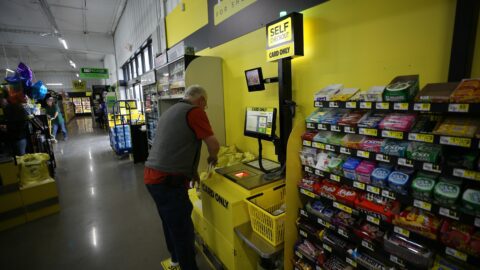
While some retailers experienced increased sales during the 2011 holiday season, Sears Holdings Corp. is closing up to 120 Sears and Kmart locations due to lackluster sales. In total, income during the eight-week period before Christmas was down 5.2%, while year-to-date purchase fell 2.6%.
In a statement released on Dec. 27, 2011, Sears Holdings Corp. revealed that the company’s yearly earnings were expected to be less than half of its 2010 income of $933 million. Lower sales, increased margin pressure and high expense rates were all causes of the company’s downfall, according to Lou D’Ambrosio, CEO of Sears Holdings Corp.
|
|
Read more...
|
|
Industry Insights
|
|
Written by Alicia Fiorletta
|
|
Wednesday, 25 January 2012 09:47 |
|
 Classic brands are facing the challenge of staying relevant in light of new fashion trends and emerging sales and marketing strategies. While they may be recognized and appreciated as “household names,” these brands will die out quickly if they don’t keep pace with their cutting-edge competitors. Ralph Lauren, for example, not only keeps up, but also sets trends in the retail marketing landscape.
According to David Lauren, Executive VP of Advertising, Marketing and Corporate Communications for Ralph Lauren, the brand stays relevant by leveraging interactive marketing strategies in-store, online and via mobile. Lauren shared this strategic approach during the session titled “Keeping a Classic Brand Modern,” at the NRF annual convention last week in New York City.
|
|
Read more...
|
|
Industry Insights
|
|
Written by the Retail TouchPoints Editorial Staff
|
|
Monday, 23 January 2012 17:28 |
|
Note: This article is a first-hand recap of The Big Show: NRF 2012, delivered in four sections by the editors of Retail TouchPoints.
Retail TouchPoints was out in force at the 101st NRF Big Show last week — attending sessions, meeting with solution providers, shooting videos and sharing industry insights with passersby at the RTP booth. Collectively, RTP editors met with more than 100 industry executives including retailers, solution providers, and industry analysts. In this article, we are sharing each editor’s personal perspective on the show, including insights on industry trends and hot topics.
|
|
Read more...
|
|
Retail DataPoints Of The Week
|
|
Tuesday, 24 January 2012 10:14 |
Today's consumers expect to have access to information in real time at their fingertips. With the increase in mobile Internet use, analysts predict that by 2014, mobile Internet will take over desktop Internet. Currently, U.S. consumers spend an average of 2.7 hours per day socializing on their mobile devices, with most (91%) utilizing mobile Internet, compared to 79% who use desktops. This infographic highlights the current mobile marketing trends and how U.S. consumers are reacting to the mobile retail market.

|
|
View Full Infographic »
|
|
Executive ViewPoints
|
|
Written by Ross Kramer, CEO, Listrak
|
|
Monday, 23 January 2012 17:13 |
|
This past year, for the first time ever, I did all of my holiday shopping online. I didn’t set foot inside the mall or buy any gifts at crowded stores. And, while I might have been shopping in solitude, I certainly wasn’t alone. comScore reported a 15.3% increase in online shopping between Nov. 1 and Dec. 26 as customers spent $37 billion on e-Commerce sites, which is a new record for those of you who are keeping track. Cyber Monday alone brought in $1.25 billion ― the heaviest online shopping day in history ― and Green Monday wasn’t far behind, with $1.1 billion. All in all, there were 10 shopping days this past holiday season that surpassed the $1 billion mark in online sales.
|
|
Read more...
|
|
Mobile
|
|
Written by Diane Buzzeo, CEO, Ability Commerce
|
|
Monday, 23 January 2012 17:04 |
|
 When referring to all the shopping that went on between Thanksgiving and Christmas Day 2011, the term “holiday” has been replaced by a different modifier — mobile.
Millions turned to their handheld devices to buy everything from lawn ornaments to winter tires and hunting decoys, all purchased with the tap of a finger.
To gauge the level of mobile shopping, Ability Commerce, an e-Commerce software developer, took a close look at its clients’ mobile shopping figures during the holiday period. We found that mobile buying trended up steadily, likely because of our clients’ clearly identified mobile strategies.
More interesting, we uncovered a fevered skirmish going on among the top mobile operating systems. With all the Android tablets and smartphones hitting the market, plus a raft of new tablets and several Apple iOS devices, the mobile market was flooded this year. We discovered a host of interesting statistics about how each operating system fared in mobile shopping in 2011. Android transactions (including Android smartphones and tablets) surged 52% from 2010, while Apple iOS device transactions (iPhones and iPads combined) were up 338%.
|
|
Read more...
|
|
Solution Spotlight
|
|
Monday, 23 January 2012 16:56 |
|
Editors' note: We have simplified the Retail TouchPoints Solution Spotlight. The new form is available here.
The proliferation of mobile devices and channels has changed the way consumers interact with technologies. Retail time clocks, however, have remained unchanged and cannot assimilate employees’ new technology habits. To address this challenge, Kronos Incorporated created the InTouch time clock, aimed at helping retailers streamline and mobilize workforce management.
The InTouch solution is an electronic time clock that allows retailers to automate time capture and provide full employee self-service capabilities. Launched in November 2011, the cloud-based InTouch time clock integrates with many other workforce management technologies: Employees can use the solution to check accrual balances, request time off and view schedules, all in real time.
|
|
Read more...
|
|
News Briefs
|
|
Monday, 23 January 2012 16:46 |
More retailers are initiating RFID pilots to track in-store item sales, according to a study recently released by the Voluntary Interindustry Commerce Standards Association (VICS). The report, titled “RFID Nears A Tipping Point,” features responses from North American retailers and suppliers that confirm item-level adoption of RFID is gaining traction. “Chain-wide, item-level RFID rollouts by some of North America’s largest retailers indicate that this technology may soon be broadly adopted by the industry,” said Joseph Andraski, President and CEO of VICS. “Even businesses that make relatively small investments are reaping benefits ranging from reduced out-of-stocks, increased sales, improved product distribution, access to more customer insights, and reduced theft and labor costs.” Item-level RFID is designed to offer early adopters better accuracy, visibility and insight to inventory, enabling them to improve in-stock positions and increase sales. According to a VICS press release, the cost of RFID tags has decreased and will continue to fall over the next three to five years as apparel and footwear retailers adopt the technology.
|
|
News Briefs
|
|
Monday, 23 January 2012 16:41 |
Town Shoes has selected a web-based employee assessment tool from PeopleAnswers to improve the quality of its hiring process. The solution helps Town Shoes more accurately prescreen manager and associate job candidates. After candidates complete the PeopleAnswers assessment, the software matches them with the Town Shoes positions that best correspond to candidates’ behaviors and tendencies. “Town Shoes employees have to be fashion and people experts so they can create the best customer experience,” said Gabriel Goncalves, CEO and President of PeopleAnswers, in a press release. “There is a proven track record of retailers using PeopleAnswers to select the right candidates who improve sales and remain with companies longer.” The Dallas-based shoe retailer sells its products under two brand company names: Town Shoes and The Shoe Company. According to Town Shoes’ VP of Sales and Operations Yvonne Faulkner, the company will implement the solution across its 124 stores throughout Canada.
|
|
|
|
|
<< Start < Prev 1 2 3 4 5 6 7 8 9 10 Next > End >>
|
|