

This story is part of Retail TouchPoints’ ongoing “Small Business, Big Ideas” series, focusing on smaller retail brands that have found big success and have even bigger ambitions.
For consumers looking for safe, healthy food choices, the grocery store has become a maze of marketing tactics and dubious claims: “gluten-free,” “organic,” “plant-based,” “farm raised,” “no additives,” “low-sodium,” “local,” — and that’s just the tip of the iceberg.
“There is all kinds of trickery on food labels — there’s trickery with ingredients, there’s trickery with what the CFR [Code of Federal Regulations] allows and doesn’t allow, and companies do whatever they can to work their way around it,” said Anna Vocino, Founder and CEO of clean-label food brand Eat Happy Kitchen in an interview with Retail TouchPoints. “Many manufacturers will do whatever they can to work their way around it so that they don’t have to fully disclose what’s in [their products]. Or they’re like, ‘We’re following the letter of the law. It’s still not that great for you, but you’re still allowed to eat it.’”
One example of this confusion is so-called “gluten-free” marinara sauces. There is no gluten in any marinara, given that the core ingredients are tomato, basil, garlic, salt and extra virgin olive oil. “All pasta sauces are gluten-free,” said Vocino. “There should be no need to say gluten-free on any brand, but now you have to do it so that people understand what they’re buying.”

With her brand, Vocino hopes to be “a voice of transparency in that very confusing, muddled world” at a moment when consumer demand for “clean” foods is increasing. In some cases that means playing by the rules (i.e. denoting that your naturally gluten-free product is indeed gluten-free) and in other cases it means looking past the established rules to get closer to truly “clean” food.
Tapping into the Clean Food Movement
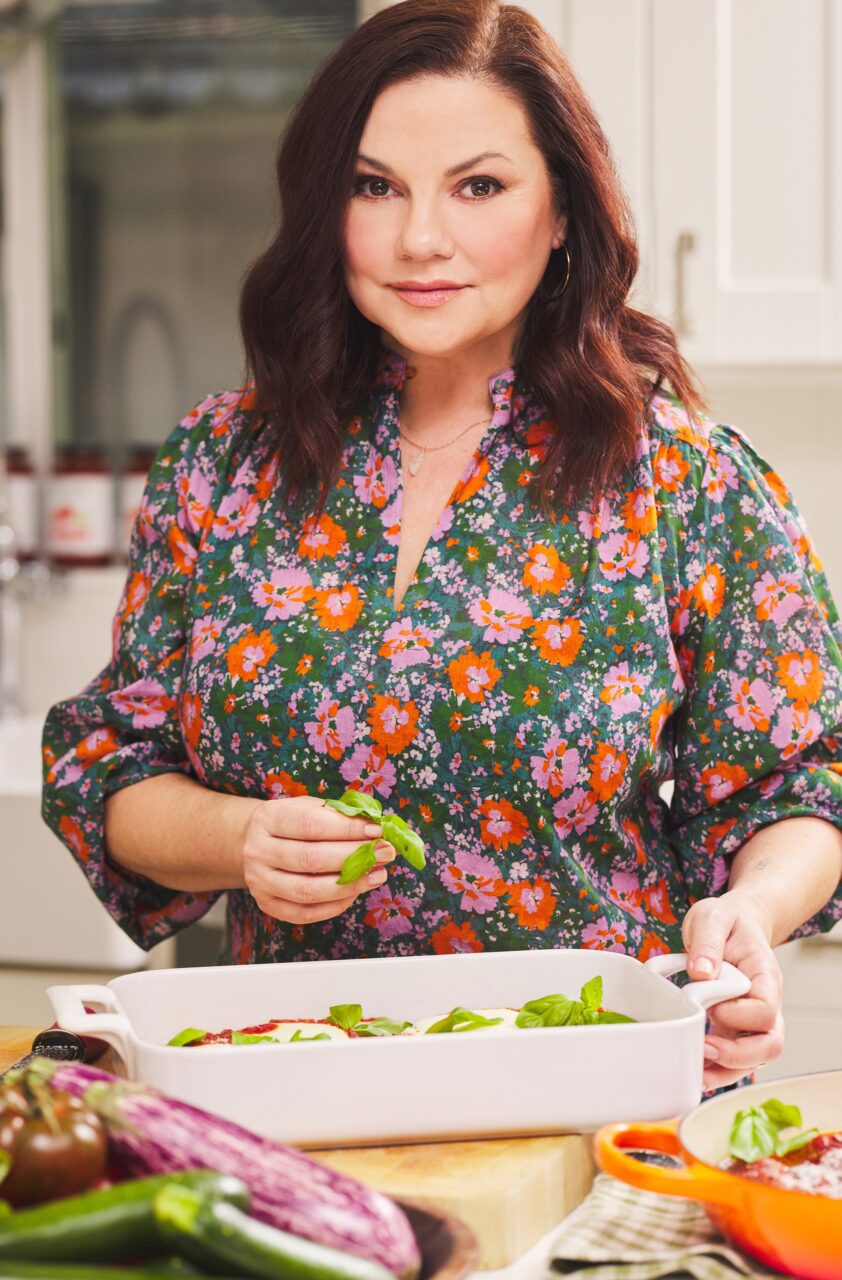
Vocino came to the “food disrupter” role later in her life; in fact, her primary métier couldn’t be further afield — for decades she has been a working actress and stand-up comedian. As the granddaughter of Italian immigrants, food has always been an important part of her life, but it wasn’t until she faced her own dietary challenges that she began to take a more active role in the food industry.
After being diagnosed with Celiac disease (gluten intolerance) in 2002, Vocino was dismayed to discover that “a lot of the pre-packaged gluten-free foods out there were kind of garbage. I spent like $17 on a bag of cookies in 2002 and they tasted like dog shit,” she said. So she started crafting her own gluten-free recipes, which eventually led to the publication of the best-selling cookbook Eat Happy in 2016, followed by Eat Happy, Too in 2019 and Eat Happy Italian in 2024. A fourth book, Happy Hour, is on the way.
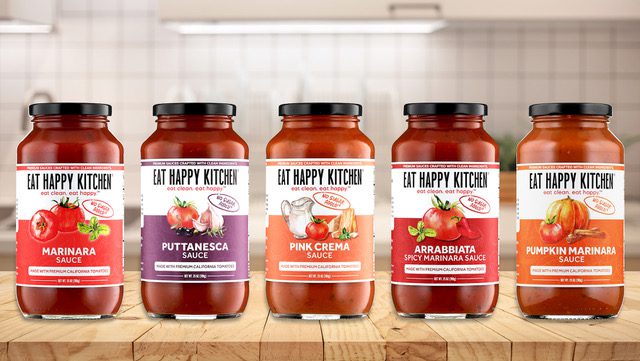
Those books prompted outreach from a food manufacturer who himself had lost 80 pounds using Vocino’s recipes. He wanted to package and sell her marinara sauces, which are now on shelves in more than 1,100 stores across the country, including 650 Kroger banners.
Somewhat unexpectedly, Vocino now finds herself in the role of a lifetime, bringing together her storytelling expertise with her passion for food, building a brand that’s at the center of a movement in American food culture.
Eat Happy Kitchen now boasts 12 SKUs, including the line of sugar-free pasta sauces, as well as spice blends and Cheese Bites, its first entry into the snack food category. Earlier this year, the brand launched a crowdfunding campaign that raised more than $675,000 from over 400 investors — made up primarily of Vocino’s cookbook fans, early customers and podcast listeners (Vocino also co-hosts the Fitness Confidential podcast), each of whom now owns a stake in Eat Happy Kitchen.
“It’s all kind of grown from the idea of being a brand that you see at multiple touch points across the store, and you know a) it’s going to taste amazing, and b) it’s going to be the cleanest that we’re able to make something,” said Vocino.
What it Means to be ‘Clean’
Vocino is the first to admit that “clean” doesn’t really mean anything when it comes to food. “There’s no federal code that defines what ‘clean’ means,” she said. “One person thinks plant-based is clean, another person thinks no seed oils is clean, and another person thinks no gluten is clean.
“This is my definition of clean — let’s take whatever the recipe is and try to distill it into the things that will make it taste the best, make it shelf-stable and affordable to make with the highest possible quality ingredients. Sometimes this means you can get organic ingredients, sometimes it means you can’t. For me, cleanliness means sourcing ingredients that are really good quality products.”
In Eat Happy Kitchen products those ingredients include San Marzano tomatoes sourced two hours from where Vocino lives and really fresh extra virgin olive oil. “Olive oil, since the dawn of history has been liquid gold, and there’s a reason for that — the good stuff is the good stuff,” Vocino said. “But in the past 10 to 12 years, people have been discovering that their olive oil has been cut, doctored, deodorized, sanitized, rancid oil is being revived with chemicals — again, we come to the trickery. The trickery of olive oil is something to be marveled at. The Italians say, ‘young oil, old wine,’ so for us it’s about sourcing olive oil that’s not cut, not rancid, it’s fresh.”
Entering a Saturated Category
The flavor of Eat Happy Kitchen’s products is crucial to Vocino not just because “I’m an Italian-American woman and the granddaughter of immigrants, so I just can’t be someone who sells a jarred sauce that’s bad,” but also because it’s perhaps the best way to break into a category with so many established brands.
“You walk down any grocery aisle and there’s a wall of pasta sauce to choose from,” Vocino said. “Some of it’s going to be [distinguished by] pricing, some of it’s going to be packaging — we redid our labels to be more colorful [once we started getting picked up by stores] because what looks great on a website doesn’t necessarily look great on a shelf in the wall of pasta sauce. But all things being equal I can’t compete with [larger brands] on many things; however, I can make it taste like I snuck in your kitchen and made it for you. That’s a big part of the marketing strategy.”
Vocino also has her experience as an actor to thank for the chutzpah it takes to enter a crowded field and believe you can offer something fresh: “You walk into an audition for a sitcom, and you didn’t realize that there were 50 other ladies who look exactly like you,” she said, and trying to break into the marinara category is not all that different. “My job is to go, ‘Hmm, how can I do this ‘Pepsi Challenge’ and get people to try mine and convert?” she said. “How do you break in? You just never shut up about it, that’s my strategy.”
In that regard, Vocino also is aided by her other career endeavors, which have given her established publishing, podcasting, television and social media platforms from which to share the word: ““The irony being that I’m a woman who sells pasta sauce to a core audience of people who don’t even eat pasta,” she said. “I appreciate that irony now that we are expanding to include the pasta-eaters of the world, which are way more multitudinous than my core low-carb army, my die-hards. “This is very much a grassroots business, built on the community level. My job is to educate people. I’d be a terrible businesswoman if I didn’t show people how to use my products.”
As an example, Vocino points to Eat Happy Kitchen’s newest sauce: “I was like, we’re gonna kill it with this puttanesca sauce because nobody’s doing it. That’s a differentiator, fabulous,” she said. “But if nobody’s doing it, there might be a reason, right? Which is, Americans aren’t familiar with that flavor profile, so it’s actually even harder to break in because we’ve got to get that story out there of why you want to try this.”
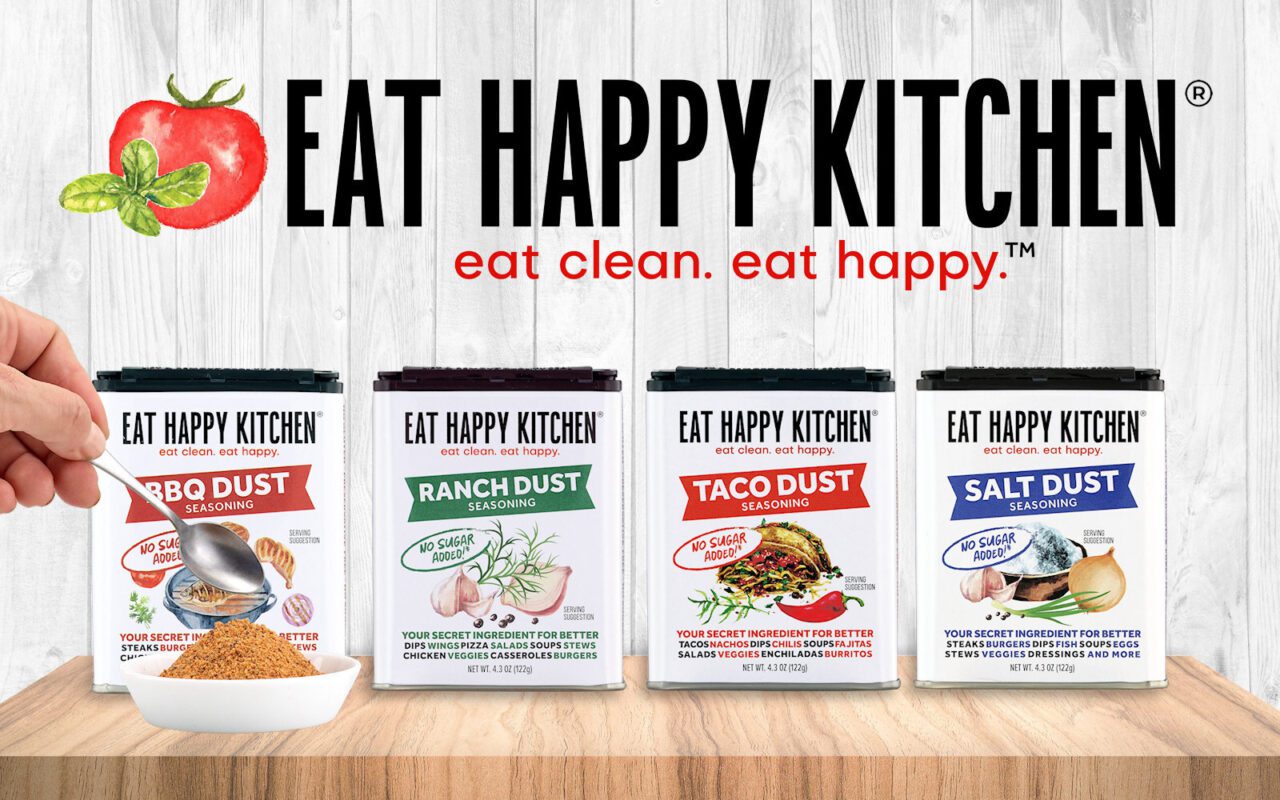
Which is exactly what she’s doing, of course, while also being sure to maintain retail fundamentals like eye-catching packaging. In fact, Eat Happy Kitchen just relaunched its line of spice blends in vintage-style tins so they would stand out more on shelves.
‘You Have to Talk to People to Grow a Business’
And Vocino isn’t looking to slow down from here. Next up for the brand will be dressings, because there’s a “dearth of clean dressings out there in the marketplace,” and at some point she’d love to tackle mayonnaise if she can find a way to do it the way she wants.
No matter what, “my job is to reach as many people as possible who are looking for clean, delicious food,” Vocino said, and she takes this task literally, actually calling at least five customers every day when she’s not traveling.
“Sometimes they’re cookbook fans, sometimes they’re podcast listeners, sometimes they’re Eat Happy Kitchen customers. It’s very fun; it’s an exercise in improv, that’s for sure,” she said. “I don’t necessarily have an agenda.
“I happened to call a lady from Alaska two weeks ago, and she told me she can’t get our sauces because they’re too expensive to ship, which told me two things: one, she didn’t know that we are now in Fred Meyer, which is in Alaska and it turns out was 0.8 miles from her house; two, she didn’t know that we have a new structure for our shipping so that she can actually order stuff,” Vocino added. “So then I thought, well, let me call every customer who’s ever ordered from the state of Alaska and talk to them all. It’s not comfortable all the time, but you have to talk to people to grow a business.”