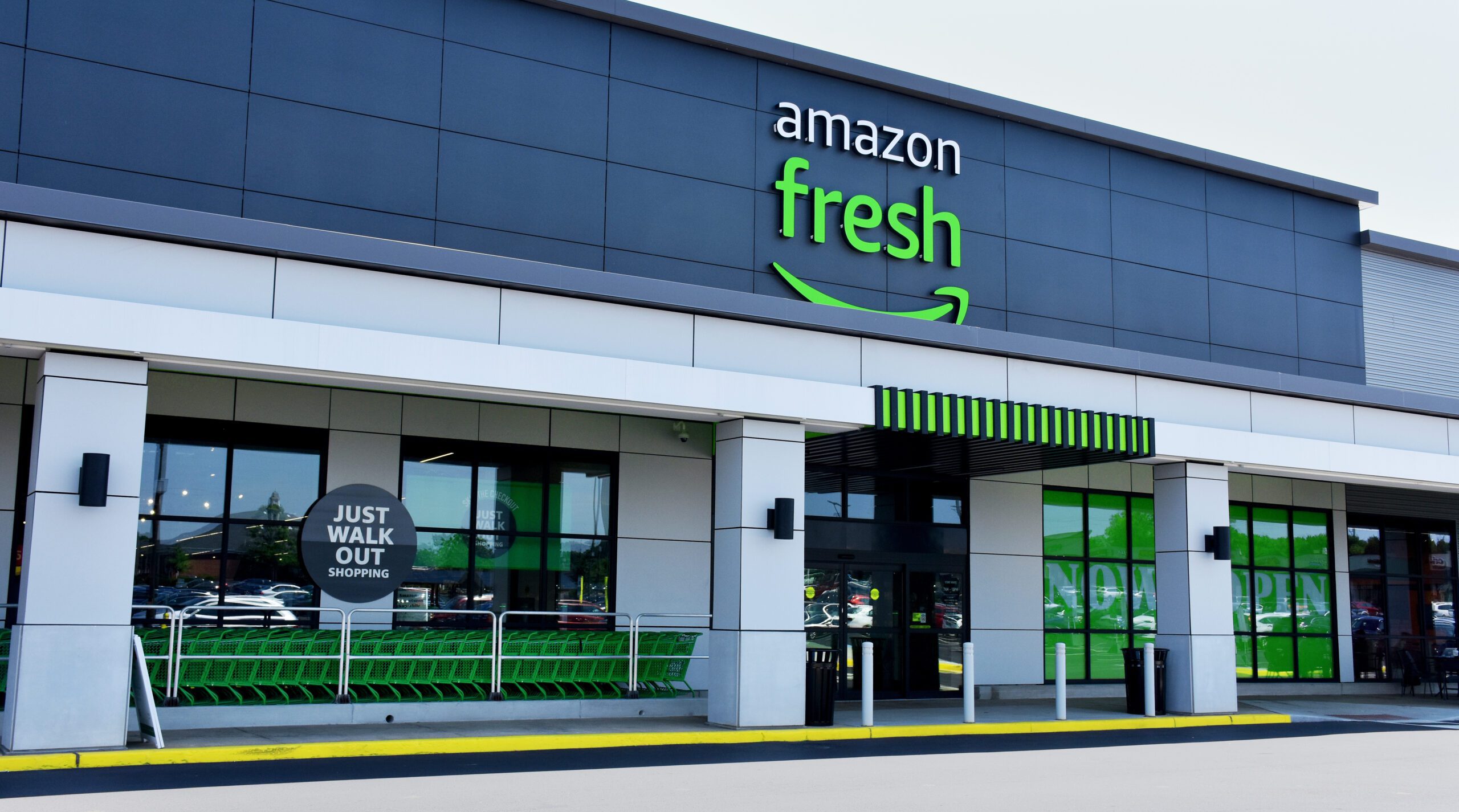
Amazon will close all remaining Amazon Go and Amazon Fresh stores to focus on its growing online grocery offering and the Whole Foods Market banner. Some of the locations set to be closed will be converted to Whole Foods, and the company also said it plans to open more than 100 new Whole Foods stores over the next few years.
Go and Fresh join a growing list of physical retail concepts started and eventually abandoned by the ecommerce giant, which also include its fashion-focused Style stores, as well as the 4-Star, Books and Pop Up store concepts.
Trouble had been evident at both the Go and Fresh banners for several years — several rounds of closures saw the Go store count whittled down to 16 as of mid-2025, and new Fresh builds were put on hold in 2023 though they did eventually start back up again. In the end Amazon admitted in a statement that “while we’ve seen encouraging signals in our Amazon-branded physical grocery stores, we haven’t yet created a truly distinctive customer experience with the right economic model needed for large-scale expansion.”
Online Grocery Momentum Powers Amazon’s Latest Pivot
But if Amazon is good at anything it’s pivoting, and this latest pivot in the realm of grocery comes amid a boom in the retailer’s online grocery business. With more than $150 billion in gross sales and 150 million+ customers shopping groceries on Amazon.com each year, Amazon is now one of the top three grocers in the U.S., although arch-rival Walmart still holds the crown in the category.
Competition aside, household essentials now represent one out of every three units sold on Amazon.com following years of investment in the category, and that, more than any brick-and-mortar concept is propelling Amazon’s momentum in grocery today.
So it makes sense then that Amazon’s old ecommerce stomping ground is where the company has decided to focus its efforts, while letting Whole Foods lead its brick-and-mortar presence. Since acquiring Whole Foods in 2017, Amazon reported that the chain has seen more than 40% sales growth and expanded to more than 550 locations.
Amazon: Go, Fresh Stores Provided ‘Valuable Insights’
Even though Go and Fresh are going away, Amazon said both concepts served as valuable testing grounds to learn “what matters to customers. For example, our Amazon Go locations served as innovation hubs where we developed Just Walk Out technology — now a scalable checkout-free solution operating in over 360 third-party locations across five countries.”
Amazon also promised that this isn’t the end of its attempts to create new physical retail experiences, pointing to the Amazon Grocery store it’s currently testing in Chicago, and its store-within-a-store experience in a Pennsylvania Whole Foods. Not to mention the 229,000-square-foot superstore Amazon is currently working on just outside of Chicago.
“We will also continue inventing on behalf of customers to develop a mass physical store format that brings customers distinctive selection, value and convenience,” read the statement. “Over the coming years, we plan to introduce new store concepts that we think customers will be excited about. For example, we are exploring a new supercenter physical retail concept designed for customers to conveniently shop Amazon’s broad selection and low prices across fresh groceries, household essentials, and general merchandise. Through it all, our goal remains: to make grocery shopping easier, faster and more affordable for customers.”
Fresh, Go Experiments Didn’t Stop Innovation in Amazon’s Core Grocery Channels
Even as Fresh and Go stumbled, Amazon continued to make a range of investments in both its online grocery offering and Whole Foods, including:
- The debut of a new smaller format Whole Foods concept aimed at convenience shopping and urban markets;
- The addition of grocery delivery as an add-on service for Prime membership;
- A rebranding of its private label grocery brands Amazon Fresh and Happy Belly under the simplified Amazon Grocery banner;
- The expansion of same-day delivery of fresh groceries from Amazon.com to more 2,300 cities and towns across the U.S. as of late last year;
- The addition of grocery delivery in partnership with local retailers like Weis Markets, Winn-Dixie and Metropolitan Market; and
- The debut of ultra-fast delivery for thousands of essential items in a direct challenge to apps like DoorDash and Uber Eats.
“The convenience of buying fresh groceries alongside a broad array of other merchandise is resonating with shoppers,” said the statement. “Perishable grocery sales through the same-day service have grown 40X since January 2025, and fresh groceries now make up nine of the top ten most-ordered items in areas where perishable groceries are available for same-day delivery.”