

Shopify is the silent partner behind 12% of all ecommerce sales in the U.S., and every 20 seconds a merchant makes their first sale on a Shopify-powered site. This broad reach means that Shopify is now playing a central role in the AI evolution of millions of merchants, giving small businesses access to new AI technologies that they don’t have the human or financial resources to develop themselves.
This is evident in the latest iteration of Shopify Editions, the company’s twice-yearly product release event. For Winter Editions, Shopify has more than 150 platform updates, but the central theme is AI: “This is a modern day renaissance, or RenAIssance, and with this Edition, we’re really trying to help businesses find their place in the new AI landscape,” explained Aaron Glazer, Director of Product at Shopify in an interview with Retail TouchPoints.
“Where Renaissance-era masters wielded paintbrushes and chisels, today’s builders and creators have access to tools those artists could have never imagined,” reads a Shopify blog posts about the updates. “This represents a transformative moment for commerce. By making powerful tech more accessible and intuitive, we’re empowering a new generation of entrepreneurs.”
Helping Merchants Make Bold Changes
Two new releases this Winter Edition aim to do just that — SimGym, a simulation tool that lets merchants test out new ideas for their sites on AI shoppers before rolling them out to real customers; and Rollouts, which lets merchants A/B test and pre-schedule website updates.
“We’re bring the learnings from our massive scale into products that are digestible and easy to use, that provide value to merchants to really help them understand their business and make great decisions,” said Glazer.
Testing Updates on AI Before Real Customers
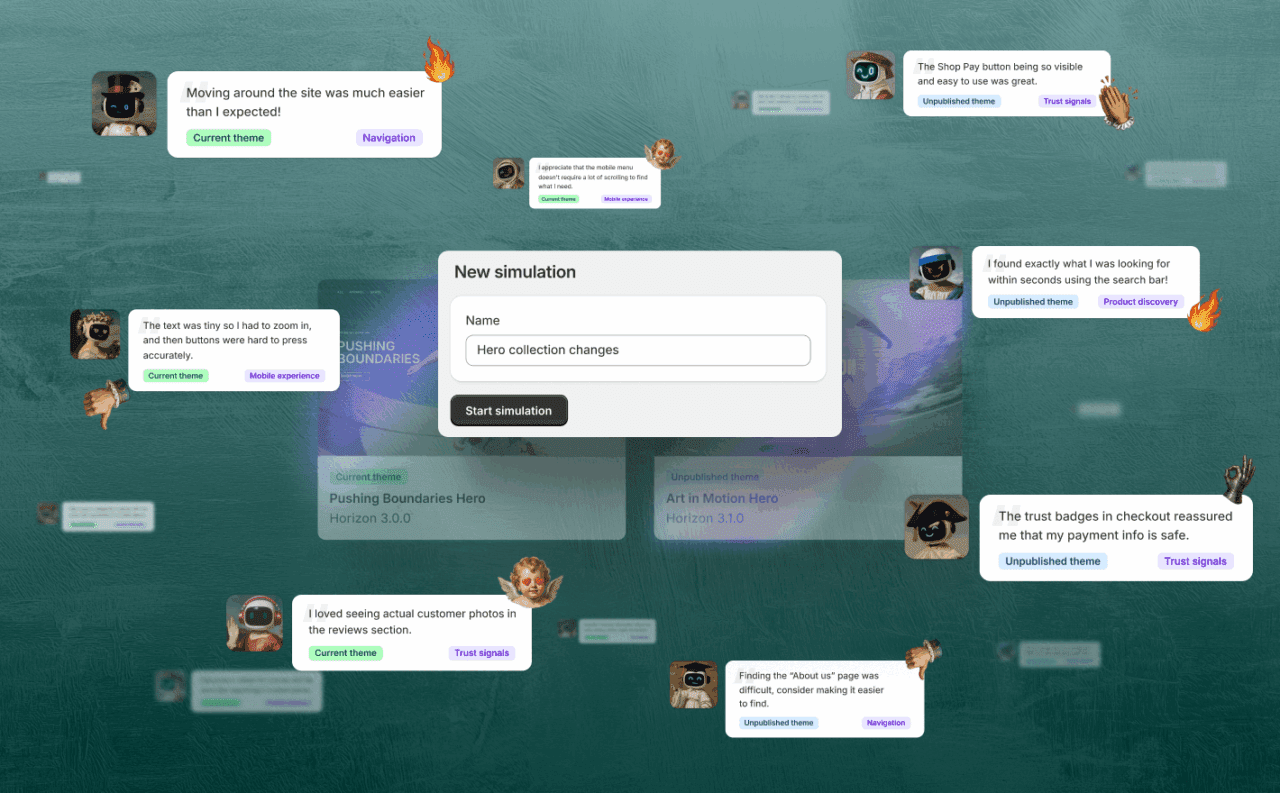
SimGym is “an incredibly unique application of AI, maybe first of its kind, designed to help merchants explore their ideas through simulations,” explained Glazer. The tool — which is now available in AI Research Preview, the equivalent of a beta test — uses AI agents with human-like profiles to simulate the behavior of real shoppers, so merchants can test out new ideas and features before real customers see them.
Merchants can now use SimGym to test and compare “theme” changes (essentially the feel and functionality of their Shopify website). Shopify built the AI shopper personas based on behavior data from the billions of purchases that happen across its platform every year. Personas are then “tuned” based on the behavior of the customers of a specific merchant and the changes that are being tested.
“Imagine a world where a website or an experience only gets better,” said Glazer. Read: No more “bear with us” messaging while work is underway, or “rage click” tracking to find problems and fix them after the fact.
“We’ve done all that work ahead of time, so all a merchant has to do is come in and simulate the differences between new and old themes to understand how to evolve their storefront and be really bold about it,” he added.
A/B Testing with Real Humans to Confirm
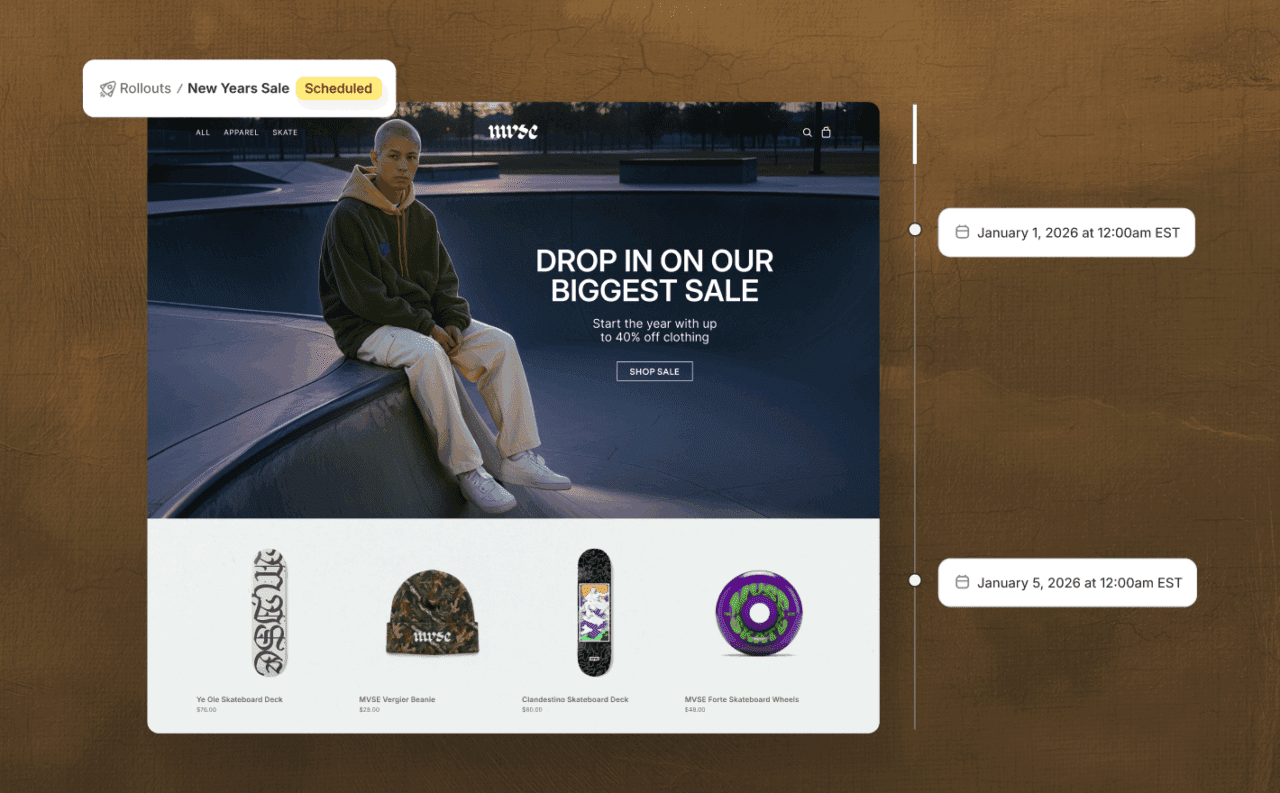
Of course, eventually updates have to be released into the wild. To help merchants gauge the success of changes when they do arrive in front of real customers, Shopify is launching Rollouts, which brings native A/B testing capabilities directly into the platform.
With Rollouts merchants also can schedule, test and “ship” (take live) storefront changes directly in the Shopify admin without any external tools. So, for example, if there’s a planned sale coming up, merchants can prepare a new experience around the sale and schedule those changes to roll out at a specific moment, and run A/B tests to see how the changes perform against the old experience.
“They can try new ideas and be super bold in SimGym and run simulations to try to understand what might be the impact of the changes, and then run actual human A/B tests, all right within their Shopify portal,” said Glazer.
“We’re constantly looking for ways to give small businesses the power and confidence of an established brand,” he added. “But if you’re a new entrepreneur just starting out, or even a small merchant, you don’t have the traffic, the resources, the staff. With AI we can augment a lot of those things, and we can make every entrepreneur feel brave when it comes to trying new ideas.”