
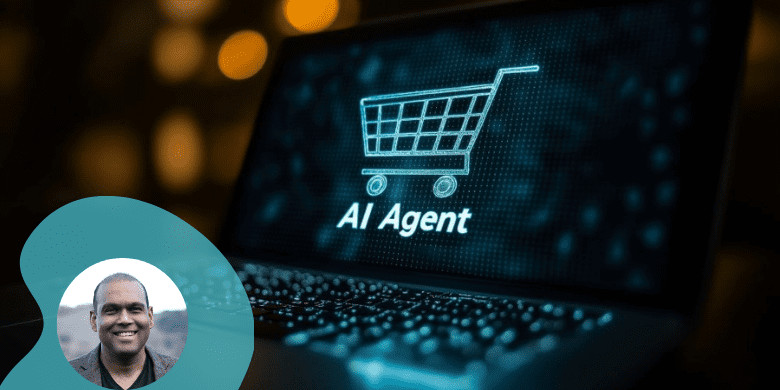
ChatGPT and Perplexity are building checkout systems. Soon enough, consumers will complete purchases without ever leaving their AI conversation. This fundamental shift in how people shop represents both an existential threat and an unprecedented opportunity for retailers. The question isn’t whether to adapt, but how quickly you can move.
The Speed of this Disruption will Shock You
Amazon needed 30 years to capture its current market share, but AI shopping platforms could achieve similar penetration in three. The infrastructure already exists: five billion people online, universal broadband, stored payment methods and, most importantly, consumer trust in digital transactions. ChatGPT reached 100 million users faster than any consumer application in history. When they flip the switch on commerce, retailers must assume that adoption will be instantaneous.
Consider what happens when a shopper tells their AI assistant, “I need new running shoes, size 10, under $150, with good arch support.” The AI simultaneously queries dozens of retailers, compares thousands of reviews, finds active promotions and presents a recommendation. The entire process takes seconds. The shopper never visits a website, never sees a store brand, never builds any merchant loyalty. They just get their shoes.
The Invisibility Problem
When consumers shop through AI intermediaries, retailers risk becoming invisible. The AI knows you carry Nike shoes, but the customer only remembers they bought Nikes, not that they bought them from you. Your decades of brand-building, your customer relationships, your carefully crafted shopping experience — all of it potentially erased by an algorithm that treats you as nothing more than a fulfillment center.

We’ve seen this movie before. Borders let Amazon handle their online sales, focusing on their “core business” of physical stores. By 2011, Borders was kaput. Toys ‘R’ Us made a similar deal, thinking Amazon would help them compete online. They filed for bankruptcy in 2017. There is a pattern where retailer partners with tech platform, platform learns the business, platform eliminates the retailer.
The Three Paths Forward
Retailers facing this disruption have three options. Choose wrong, and you could join Borders in the business history books. Choose right, and you might emerge stronger than ever.
Option one: Expose it all
Open your entire catalog to AI platforms. Provide real-time inventory, dynamic pricing, instant checkout capabilities, the whole nine yards. Accept that you’ll become a commodity supplier, competing solely on price and delivery speed. This is surrender disguised as strategy, but for some retailers (and particularly those already struggling with differentiation), it might be the only viable path.
Option two: Build your own AI experience
Develop proprietary AI shopping assistants that keep customers within your ecosystem. Create experiences so dang compelling that consumers choose to shop with you directly rather than through third-party AI. This requires massive investment and technical expertise, but it preserves your direct customer relationships. Think of how Apple maintains its premium position despite Amazon’s dominance. They built an experience that transcends mere transaction.
Option three: The hybrid approach
This is where I believe the real opportunity lies. Smart retailers will adopt what is termed a “Carousel” strategy. Yes, you’ll participate in AI platform commerce because you must. But simultaneously, you’ll use those same AI capabilities to revolutionize your owned channels.
Re-engineer your product pages for AI discovery, structure your data for optimal AI interpretation and create unique bundling and configuration options that AI assistants can offer. Adopt a universal “Buy for Me” button that works across all AI agents. The goal here isn’t to fight the AI revolution but to surf it while maintaining your identity and customer relationships.
The LLM Advantage
What many retailers don’t truly understand yet is that LLMs fundamentally change how shopping works. Traditional ecommerce relies on keywords and filters. LLMs understand context, nuance and preference. A customer saying “I need something nice for my sister’s outdoor wedding in Phoenix next month” triggers an entirely different discovery process than any traditional search could provide.
Retailers that structure their catalogs, product descriptions and metadata precisely for LLM interpretation will win disproportionate share. Those clinging to SEO-optimized product pages designed for human eyes will watch their traffic evaporate.
Moving at the Speed of Disruption
Jon Nordmark, my founding partner at Iterate.ai, lived through the first ecommerce revolution as CEO of eBags. He often reminds me that the difference between winners and losers wasn’t who had the best strategy on paper but who moved fastest to implement it. The same will be true here, except the timeline is compressed from decades to years.
Some retailers are already in motion. Walmart experiments with generative AI shopping assistants, Instacart embeds AI throughout its platform, and Shopify provides AI tools to its millions of merchants. But most retailers remain frozen, hoping this is just another tech fad that will pass. It won’t. Within, say, 18 months, a significant percentage of online purchases will likely originate from AI conversations. Within three years, it could be the majority. Retailers that haven’t yet adapted by then may not get a second chance.
The Human Element Remains
Not everything will be automated. Shoppers will still browse for inspiration, still treasure the social aspects of shopping, still value human expertise for complex purchases. But routine replenishment, research-heavy buying and convenience shopping will increasingly flow through AI channels.
Smart retailers will use AI to handle the transactional so they can focus on the transformational. Let the machines handle reordering paper towels while your human staff helps customers plan their dream kitchens. Use AI to manage inventory and pricing while you invest in creating shopping experiences worth leaving the house for.
The Clock is Ticking
Every day you delay right now is a day your competitors gain advantage. The retailers that thrive in the AI shopping era will be those that start adapting today, not those that perfect their strategy over the next two years. Perfect is the enemy of good when disruption moves at digital speed.
Your next board meeting shouldn’t still be debating whether to develop an AI strategy. It should review the three strategic options and pick one. Because in the time it takes to schedule another planning session, your customers will have already started shopping with AI. And once they start, they might not look back.
Brian Sathianathan is the Chief Digital Officer and Co-founder at Iterate.ai, which provides an enterprise AI ecosystem for accelerating application development. He began his career at Apple, where he led iPhone and Intel Mac efforts in the New Product Introductions group, contributing to the security and activation platform for the first iPhone and earning multiple patents.