
This story first appeared in our sister publication Shop Eat Surf Outdoor (SESO)
It’s easy to see photos of the elaborate and over-the-top employee recognition celebration that 700-plus door retailer Zumiez puts on annually and miss one of the key elements underlying the event.
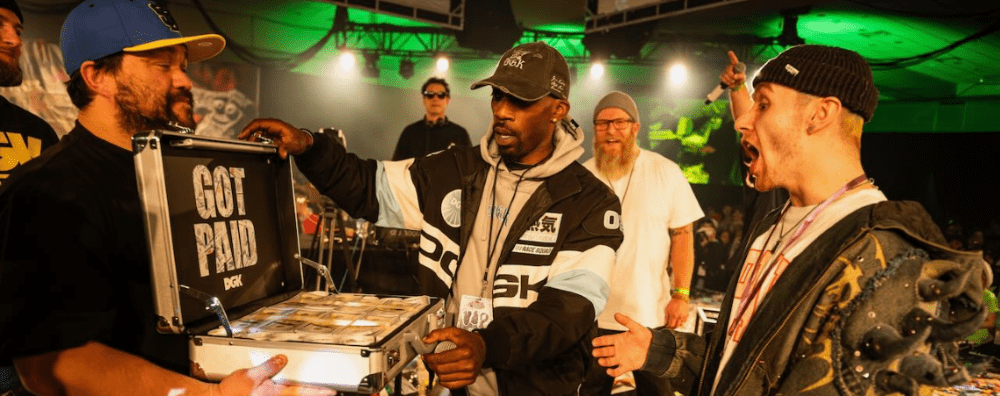
Known as 100k, the two-day party each January honors employees who have sold over $100,000 in merchandise in a year. The 100k celebration has grown over the decades, and now more than 1,000 of the company’s top-selling employees, a portion of whom are invited via a lottery system once they have met that $100,000 threshold, are joined by the 250 action sports and streetwear brands that Zumiez sells in its stores.
The brands provide the prizes, which this year included a car, multiple international trips, tickets to the NBA All-Star Game, tickets and vacations to music festivals, and much more. The brands also bring their founders and star skateboarders and snowboarders to mingle over two days in Keystone, Colo., with Zumiez‘s frontline store employees.

These days, the top-performing employees are selling a heck of a lot more than $100,000 each year. In fact, the No. 1 companywide seller for 2025 was Cooper Walker from Lynwood, Wash., who moved $1,055,383.09 worth of goods on the sales floor.
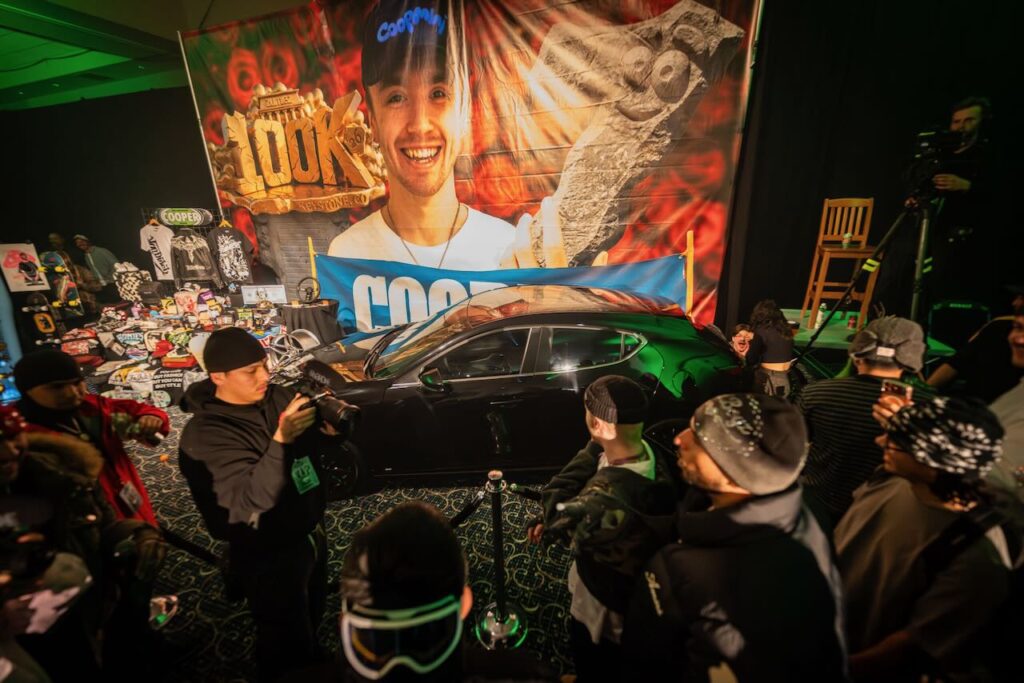
His journey to No. 1 seller perfectly illustrates that in addition to employee recognition, there is another key element of the Zumiez culture that underpins this event: competition.
Walker attended the 100k event for the first time last year, and after seeing just how many prizes the No. 1 seller received, he decided he was going to earn the top spot in 2025.
“Seeing this event last year lit a fire,” Walker said during the 2025 celebration. “I wanted to come back and earn my spot. This is about the stores, the brands and everyone pushing each other to be better.”
“100k reflects how seriously we take sales culture at Zumiez,” CEO Rick Brooks added. “Recognizing performance and investing in our people creates momentum. Bringing the industry together gives brand partners a chance to recognize the teams selling their products and build real connection, which benefits everyone.”
The 100k recognition program is just one of three key company events during the year. The others include two intensive offsite training sessions for managers.
(Editor’s note: Check out SESO‘s related story about the Zumiez off site training and infamous “Teach Off” competition, where managers handle mock scenarios that happen every day on sales floors — customer complaints, lines for dressing rooms, boxes of new product arriving, sales goals to hit, motivating and managing employees. At the training, Teach Off competitors handle those mock scenarios on stage in front of 800 people, including their fellow store managers, Zumiez store leadership and top executives from headquarters.)
Recognition, Training, Competition, Independent Thinking All Valued
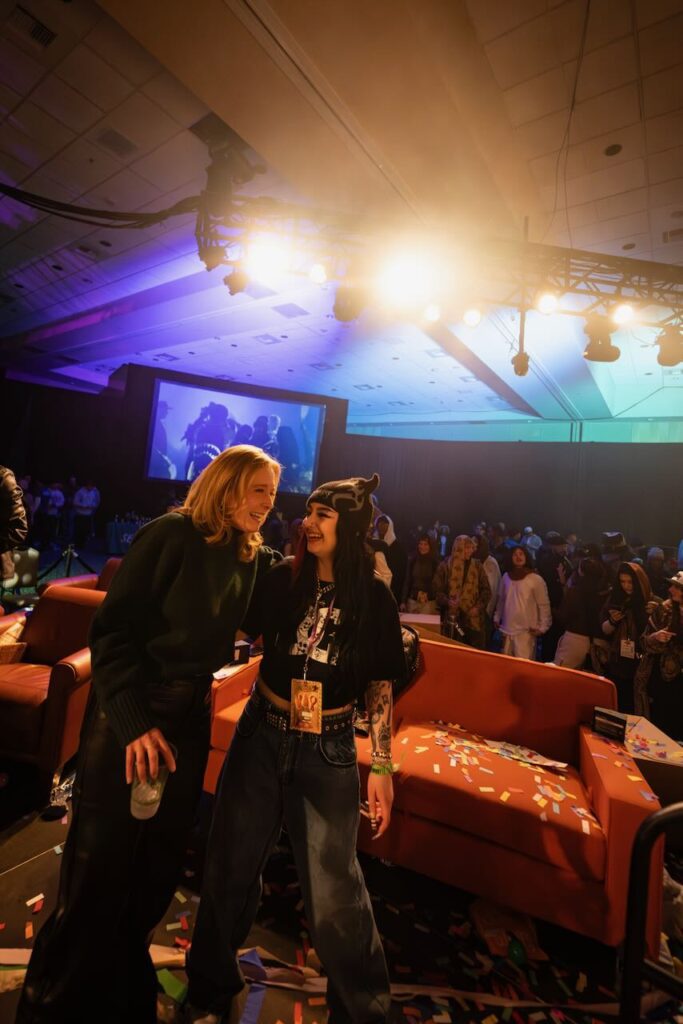
Lots of companies talk about their culture. But at publicly-traded Zumiez, they live and breathe it and reinforce it every day, in every store, which we have seen firsthand while reporting on Zumiez for more than a decade. It’s a culture that values independent thinking, transparency, competition, recognition and accountability.
That culture is really a framework for how to treat people, and for growing talent, that allows certain kinds of people to thrive. People who like to make decisions instead of being told what to do. People who can handle being accountable for their decisions. And people who like competition instead of shying away from it.
“Certain kinds of people want to own decisions, and that’s who we like to hire,” Brooks said. “At most other retailers, many of our store managers wouldn’t work out because they’d be breaking the rules all the time. They’d be questioning and challenging — they’d probably get fired. But at Zumiez, we say, ‘Go for it.’ Now, we are going to measure results. If decisions they make don’t work out, it’s a learning opportunity and everyone gets better.”
Many people we have talked to over the years at Zumiez, whether a company executive, district manager, regional manager or divisional manager, started on the sales floor — just like the frontline employees honored at the 100k event — and have gone through the extensive Zumiez training and teaching process.
“It’s a lot easier to tell someone what to do rather than teach them,” Brooks said. “Teaching is expensive and takes a lot of time.”
But that is what has allowed Zumiez to thrive over the years, he said.
Tattoos, Dyed Hair and Tony Robbins-ish Vibes
Zumiez managers — often adorned with ample tattoos, piercings and colorfully dyed hair — on the surface may look like stereotypical disaffected youth. But spend time talking to them and you find they are articulate, direct and sincere. They are also driven businesspeople who are true believers in the Zumiez culture.
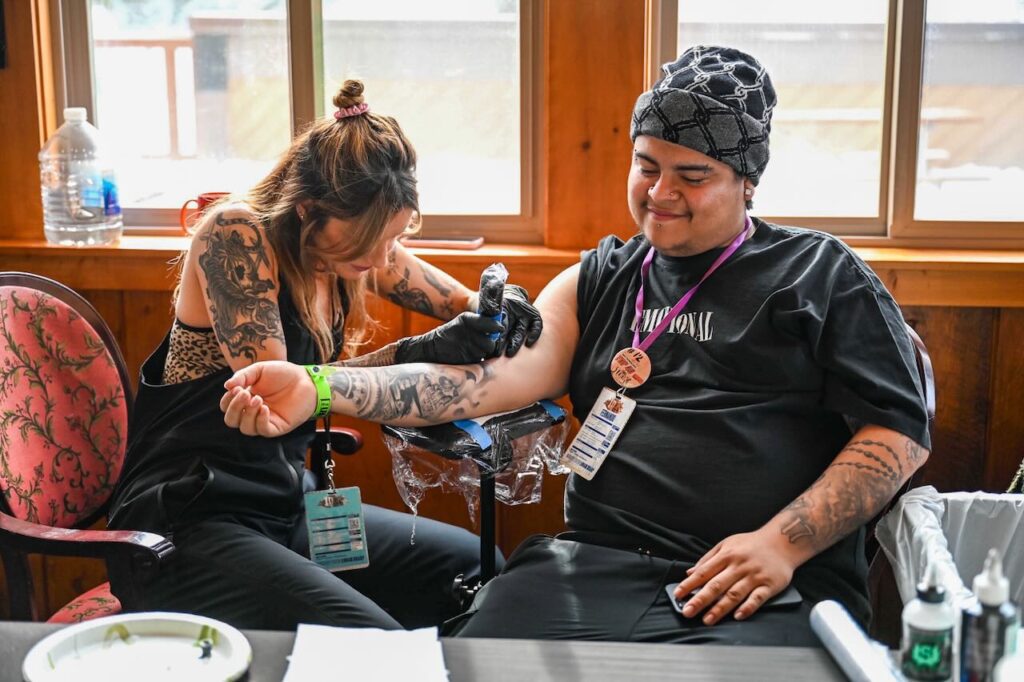
And after years of Zumiez training, which often has them dig deep inside themselves and analyze their personalities, they also give off a self-actualized/Tony Robbins-ish vibe, which is counter to how they look and totally refreshing in today’s cynical world.
SESO has interviewed many of these top sellers and managers at the 100k event over the years, and many tell a similar story — that the Zumiez culture tapped into a competitiveness they might not even have known they had before. In many cases, the sales associates and managers who thrive at Zumiez are not college educated. Some have not fit in at other jobs.
“For those that really get it, we provide the framework that unleashes their power and they discover things about themselves they didn’t know,” Brooks said.
Founder Tom Campion: Culture Creator and Keeper
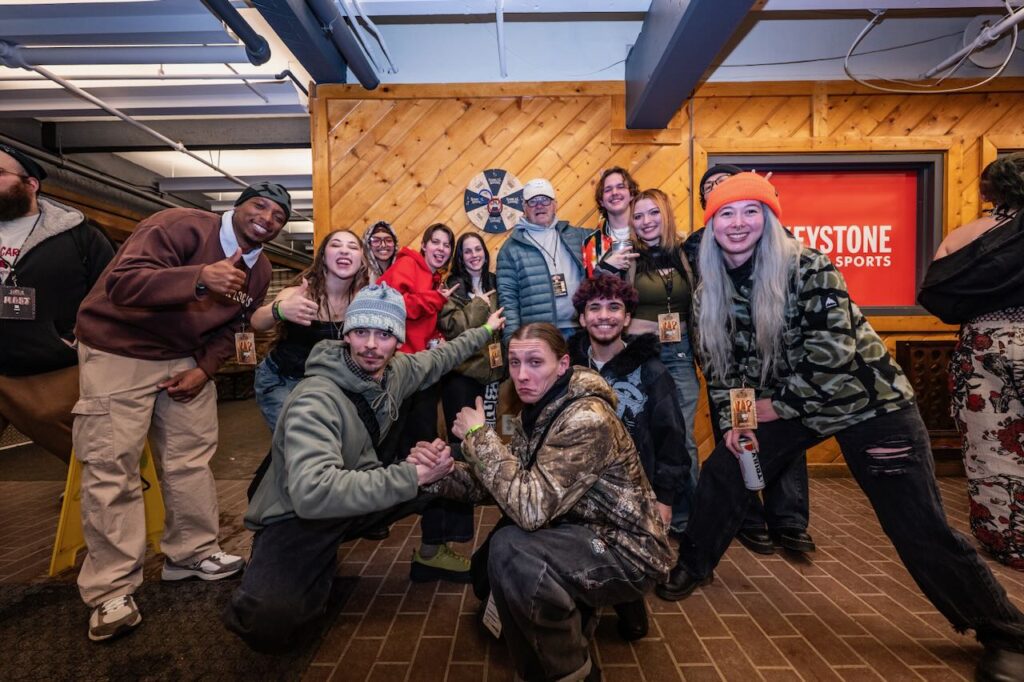
This culture was created by Zumiez Founder and Chairman Tom Campion, who opened his first store in Seattle in 1978. Campion, who is known to say he has a problem with authority, developed the Zumiez philosophy in part because he saw what other retailers were doing wrong during his early years working at JCPenney.
SESO heard him speak about the culture and how he developed it at a previous 100k event: “One of the things that shaped me, for nine years before I started Zumiez, I was at JCPenney. I was a 21-year-old kid starting in management at JCPenney’s,” Campion said. “And I loved retail. I loved the sale and the hustle and the transaction. But I couldn’t frickin’ stand the upper management. It wasn’t about what you did, it was about who you knew. And I was shaping this stuff in myself about how I’d do it differently if I was on my own.”
Brands Appreciate Zumiez Sales Floor Employees
For the brands sold at Zumiez, there’s a lot involved in supporting the 100k event, from coming up with unique gifts for the top sellers, bringing swag to hand out to attendees and making the trek to Keystone for the two-day extravaganza. Interacting with the employees who are actually selling your brand at such a big retail account makes it all worth it though, brand executives and athletes said.

“Zumiez 100k brings out some of the most enthusiastic and appreciative people I have ever met in our industry,” said professional skateboarder Nora Vasconcellos of Adidas Skateboarding, which gave the No. 1 seller a trip to London to see an Arsenal soccer game. “It’s an awesome opportunity to celebrate the people who push our products.”
Jim Kushner, EVP of the True Religion brand, which is currently having a strong run at Zumiez, agreed: “The passion and energy I witnessed was unlike anything I’ve experienced in my three decades in business,” he said.
Zumiez’s Recent Results
All the employee recognition, training and nurturing of culture appears to be working for Zumiez. In its third quarter, which ended Nov. 1, 2025, Zumiez’s net sales rose 7.5% to $239.1 million, driven by an 8.6% revenue increase in North America, while international sales were more challenged. The company’s $0.55 earnings per share blew past Zumiez’s Q3 forecast of earnings per share of $0.19 to $0.29.
Zumiez reported in January 2026 that the holiday season delivered strong results in North America for the company, offset by challenges in Europe.
“100k is about recognizing performance and investing in people,” Brooks added. “Bringing brand partners together with our sales teams helps strengthen connection and supports the foundation of a sales culture that works for everyone involved.”