

The Just Walk Out (JWO) cashierless retailing solution from Amazon has faced hurdles since it was first introduced nearly a decade ago, but recently it has been racking up some impressive wins. It now appears that a key turning point in this journey was Amazon’s March 2020 decision to offer the technology to other retailers, in addition to using it in its own retail locations such as Amazon Fresh and Amazon Go.

Now, with more than 300 third-party JWO deployments across the U.S., UK, Australia, Canada and France — in venues as varied as sports stadiums, hospitals, warehouse fulfillment centers and college campus stores — the technology is poised to move from the “pilot phase to a potential scaled growth phase,” according to Amazon Web Services’ Anthony Leggett, who leads business development for JWO.
In an interview with Retail TouchPoints, Leggett shared which factors are accelerating Just Walk Out into a run, including the convenience of 24/7 access for consumers, physical hardware improvements that have helped cut installation and deployment costs, and simplified integrations with retailers’ POS and payment systems, and even their loyalty programs.
Retail TouchPoints (RTP): Where are you seeing the strongest growth potential for the JWO technology?
Anthony Leggett: The momentum is definitely picking up; 150 of our more than 300 deployments were added [just] this year, and this growth allows us to set up for a much bigger expansion in 2026 and beyond.
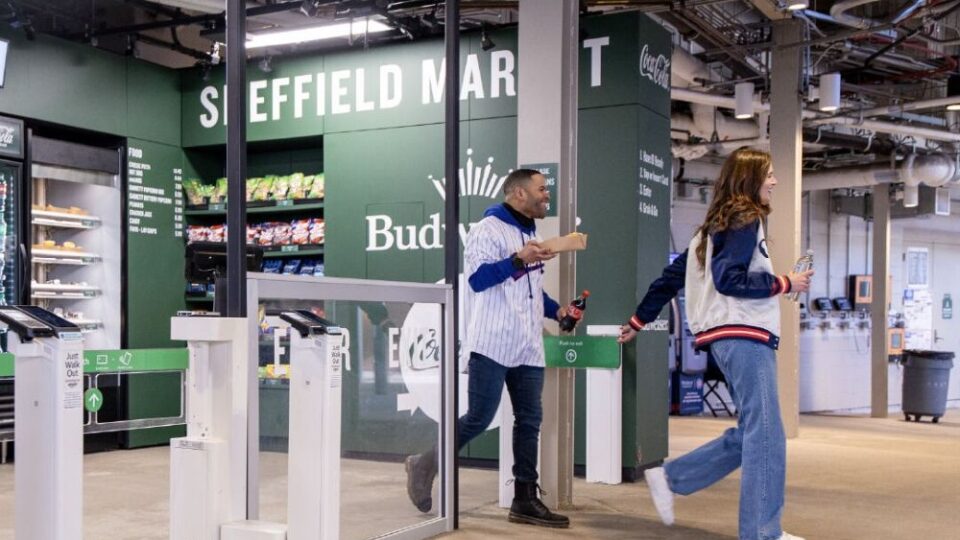
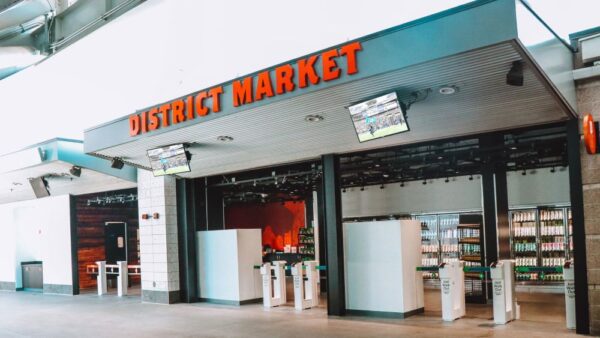
In what are established verticals for us, like sports stadiums, we’re pivoting from these customers going from deploying JWO in one or two sites to saying, “Yes, this is proven technology.” There are 15 deployments at Lumen Field [in Seattle], and the Washington Commanders are launching with JWO technology from the start.
Then there are other verticals such as education, hospitals, casinos and office buildings, with some areas really benefiting from JWO’s support for 24/7 unattended operations with little risk of theft. These include fulfillment and manufacturing facilities that operate on multiple shifts, including dozens of cashierless stores in facilities operated by Amazon. With JWO, you can provide food and beverage opportunities to associates quickly, which adds to employee satisfaction.
Hospitality applications also have grown, like the Omni Hotel in Boston, which doubled sales [at its lobby convenience store] during unattended hours, increasing profit 13X. Not only is this adding incremental value [for the hotel]; it’s also providing a better experience [during attended hours], because the hotel guest doesn’t have to wait to get the front desk clerk’s attention when they want to buy something.
RTP: What are some of the key reasons for this acceleration of JWO deployments?
Leggett: We came into this year focused on lowering total cost of ownership (TCO), and we have multiple examples of where we’re driving down general contracting costs. One way is through technological advances that improve flexibility, including optimizing [these systems] with AI-powered algorithms.
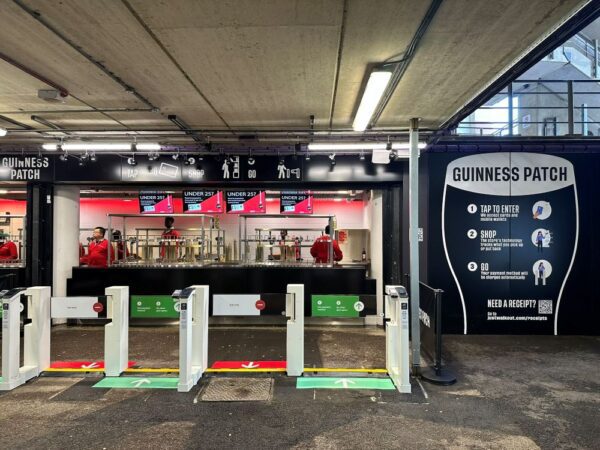
We’ve also simplified physical installation requirements. For example, with the gates [at the store entrance], we can now mount them on plates rather than having to drill into cement. This not only allows the customer to bring down the TCO; they also can be more nimble and even reuse some existing fixtures. We asked ourselves — what requirements do we change so that the deployment costs, including for a general contractor, electrician, designer, etc., go down? This also has cut the installation times from months of work to weeks of work.
RTP: What about backend and software improvements? What role are they playing?
Leggett: In addition to focusing on the technology’s hardware flexibility, we also wanted to seamlessly fit in with our customers’ retail environments by plugging right into their retail systems. For example, we can now create a virtual cart and hand it over to the [retailer’s] POS for payments. Our [retailer] customers will see JWO as a seamless, integrated solution within their retail system, no longer as something separate.
This allows for even more customization, including linking to the loyalty program providers that are active in each given space. In sports it’s manifested through companies like MyVenue, Shift4, Cbord and Transact, and we’re carrying that over, space by space.
We also regularly listen to our customers. For example, you typically couldn’t use JWO technology in a retail environment with clothing on racks, so we solved this with an RFID lane gate. When customers walk through the gate with an RFID-tagged item, it recognizes the item with our proprietary RFID technology. That’s giving these retailers a more accurate basket price, improving throughput and creating shrink savings.
So while we’ve been seeing success in sports stadiums, concert venues and PGA tour events, we want to create an even more nimble solution. It won’t ever be “one size fits all,” and we’re constantly asking ourselves, “What else do we need to solve?”
RTP: Which verticals will JWO be focusing on going forward?
Leggett: While I see sports accelerating — and we already have more than 70 stores in sports and entertainment venues — many JWO stores are sitting outside the traditional sports world, in offices, warehouses, educational facilities and hospitals. Sports is a finite area, and we’re looking at other facilities with very large footprints, such as warehouses and manufacturing facilities. With Amazon, for example, they started with just a couple of stores last year, and now there are upwards of 40 stores operating in Amazon facilities.
As we dig into these other verticals, I think we’ll see a tipping point in both education and hospitals, where there are a lot of additional value-realization stories to be told. For example, some UK hospitals associated with the National Health Service wanted to offer fresh food 24/7. Previously, nurses would have to go outside [the hospital] in what might not be the best neighborhoods, late at night, to get food. So we’re now helping them check that box with salad and fresh food options.
We’re expanding from the traditional financial value realization [of cashierless technology] to solving real-world business problems and increasing end user satisfaction — including the feel-good examples of providing nurses and doctors with what they need when they need it.