Fortune-telling has long been an elusive yet in-demand art, somehow still appealing despite how often prognosticators get it wrong. 2026, like other years before it, has seen a swath of January predictions about what the year will hold, from companies as varied as Morgan Stanley and TikTok. But despite the multiplicity of sources, what was particularly interesting this year was how similar many of those predictions ended up being.
Every prediction set that Retail TouchPoints reviewed — which included forecasts from Euromonitor, Faire, Morgan Stanley, Pinterest, Stitch Fix, TikTok and WGSN — started off from the same central theme; namely that it is rough out there right now and the key to success in 2026 will be helping consumers navigate the chaos.
“Consumers are weathering a global poly-crisis era and what feels like a darkening future — we have a cost crisis, a climate crisis and we’re facing a happiness epidemic at the same time,” said Cassandra Napoli, Head of Consumer Forecasting at trend forecasting company WGSN during the webinar Unlocking the Culture Code for 2026. “Just 16% of people globally say they’re very happy, but brands have an opportunity to really bridge the divide.”
“In 2026, consumers will seek comfort, authenticity and optimism to quiet the constant noise of the world and social media,” predicts Pinterest, and pretty much everyone else seems to be in agreement. Here are the four major themes that emerged across all seven forecasts about the impulses and influences that will shape consumer behavior this year.
1. Self-Preservation
The primary impulse driving consumers this year will be self-preservation — finding ways to mitigate the impact of everything going on in the world, both financially and emotionally.
In Morgan Stanley’s forecast, the company zeros in on the current “multipolar world” full of geopolitical and industrial shifts, including seeing governments “go against the COVID-19 globalization trends” and “policymakers prioritizing control of supply chains.” Set alongside that are a range of sweeping “demographic, technological and social changes reshaping economies worldwide,” including “the influence of AI on the labor market, aging populations, evolving consumer tastes and the growing divide represented by the K-shaped economy, in which higher-income groups advance while lower-income groups fall behind.”
That’s a lot of change for a species not particularly inclined toward change, and the result will be a consumer less given to impulse purchasing and instead focused on intentional spending that meets an immediate need.
“Consumers may be cutting back on ‘non-essentials,’ but they’re also expanding what counts as essential — and emotions are driving that line,” according to the 6th annual TikTok Next report. “It’s no longer just about grabbing the cheapest shampoo or bread; it’s about finding the shampoo that truly works for your hair type or turning bread-making into a ritual that supports wellness. Shoppers are redefining what’s essential not by price, but by meaning, joy and belonging.”
“In an uncertain world, our data show consumers actively seeking better balance, with two-thirds looking for ways to simplify their lives,” according to Euromonitor’s research. “They’re re-evaluating how they spend their time, money and energy. This shift means many are embracing emotional wellbeing and adopting a less-but-better mindset. As a result, shoppers are drawn to products that promote relaxation, and interest in natural, wholesome ingredients is rising.”
“Advertisers should show how their brand delivers real, everyday value — whether through cost-per-wear, emotional payoff or community connection,” TikTok advises. And according to WGSN, one thing consumers will be willing to spend on this year are what they define as “glimmers.”
“Glimmers are the opposite of triggers. Essentially, they can be understood as micro-moments of joy, comfort and safety, and they will increasingly become a vital coping tool for consumers,” said Napoli, who added that this impulse will continue to drive the “treat culture” trend of consumers making small, fun purchases to “reward” themselves for everything from reaching a goal to simply getting through the day.
2. Escapism
One of the main ways consumers will look to maintain their well-being in 2026 will be by escaping, both to more calming physical and digital environments and by returning to “happier” eras. This can already been seen playing out in the viral “2026 is the new 2016” TikTok trend, harkening back to that “simpler” time of lip-syncing on Musical.ly, Snapchat dog ears filters and bottle-flip challenges.
“Comfort is consumers’ primary emotional crutch, with 55% of global respondents prioritizing it as a need in their daily lives,” according to Pinterest. “They’re engaging in safe havens, finding relief in everyday rituals and using nostalgia to feel like themselves again.”
They also are freeing themselves from the burden of the future (most consumers say they can’t envision a future beyond 24 months, according to Pinterest), and instead are looking for “grounded optimism in the present, with escapism as their emotional fuel.”
This will drive a continued demand for nostalgic environments and merchandise as well as a desire to find connection, both through online communities and by ditching the screens and heading out to real-world gathering spaces and events.
While both these trends already were emerging in 2025, according to forecasters they’ll get new emphasis in 2026. “Over the past few years, Pinterest has seen a rise in nostalgic trends that transport people back to childhood, because looking to the past provides people with comfort,” the company said in its Pinterest Predicts report. “They are craving simpler times, with 52% of respondents saying they’re rewatching classic TV or films. Nearly four in 10 are cooking or eating traditional comfort foods. Our study found that nostalgia is evolving into ‘reclamation,’ fusing the past with the present to brace for a future unknown.”
3. Fandom
Of course, one of the biggest escapes for consumers has always been and will continue be their private passions, and in 2026, those fan-driven activities will kick into hyperdrive, particularly when it comes to sports.
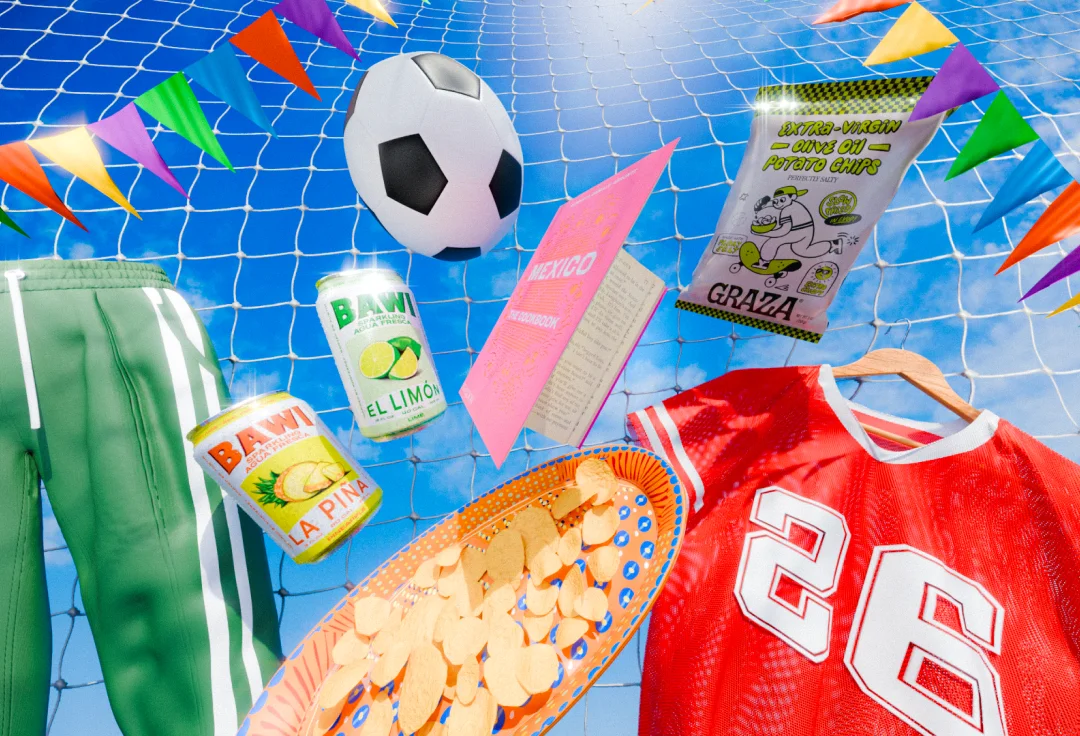
With the Winter Olympics ongoing and FIFA World Cup ahead, sports will be a major driver of connection this year. On wholesale platform Faire, searches for “sports” are up 94% and “medals” have climbed 154%. Fans also are broadening their taste horizons to explore the flavors of their favorite competitors — fusion food uploads have spiked 277%, while searches for spices and chilis are up 74% and 39%, respectively.
In fact, this year and beyond, WGSN sees sports being “the ultimate cultural super channel. As more athletes become online tastemakers, they will define style, language and influence around big events.”
In fact, sports are becoming much more than just entertainment, especially among younger generations: “It’s a space of self-care, social connection and identity expression, all wrapped into one,” said Napoli. Adding to the appeal for brands, sports is the category most likely to have super-fans, with approximately 17% of U.S. adults identifying as die-hard fans of sports leagues, teams or athletes, ahead of both music and IP.
Tapping into fandoms, sports or otherwise, is a highly effective way to engage consumers — when it’s done right. In fact, in the U.S. 92% of people consider themselves a fan of something, according to WGSN.
However, “the most successful brands will be those that build worlds worth living in,” predicted Napoli, who added that communities are becoming more valuable to brands than the traditional customer database.
Which leaves brands to decide whether they will engage with existing fandoms or attempt to architect their own brand universe (not easily done, it should be noted). Either way, finding ways to engage with passionate fandoms in 2026 will be a winning strategy.
“Why is fandom so powerful? It’s because fandom is deeply emotional,” explained Napoli. “People engage with it daily, and it’s also very long-lasting. Typically, if we’re a fan of something it’s for life. Fandoms today are not just about entertainment. They shape identity, influence purchasing and foster deep emotional connections and bonds.”
4. Nonconformity
The final trend, seen across almost all predictions, was, somewhat ironically, a pushback against trends. Each outlet has its own term for it — “algorithm fatigue” at Faire, “ignoring trend churn” at Stitch Fix, “trend fatigue” at Pinterest and a “movement away from passive consumption” at TikTok — but no matter how you call it, it’s all the same impulse.
“In 2026, we’re seeing shoppers move beyond trend-chasing and toward choices that feel deeply personal,” said Jennifer Burke, Chief Revenue Officer of Faire in a statement. “They’re using shopping as a way to express identity, build community and create meaning in everyday moments.”
“In a shift from past norms, people in 2026 will not consider trends as cultural mandates, but rather opportunities for identity curation and personal expression,” according to Pinterest.
This will express itself in a number of ways:
- Shoppers may gravitate toward un-Googleable inventory and unique, mission-driven brands that don’t exist within mass-market-style ecosystems, predicts Faire;
- Faire also sees the growing interest in maximalism as a key example of nonconformity, with maximalist palettes offering more variety and room for self-expression than the previously popular minimalist aesthetic;
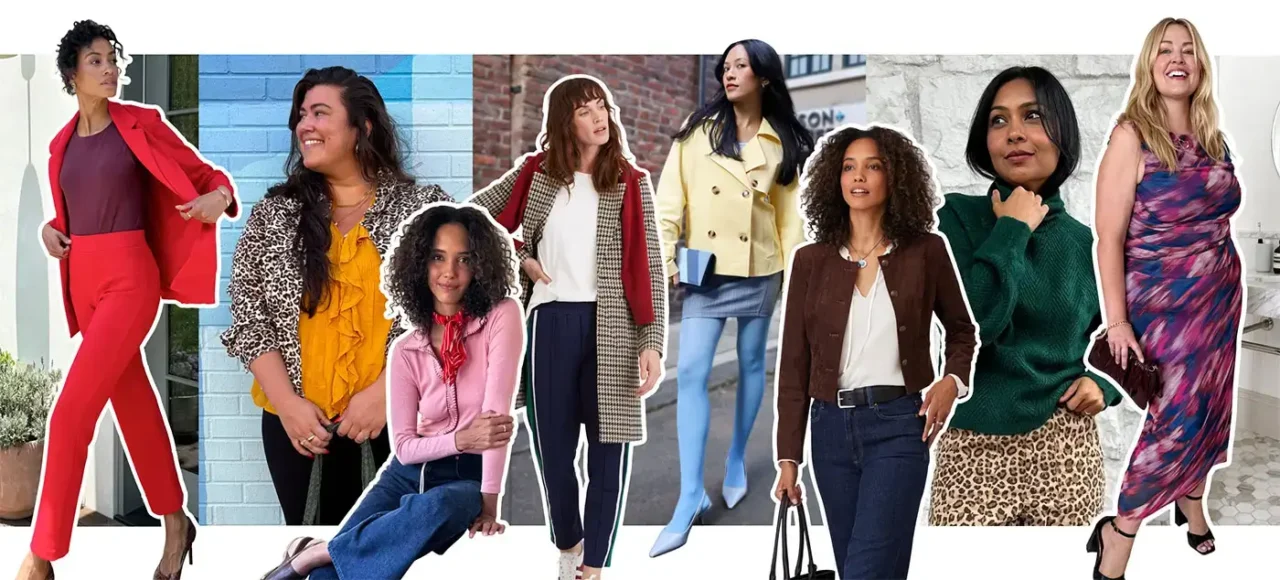
- On the fashion front, Stitch Fix sees the maximalist preference playing out in a slightly different way, with a year shaped by “Statement Staples” such as sculptural jewelry, colorful bags and textured wool coats that can be layered onto more simple foundation pieces. More than half of users surveyed by Stitch Fix described their ideal wardrobe as “elevated basics with bold accents”;
- Euromonitor sees this playing out in a desire among consumers for precision products, in particular medical-grade, high-tech solutions that target their specific wellness needs;
- Faire also sees the growing interest in books as part of both the fandom and nonconformity movements, saying that consumers are “building identities around what they read, turning fandom into community through book clubs and shared rituals.” The platform has seen searches for literature increase 113% and paperback books bump up 131%, and brands are leaning in, with a 2,092% increase in book totes added to Faire’s catalog.
“With 91% of Gen Z declaring ‘the mainstream’ is officially over, we’re living through a fundamental shift in how people try on trends,” said Pinterest. “It’s not about following the crowd anymore — it’s about taking what’s popular and turning it into something unique.”
To capture this desire for distinction and individuality, Euromonitor suggests that brands “lean on hyper‑segmentation and embed personalization across touch points.”