

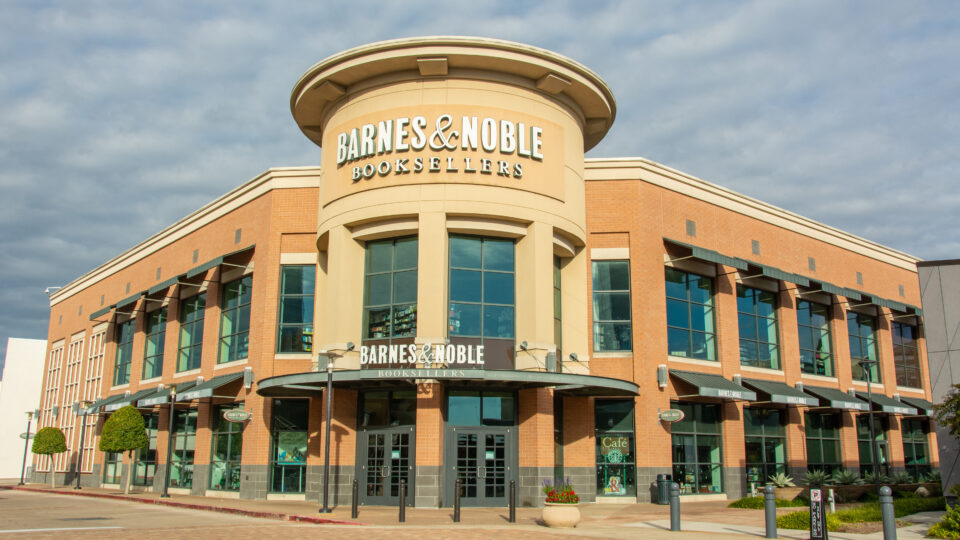
Prognosticators have gleefully foretold the death of the store for decades now, and it still hasn’t come true. In fact, in the case of Barnes & Noble, the chain’s stores have given it new lease on life.
Six years ago, Barnes & Noble was a “company on the brink,” recounted Shannon DeVito, Senior Director for Books at Barnes & Noble in a session at the NRF Big Show. It’s a familiar tale — the rise of online shopping and the new behaviors prompted by that shift presented an existential threat to the business. But while many retailers in similar positions have turned to enhanced ecommerce or influencers or private equity to prompt a turnaround, Barnes & Noble looked in a different direction — its stores — and diagnosed a key problem: “We were trying to be a traditional retailer instead of a bookstore, and there’s a very big difference,” DeVito said. So, Barnes & Noble rewrote its playbook.
Understanding the Role Stores Play for Consumers Today
The idea was to draw inspiration from the indie bookseller model, giving “each store the breathing room to do their own thing, so they are able to resonate more effectively with the communities where they are,” shared CEO James Daunt (who also architected the turnaround of UK bookseller Waterstones) at the NRF Big Show back in 2024. Two years on and that seed of an idea has grown into a novel-sized success story — after bottoming out at around 600 stores, the company opened 60 new stores in 2025 and plans to repeat that feat in 2026.
The genius of this particular turnaround lies in Daunt’s understanding of the role that stores play in today’s world and, more importantly, the fact that Barnes & Noble’s stores could still fill a distinct need. “In the old days [the draw was] price, variety or convenience, but those dimensions don’t work anymore to get people to visit stores,” said Kevin Kelley, Co-founder of the design firm Shook Kelley, who moderated the session with DeVito. “Think about the extreme things customers do — they’ll go to Coachella, they’ll wait hours and endure Porta-Johns and heat and very expensive food just to be a part of an event like that. It’s not about the music, which has really low fidelity, it’s about the collective group experience.
“People don’t form attachments to convenience; they like convenience and they love frictionless environments on some level, but those things are really commoditized,” he added. “What people form attachments to is meaning, moments and memories, and I think all of us would agree that bookstores are a public place that provides that.”
DeVito shared how Barnes & Noble has tapped into that ethos through its new approach to store design — which has included ditching planograms altogether and letting stores take over their own social marketing — because, as she said, “People absolutely judge books by their cover and stores by how they look.”
Designing for Local Interest
Every single store in Barnes & Noble’s 700+-strong fleet now looks different, from the layout to the displays, which does make it difficult to “figure out what to ship where, and what’s working and what isn’t and why,” but is still well worth it, said DeVito.
“I started as a bookseller in Cleveland, and I was essentially told at that time, 13 years ago, to turn my brain off when I came to work — we had planograms for everything,” she said.
Now, the planograms are no more. Instead, Barnes & Noble corporate focuses on training its employees on the “tenets of being a good bookseller and curation.” And with hundreds of thousands of titles to choose from, the possibilities for localized curation are nearly limitless.
Trusting the Booksellers
The key to making this work has been empowering local employees to make decisions without too much oversight — a tough pill to swallow for most corporate leadership teams. But what this freedom allows for is a hyper-localized national chain.

“We’re capitalizing on the creativity that our booksellers have and what they’re good at — they’re really good at recommending books,” said DeVito.
And they are empowered to make those recommendations not just in conversations with customers and book placements throughout the store, but also through social media (each store now has its own handle on all the major platforms), through events and with customized, often hand-crafted, displays. Recent examples included a range of stylized volcano shelf treatments for Michael Crichton and James Patterson’s book Eruption and a melted-butter table display crafted from latex for Asako Yuzuki’s novel Butter.
“The localization has become so important for us — really doubling down on local authors or making sure that we’re talking about [what’s] in the news, taking those moments and creating a local aspect to them that makes the bookstore feel like a community. And it’s all store-led,” said DeVito.
“It feels different to buy a book from a bookseller — to walk around the store and meet someone for coffee and then take that book home with you — than to have a book delivered in a package,” she added. “Reading that book is going to feel just a little bit different.”
Establishing Barnes & Noble as a Community Hub
That feeling is exactly what Barnes & Noble is going for, although it’s not only about books. While the company no longer operates as large a music department as it did in its original heyday, DeVito said music is still big business for the chain, particularly vinyl records. That renewed passion for an outdated media format hints at the larger desire driving store shoppers today: “People want that tactile experience,” DeVito explained. “They want to collect and they want that ownership of something on their shelves.”
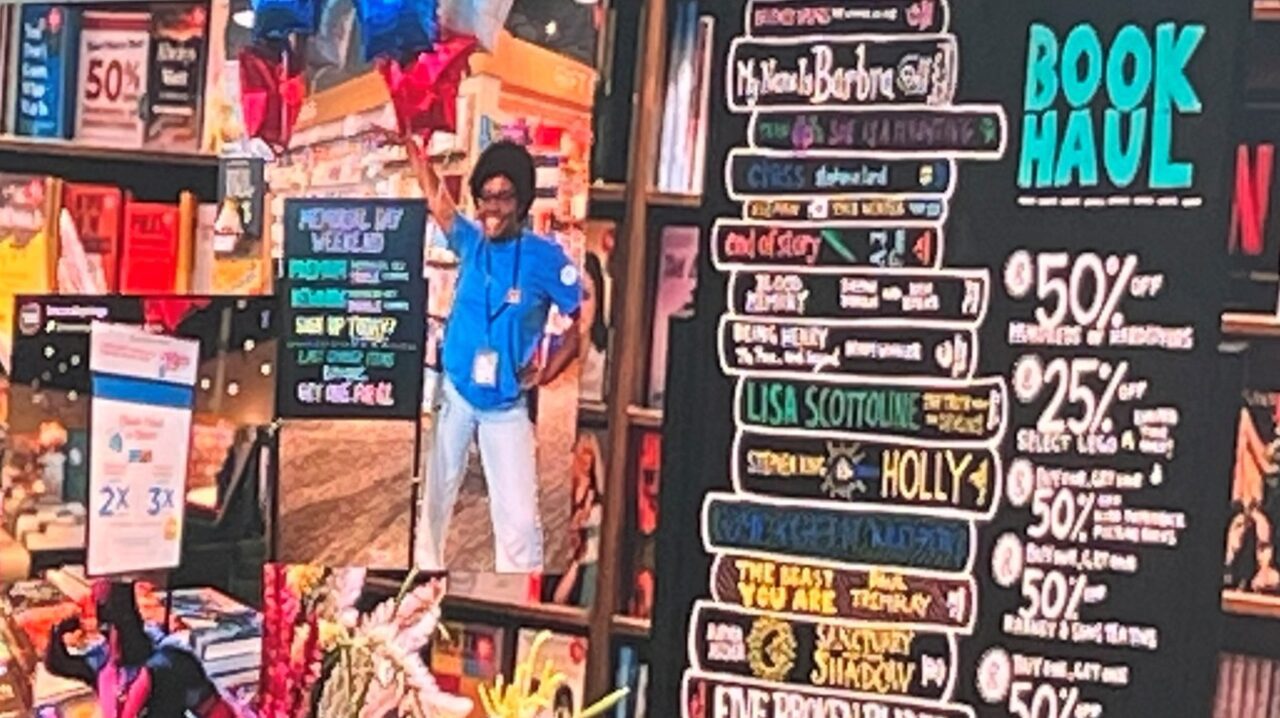
A range of diverse in-store events also helps make the store feel like a gathering place for customers. Events can include midnight release parties, book signings, virtual events, “midday mysteries,” and a range of activities for kids including story times, visits from costume characters like Clifford, scavenger hunts and reading giveaways.
“We’re happy for people to spend time in our stores,” said DeVito. “A lot of this is about creating a community space, that ‘third space’ that feels really special and intentional. A bookstore is inherently a community hub, so we have that going for us.”
Localized marketing across store signage (think chalkboard easels) and social media also helps drive home the personal connection to each store.
“The marketing is ground-level, we’re not pushing cookie-cutter,” DeVito added. “We want it to feel really genuine and authentic and organic, because it is. That’s why you come to a bookstore; that’s what people are yearning for, to feel like they’re part of an experience, to feel like they’re part of something that’s in the world and they’re connecting with like-minded people. That’s what bookstores are.”