

In an era of increasing media fragmentation, the Super Bowl remains one of the few live events that continues to capture a reliably large audience — last weekend, nearly 128 million tuned in for Super Bowl LX. It is also one of the few TV moments when viewers actually welcome ads. Given the event’s reputation for high-quality commercial storytelling, viewership of the ads themselves is nearly as high as that for the game; a survey by AdTaxi found that while 73% of viewers were interested in the on-field face-off, a nearly equal amount (72%) were tuning in for the commercials.
And this year, the Big Game also served as the kickoff for an unusually dense year of high-profile sporting events: the Winter Olympics already are underway, to be followed this summer by the FIFA World Cup, which will be hosted across the U.S., Canada and Mexico.
Given this year’s expanded arena of opportunity, it’s no surprise that marketers are looking at 2026 holistically: “Instead of betting everything on a single in-game moment, marketers are stretching Super Bowl investments across weeks of pre-game drops, digital extensions, streaming buys and AI-powered personalization that extend well past the fourth quarter,” according to MediaPost’s Sarah Mahoney.
Big Game Marketing Must Now Account for ‘Second-Screens’
They’re also looking beyond the ad itself, a reflection of the growing ubiquity of “second-screen” behaviors. The AdTaxi survey found that 70% of viewers consumed the game through multiple screens, with digital video (39%) and social media (33%) topping the list of second-screen sites, followed by sports websites and group chats.

All of this has shifted the dynamic marketers must account for when planning their Big Game moment: “People’s ‘second screen’ behavior is now the primary behavior. Viewers will immediately search for brands on their phones when they see the ad,” said János Moldvay, Chief Data Science Officer at marketing intelligence platform Funnel, in comments shared with Retail TouchPoints. “It’s the Super Bowl, reach is guaranteed. This year, the defining metric will be ‘share of search velocity.’ This means the speed at which you steal share from competitors in the 60-minute window post-airing. This is the truest proxy for mental availability and the strongest leading indicator for incremental sales in the weeks to come.”
That search velocity doesn’t immediately translate into sales, however. While 43% of respondents in the AdTaxi survey said ads drive interest in learning more or visiting a brand online, just 1% say ads lead directly to an immediate purchase, underscoring the importance of follow-up media.
AI Wars on Display: Anthropic Calls Out OpenAI, While Amazon Goes for Laughs
It’s clear that the Super Bowl is no longer the pinnacle but rather simply the starting point for the brands and campaigns that will shape the year. And in that regard, two familiar acronyms dominated this year’s show — AI and GLP-1.
Both were major topics in 2025, and if the Super Bowl is any indicator, they’ll continue to be front-of-mind in 2026. In particular, the arrival of the “AI wars” at the Big Game was hard to miss. Anthropic, Amazon, Google, OpenAI, Microsoft and newer players like Geospark, Base 44 and AI.com all made their pitch during the game. In fact, AI.com had the top-performing ad of the event, according to TV measurement firm EDO, which reported that the company’s introduction of itself to the world saw 9.1X more engagement than the median Super Bowl LX ad. In fact, the ad drove so much traffic that it crashed the website. Lay’s, Dunkin’ Donuts, Cadillac, Budweiser and Wegovy all also made the Top 10.
More familiar names in AI took varied tacks to make their case. Anthropic made waves even before the event with its series of ads lambasting OpenAI’s decision to bring ads to ChatGPT while promising never to do the same on Claude (a risky move if you ask us, given that advertising has time and again proven to be the most effective way to monetize online platforms). Amazon had fun playing on the fears surrounding AI in its comedic spot with Chris Hemsworth. And OpenAI and Google Gemini both took the heartwarming route.
Outside of AI and GLP-1, a number of retail brands made a splash (both of the stylish and sloppy variety) this year, and the Retail TouchPoints and Shop Eat Surf Outdoor teams tuned in for it all. Here are some other ads that stood out to each of us:
Canadians Feel Seen at Super Bowl 60
-Kate Robertson, Editor, Shop Eat Surf Outdoor
My dad, a proud Canadian, might be wishing he watched the Super Bowl after all. He grew up near the Michigan border and is a lifelong Lions fan, but he boycotted this year’s game, his way of defending Canadian sovereignty from President Trump’s ongoing jokes/threats about making the world’s second-largest country the 51st state. (My dad’s activism is loosely defined. He’s currently on vacation in Florida).
While Canadian travel to the U.S. declined 30% in 2025 and provinces such as Ontario have removed all American-made liquor, wine and beer from store shelves, about 8.4 million Canadians were still expected to follow the Super Bowl. More than half of them are not regular NFL viewers, according to data collected by market research firm Vividata.
Canadians don’t expect to be acknowledged at any point during the spectacle. Our broadcasters even air largely different ads from the big-budget celebrity ads the Super Bowl has made famous. So, we certainly took notice when halftime performer Bad Bunny included Canada in his shoutout to countries of the Americas, holding up a football that said, “Together, we are America.”
When it comes to the ads specifically for Canadian audiences, two stood out for their frank addresses to a male audience grappling with topics they don’t always feel comfortable talking about: weight loss and uncomfortable underwear.
An ad for online weight-loss platform Phoenix, showed a man in the woods setting his old, too-small jeans free, bidding a teary goodbye as if the pants were a beloved pet. A women’s version called Raven made its Super Bowl debut and took a similar approach, only with a caged bikini. In both cases, the nearly discarded garments suggest a different route: connecting with a physician by signing up for the weight-loss platform.
And Manmade, an underwear start-up that appeared on Dragon’s Den (our version of Shark Tank), created a Super Bowl ad for the second time, which the company said was not made with AI. The 30-second spot features the four founders of the company speaking to camera, saying that after scouring the league for the perfect athlete they want you — the “Greatest Of All Time” — to be Manmade’s new spokesperson. The potential spokesperson turns out to be an actual goat (or rather, a computer-generated one).
E.l.f. Cosmetics Telenovela Spoof Scores with Laughs
-Adam Blair, Editor, Retail TouchPoints
With all the furor over Bad Bunny’s Spanish-language halftime show, E.l.f. Cosmetics chose to touch that live wire, and did it without getting burned. I loved their commercial with Melissa McCarthy (a comedic goddess) as a non-Spanish-speaking woman suddenly thrust into a telenovela, complete with a hunky doctor, his jealous girlfriend, over-the-top costumes and musical “stings” to punctuate the action.
The spot also cleverly put the product front and center: Melissa must learn not only how to speak Spanish but to properly roll her “rrrrr’s,” so E.l.f. Cosmetics had plenty of close-ups showing the doctor applying lip gloss to her stubbornly Anglophone lips. And she even manages a few words in Spanish by the end.
Food Delivery Apps Spend a Lot to Say Little
-Adam Blair, Editor, Retail TouchPoints
Undoubtedly, some of the “second screen” activity before (and maybe even during) the game was ordering food, so it makes sense that the top national delivery platforms shelled out for ad spots. Grubhub actually had a product benefit to discuss — eliminating fees on restaurant orders over $50 — and told it in the offbeat, eccentric style typical of its director, Yorgos Lanthimos (Bugonia, Poor Things, The Favorite) for the company’s Super Bowl debut, with the prize of George Clooney as the requisite celebrity.
Uber Eats paid the freight for two movie stars — Bradley Cooper and Matthew McConaughey — and played off of McConaughey’s innate weirdness and Cooper’s earnestness, as the former tried to convince the latter that football was really all about food. Cute idea but, despite the dollars obviously spent, not really that effective as an ad (though it’s fun to see McConaughey pester/torture Cooper).
Instacart’s ad was just mystifying and got less and less funny the longer it went on. Supposedly it was a portrait of sibling rivalry, with Ben Stiller vying with “brother” Benson Boone for “Papa’s” love as the two sing about how Instacart lets you choose your banana. It’s shot like a second-rate glam-rock act appearing on a local variety show — kind of bad-on-purpose — and there is a dancer wearing a banana suit, but the main action of the commercial is having Stiller try to outdo Boone and his effortless backflips. Stiller tries, and tries, and tries to do a flip from ever-higher jumping-off points, crashing more spectacularly each time. If it sounds boring, it was, and while I’m not a snob about enjoying physical comedy, all I could think about were the stunt people actually taking Stiller’s falls. Not exactly conducive to warm thoughts about Instacart.
Levi’s Makes a Strong Statement…without Saying a Word
-Nicole Silberstein, Editor-in-Chief, Retail TouchPoints
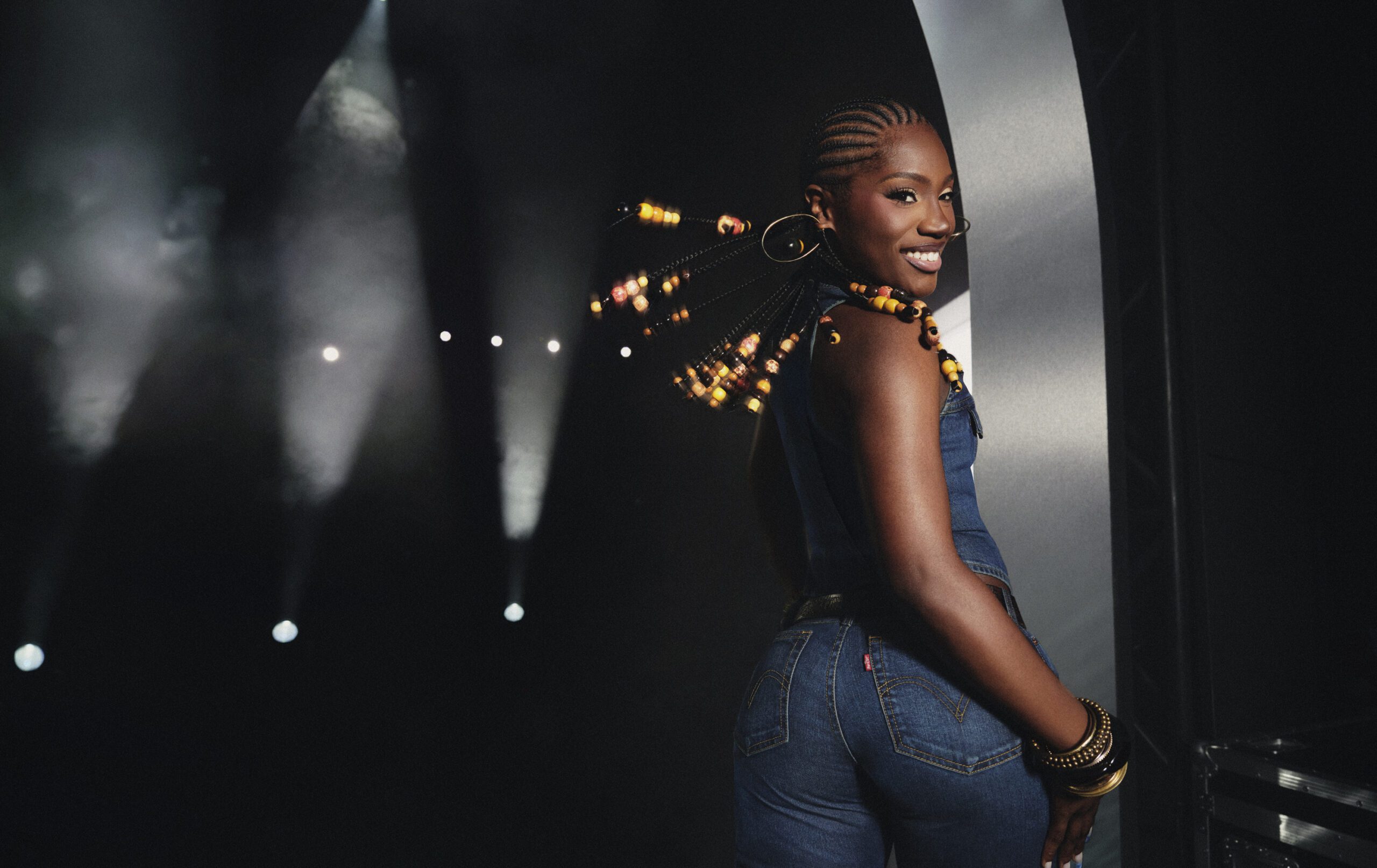
For me, Levi’s ad was one of the standouts this year, not least because it featured only butts…and a lot of them. (It wasn’t as raunchy as it sounds). By highlighting that tiny little red tag on the backside of its signature product, Levi’s made a clear statement about the timeless universality of its product. With the tagline “Behind Every Original” the spot showcased the wide variety of people and places where its jeans are at home — from cowboys (including Toy Story’s Woody) and construction workers to rock climbers, bikers and rock stars. The ad is all the more noteworthy for marking the brand’s return after sitting out the Big Game for 20 years, not coincidentally happening in the year that the game was hosted at Levi’s Stadium. It served as a strong statement of the brand’s longevity and renewed cultural relevance.