
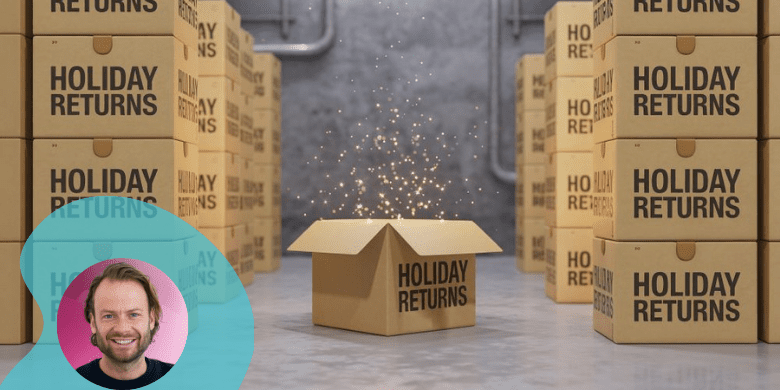
Black Friday and Cyber Monday are over. Dashboards already show who hit targets and who missed. What they do not show is how that weekend felt to customers. Over the next few weeks, retailers will face returns, delays, damaged items and buyer’s remorse. Treat these as routine costs and you miss the moments that decide whether customers come back once the discounts end.
In recent research conducted by PwC on the ‘feeling economy,’ one pattern keeps appearing: when customers feel more, they do more. They stay longer, spend more and recommend more. Emotion sits alongside price and product as a core part of the value customers perceive. It is a driver of trust and growth, and it matters just as much in returns and complaints as it does at checkout.
If Black Friday showed you where your journeys break, holiday returns will decide whether you fix them in time.
What Black Friday Already told you About your Journeys
Black Friday is more than a revenue spike; it’s a stress test of your entire customer journey. Traffic peaks, systems break and the policies that looked fine in a slide deck collide with real life. Under pressure, the gaps in your experience become visible faster and at a larger scale.

You probably already know where the cracks appeared. Contacts spiked around specific questions. Visitors opened the returns page and then abandoned it. Social teams saw the same complaints repeat. Store staff watched queues build at the returns desk while click-and-collect worked reasonably well. These are not random annoyances. They are early signals of what will happen, at higher volume, now and in January.
Returns and Complaints aren’t ‘The End’ of the Same Journey
When we map journeys with retail teams, we often see everything treated as a variant of the same path. Browse, add to cart, pay, receive. Returns and complaints get bolted on at the end as exceptions. That framing hides a crucial fact; these moments are different journeys with different emotional starting points.
PwC’s Growth Through Experience research describes four broad journey types:
- Crisis journeys, where something serious has gone wrong and people arrive anxious.
- Special journeys, such as major purchases or gifts, where anticipation runs high.
- Day-to-day journeys, such as tracking a delivery, where people want ease.
- Inconvenience journeys, such as returns and complaints, where people arrive tired and low on patience.
Holiday returns often sit between inconvenience and crisis. The wrong item arrives. A gift is late. A purchase suddenly feels like a mistake. People may feel embarrassed or stressed, not just annoyed. In those moments, success is not delight. Success is relief and respect. The goal is to restore a sense of control and fairness as quickly as possible.
Across journey types, the experiences that drive trust share four attributes: they are coherent, personal, engaging and distinctive. For returns you do not need drama; you need clarity and fairness that customers can feel.
You Still Have Time to Fix High-Emotion Journeys this Season
The good news is that improving returns and complaints does not always require a major systems project. There is still time to act on what Black Friday revealed. Three areas usually offer fast, meaningful wins that customers can feel before Christmas and into the new year.
1. Tell a clear, honest returns story everywhere: Start with what customers see. Your policy, help pages and in-store signage should answer four questions on a single page. How long do I have? What will it cost? What are my options? What happens next? Use the questions customers asked during Black Friday as your guide. If they kept asking, your story was not clear enough.
2. Create fast lanes for the most common problems: Not every case needs the same journey. Use your Black Friday data to find the top scenarios by volume and emotion, such as damaged items, wrong sizes and failed deliveries. Give each scenario a simple path that customers and staff can follow without escalation. Every step you remove buys back trust.
3. Equip people on the front line to handle emotion: In high-emotion journeys, humans matter as much as the policies. If agents, associates and social teams are not clear on when they can say “yes,” the safest option becomes delay, or a “default” no. A short list of fairness principles and a few lines of empathetic language go a long way.
“I can see why you are worried about this arriving in time, so let’s walk through the fastest option we have” lands very differently than: “Our policy states that…”. The first line acknowledges feeling, then moves to action. The second starts and ends with a procedure. One builds trust, the other erodes it.
Measure Whether you are Winning the Returns Battle
Retail already runs on dashboards. The risk is that you drown in metrics without knowing whether customers feel any better. A small set of measures can tell you if your changes to returns and complaints are working at both an emotional and commercial level:
- Repeat purchase after a problem is resolved: Look at customers who had a return or complaint, then compare repurchase rates for low-friction vs. high-friction resolutions
- Time to resolution and first-contact resolution: Long chains of emails, chats and calls usually signal confusing journeys rather than “difficult customers”
- Returns portal drop-off: If customers start a return but don’t complete it, the journey is telling you where it breaks
- Language customers use: Surveys, call transcripts, chats and reviews contain clues. Mentions of feeling “treated fairly,” “looked after,” or “taken seriously” are strong signs that inconvenience journeys are working as they should.
The Real Success of this Season will Show Up Next Year
It’s tempting to view Black Friday as the final exam of your promotional calendar. In fact, it’s the first lesson of your returns season. If you use what you learned over the Black Friday period to redesign the most emotional parts of the journey, you can still change how the rest of the holidays will feel for your customers.
Shoppers may not remember the exact percentage they saved. They will remember whether you made it easy to fix a mistake, solve a problem or admit that something went wrong. Holiday returns are not just a cost to be managed. They are where loyalty is won or lost. Treat them as a design priority now and customers will still be with you when the discounts are over.
Jochem van der Veer is the Co-founder and CEO of TheyDo, an intuitive journey management platform. A designer by trade, he has nearly a decade’s experience in UX consultancy. Van der Veer founded TheyDo in 2019 to help businesses truly become customer-centric by organizing around the customer journey.