

Amazon CEO Andy Jassy recently made headlines for telling investors he believes AI will accelerate the decline of brick-and-mortar stores. Jassy expects physical retail’s share of sales to drop from around 85% today to 15%-20% in the future. The theory goes that AI assistants will make online shopping so effortless that stores shrink into mere showrooms or sellers of specialized goods. Why go to a supermarket for milk if your AI assistant has already ordered it for you online?
But AI won’t kill the retail store, it’ll enhance it. Because retail isn’t just about buying products. It’s an experience.
We’ve heard this before. The death of the retail store has supposedly been a few years away for the past six decades. As far back as 1967, before the internet was a twinkle in Tim Berners-Lee’s eye, the Harvard Business Review was publishing articles predicting a future dominated by ecommerce.
And yet, in-store sales still outpace online by four to one. Retail foot traffic has held steady this year despite inflation, and traffic at shopping centers is growing again. Amazon’s own figures indicate sales in its physical stores rose 7% in its third quarter.

AI is One More Tool for Omnichannel Shoppers
In-store remains the most potent sales channel. Recent data shows that 45% of consumers prefer to shop in-store, with only 28% preferring online. And there is no sign of a drop off down the age brackets, with 97% of Gen Z shopping in physical stores.
To assume that AI agents will wipe out in-store retail through their efficiency in responding to demands like “find me red sneakers under $85” is to miss a fundamental part of why people go shopping. A great in-store environment delivers a multi-sensory experience — visually engaging displays, music that creates an on-brand ambiance, products to touch or smell or taste. Consumers want to find new products, test them, maybe make an impulse purchase and not have to wait for it to be delivered.
But the story here isn’t really bricks versus AI clicks, real-life experience versus machine efficiency. Most shoppers have been firmly omnichannel in their behavior for several years, moving freely between websites, stores and social platforms. AI agents are one more platform. Once the hype surrounding them dies down, I expect AI agents will be seen as another tool in the kit for purchasing and discovery.
Retailers are Using AI to Blend the Real and Virtual Worlds
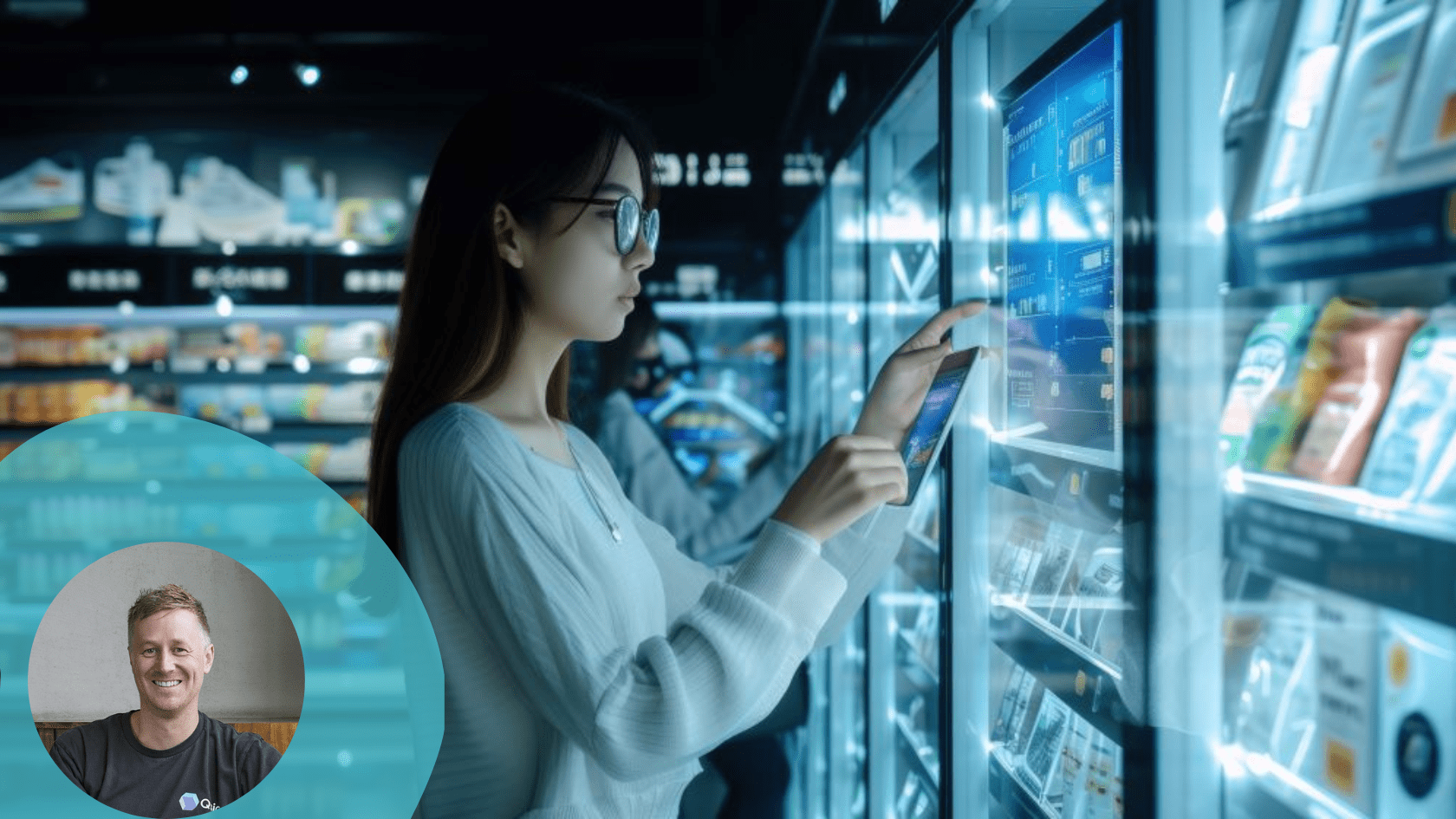
Where generative AI is already having a major impact is on the in-store experience. Far from pulling shoppers out of stores, it is following them into the aisle and making visits more relevant and measurable.
According to 2024 NIQ data, shoppers are increasingly using their phones in-store. They’re accessing retailers’ apps, navigating shelves, comparing products and prices and downloading more detailed product information. This enables retailers to deliver hyper-personalized offers and recommendations. Fashion retailers like Zara and H&M are using AI to create avatars of customers, enabling them to digitally try on items in-store or online. Lowe’s is using gen AI to improve customer service with a digital assistant that helps its associates answer product questions.
AI also is delivering a shift in capabilities for in-store retail media, one of the fastest-growing segments of the advertising market and a growing part of the shopping experience. Gen AI is not only being used to develop the creative that appears on screens or is played on audio systems in stores; it is also integrating data from multiple platforms and planning systems to target advertising messages to the moments when they are most likely to drive incremental sales.
For example, Best Buy is experimenting with store takeovers that give a brand access to all the retail media screens and platforms in a location. For landmark events like a product launch, it adds excitement and a sense of retail theater that’s impossible to replicate online.
Stores are a Strategically Vital Platform
So is Amazon’s CEO wrong? Not entirely. AI will accelerate the end of one thing: the standalone store that’s not connected to the omnichannel experience. From where I sit, working with retailers across North America, Australia and Asia-Pacific, the most successful brands are doing three things.
- They’re using AI to drive the whole retail journey, using it to decide which message to show, in which channel, at what moment, whether the shopper is on a phone, a couch or in front of a shelf.
- They’re treating stores as a combination of media platform and stage, creating truly engaging retail experiences.
- They’re integrating data from loyalty programs, app usage, sales records and retail media into a holistic view of their customers.
We are not heading for a world where ecommerce simply replaces brick-and-mortar. We’re heading for one in which the line between them disappears. And in that world, the store, far from vanishing, will continue to be the most strategically important platform retailers own.
Matt Elsley is the Co-founder and CEO of QSIC, the global intelligent in-store audio platform that uses data and AI to remove friction from the planning process and elevate and measure the impact of audio. His leadership has shaped the retail landscape by driving in-store sales growth and unlocking new avenues for commercialization. Elsley’s early success leading multiple companies has honed his ability to identify and capitalize on emerging market opportunities, positioning QSIC as an industry trailblazer.