
Over the past five years, retail has undergone a significant transformation, driven by shifts in consumer behavior, evolving supply chains and the emergence of new technologies. For instance, the increased demand for grocery delivery led to a reorganization of the foodservice industry. Stores and restaurants that historically did not cater to delivery orders, like quick-service restaurants and convenience stores, changed their business models to include delivery and pickup options.
This is just a microcosm of what has taken place across many retail segments. The result was an explosion of ecommerce, which jumped from $4.248 trillion in 2020 to $7.391 trillion in 2025.
The pronounced uptick in ecommerce sales might suggest that online retail has overtaken brick-and-mortar, yet this is not the case. In spite of the growth of ecommerce, in-store retail still accounts for about 77% of overall retail sales. It’s reasonable to assume that the retail industry, like other industries, is just slow to adopt new technologies, but the answer lies in a fundamental business truth: The margins are better in-store.
In a digital landscape, ecommerce threatens a retailer’s margins. Consumers in physical stores — a captive audience — are more amenable to cross-selling and upselling. In other words, while retailers should invest in ecommerce, they ignore brick-and-mortar at their peril. In-store innovation, like smart shelves, creates additional competitive advantage.
Personalizing the Store Experience
Though brick-and-mortar remains the bulk of the retail industry, retailers shouldn’t get complacent. They’re still vying for the attention of consumers in-store. To maximize those in-store opportunities, retailers must focus on enhancing the store experience. Personalization is key.
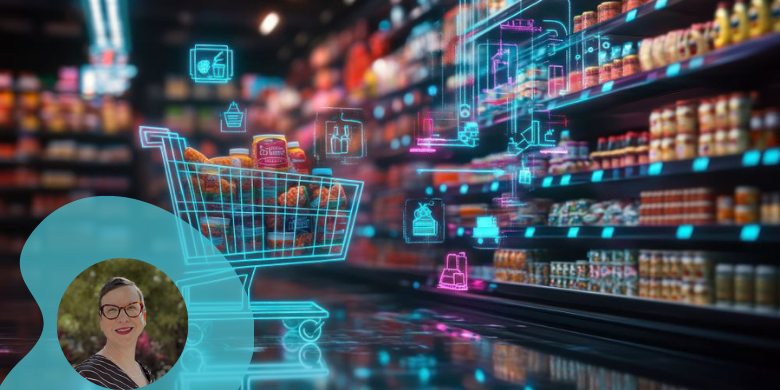
Smart shelves can deliver by combining AI-powered personalization with the power of real-time in-store promotions. Imagine a grocery store that recommends a wine pairing for the pasta sauce in your cart, or a gelato with a sweetener alternative based on your purchase history.
Drawing from shopper data, loyalty programs, purchase history and real-time shelf activity, smart shelves can make recommendations via dynamic digital displays or mobile push notifications. These can be personalized deals or product suggestions based on purchase history or the current cart.
Such granular and dynamic personalization is good for shoppers and retailers alike. Retailers gain cross-selling and upselling opportunities while consumers improve their chances of finding products they want or need.
Optimizing Inventory Management
Optimizing the in-store shopping experience goes beyond mere personalization. A critical challenge for retailers today involves ensuring product availability, maintaining product quality and having adequate staff to assist customers. Even the most advanced personalization efforts will fall short if products are out of stock, damaged, or if employees are unavailable to help customers and restock shelves. Smart shelves can improve availability and upkeep.
Smart shelves can track inventory and monitor product conditions in real time by combining Radio Frequency Identification (RFID), AI, computer vision and sensors. An accurate, up-to-date view of inventory helps prevent stockout and overstock situations, thereby optimizing shelf management, the retailer’s supply chain, and in-store promotions.
This enhanced view of current stock, available with smart shelves, also maximizes staff resources by reducing the time they spend searching for products, freeing them to focus on customer service and more high-value functions – ultimately leading to a better customer experience.
From Foot Traffic to Future Strategy
Making the most of shoppers when they’re in-store is important, but retailers need a long-term strategy that builds on successive consumer interactions. By gathering information about customer behavior in-store — where customers tend to linger, what promotions tend to work, what products sell well together — retailers can reorganize and redesign their stores for optimal wayfinding and promotional opportunities. Retailers may supplement these efforts by cross-referencing with the online consumer behaviors of their customers via loyalty programs.
Smart shelves can integrate with other retail technologies — feeding customer interaction data to AR wayfinding systems, triggering dynamic pricing and informing predictive inventory — to determine business strategies such as optimizing product placement and real-time personalized promotions.
Ultimately, smart shelves can optimize the utilization of store resources to enhance the customer experience. An enhanced customer experience, in turn, begets higher-quality data, both for in-store foot traffic as well as overall customer behavior. This data allows retailers to optimize layout and stocking even more, which only further enhances these shopping experiences. Such a dynamic can create a cycle of ever-improving in-store and customer data to generate better experiences.
Smart Shelves Improve the Future of Traditional Brick-and-Mortar
The world is fundamentally becoming more and more digital, but that doesn’t supersede compelling in-person experiences. In-store retail remains more effective and commercially viable. That said, we can apply the lessons of digital commerce, like data-driven personalization, to optimize in-store experiences. As such, retailers must invest in technologies like smart shelves to reimagine in-store shopping experiences. What’s more, in-store and online can work synergistically, whereby retailers use the data gathered online to entice customers in-store for richer shopping experiences.
Smart shelves represent a confluence of smart technologies that are redefining in-store retail, including AI, RFID, IoT, computer vision, AR/VR and more. Brick-and-mortar isn’t ceding ground to ecommerce; ecommerce is rejuvenating and complementing the store experience — when done right. By investing in smart technologies, retailers can remind customers why there’s nothing quite like shopping in person.
Katie Riddle leads global hospitality strategy at Verizon Business, leveraging network technology and partnerships. She has 20+ years’ experience with IHG, Choice Hotels, Four Seasons and other major brands.