

Key Takeaways
- Physical AI is already gaining traction in retail and logistics through practical use cases such as warehouse sorting, goods-to-person picking, mobile robots and in-store restocking.
- Retailers should evaluate physical AI based on performance, throughput and operational fit, while starting with focused pilots and workforce training before broader deployment.
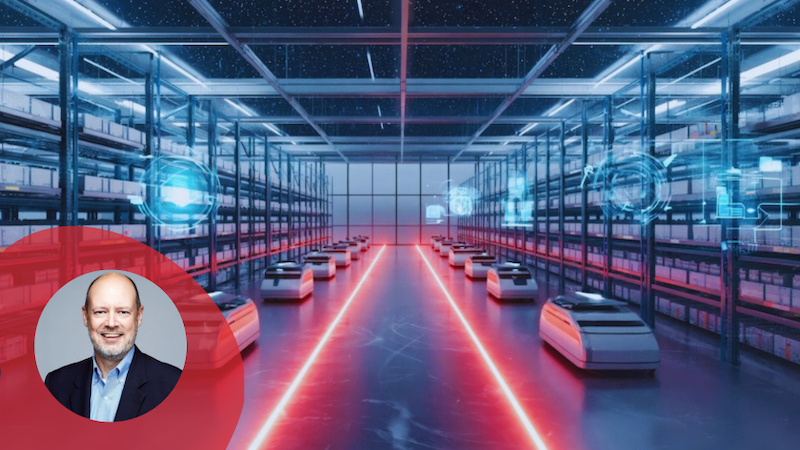
Physical AI is moving off the drawing board and onto the warehouse floor. According to the AI Gets Physical: The Global Startups Readiness Index report, logistics, warehousing and retail are among the sectors most likely to be reshaped first by AI that can see, move and act in the real world. Nearly half (47%) of physical AI builders focused on these sectors say their products are already commercially deployed. Those products handle warehouse picking and packing, automated sorting, autonomous forklifts, inventory-moving robots and in-store restocking.
The findings challenge the idea that robots are mainly about cutting labor costs. In the logistics, warehousing and retail sector, 31% of customers cite better performance as their main reason for adopting physical AI. Many retailers aren’t sure where to begin. The report identifies market readiness as the biggest barrier to scale, as businesses work out how the technology fits their operations.
To unpack what these findings mean for retailers, Retail TouchPoints spoke with David Dorf, global head of retail industry solutions at AWS. Dorf explains which retail use cases are moving fastest, how retailers should think about ROI beyond labor savings, and outlines the smartest first steps for testing physical AI before committing to a full rollout.
RetailTouchPoints.com: The report finds that logistics, warehousing and retail are among the sectors most likely to be reshaped first by physical AI. What specific retail use cases are moving fastest right now?

David Dorf: Warehousing and logistics are already seeing early commercial adoption, with 47% of physical AI builders focused on these sectors reporting that their products are commercially deployed. Applications include warehouse picking and packing, automated sorting, autonomous forklifts, mobile robots moving inventory, and in-store restocking.
These examples show how physical AI is beginning to be used in real-world operations. In addition to warehouses, I’m also hearing from our retail customers that they’re really curious about using physical AI to solve problems inside stores. For example, micro-fulfillment is particularly applicable to grocery stores that are taking more online orders. Ocado an excellent example.
Using video cameras for video analytics and even cycle counts is another great area. A third is mobile robots used to clean stores, verify planograms, and perform shelf-level analytics.
RetailTouchPoints.com: Nearly half of builders focused on logistics, warehousing and retail say their products are already commercially deployed. What does “commercially deployed” actually look like in a retail environment today?
Dorf: Commercial deployment can take different forms depending on the environment and task. For example, Humandroid in Argentina buys humanoid robots from established manufacturers, trains them, and deploys them in factories and industrial sites.
Each robot first practices in a detailed digital twin of the customer’s workplace, and the company already has several hundred robots deployed across Latin America. For example, we have a large beauty customer that’s using digital twins to simulate robots to test different layouts and reimagine their actual lab testing processes in their Research & Innovation lab.
How Should Retailers Measure Physical AI ROI Beyond Labor Savings?
RetailTouchPoints.com: According to the report, performance is a bigger driver of adoption than labor replacement in many cases. How should retailers think about the ROI of physical AI beyond labor savings alone?
Dorf: Beyond labor savings, physical AI can help retailers improve day-to-day operations by increasing consistency, productivity, and enabling teams to move goods and manage inventory more effectively.
In the logistics, warehousing and retail sector, 31% of customers cite better performance— from faster operations to higher quality and greater throughput— as their primary reason for adopting the technology, compared with 27% who cite labor shortages. In warehousing, applications such as automated picking and packing, sorting, autonomous forklifts and mobile robots moving inventory offer opportunities to improve operational efficiency and throughput.
RetailTouchPoints.com: The report points to warehouse picking, automated sorting, autonomous forklifts, mobile robots and in-store restocking as key applications. Which of these are proving most practical for retailers today, and why?
Dorf: The practical applications are the ones in structured, controlled spaces doing high-volume, repetitive work. That means sorting and mobile robots in distribution centers (DCs) come first, followed by goods-to-person picking. Autonomous forklifts and in-store restocking are real, but narrower and earlier.
RetailTouchPoints.com: Market readiness appears to be the biggest barrier to scale, with many businesses still unsure how to apply physical AI. What do retailers need to see or understand before they are ready to invest?
Dorf: Many businesses may not realize how much physical AI is already being deployed or how it can help address operational challenges, including labor shortages and the need for greater efficiency. Before investing, retailers need to understand where physical AI technology can deliver practical value in their unique operations. Scaling physical AI also requires the right foundations, including access to capital, reliable supply chains, skilled talent and regulatory frameworks that support deployment.
How Can Retailers Prepare Their Workforce for Physical AI?
RetailTouchPoints.com: The findings suggest that physical AI will create new technical and skilled-trade roles even as it changes existing workflows. How should retailers prepare their workforce for that shift?
Dorf: That’s right; we found that 70% of physical AI builders expect the technology to create more jobs than it displaces. Most anticipate that more than half of those new hires will be in engineering, technical or skilled-trade roles.
For retailers, this creates an opportunity to invest in workforce training on two fronts: reskilling existing employees to operate, maintain and work effectively alongside physical AI technologies, while preparing for new roles in areas such as robotics maintenance, operations and systems integration.
Equipping employees with the skills to work with these technologies will be important as retailers bring physical AI into their operations.
RetailTouchPoints.com: For retail leaders who are intrigued by physical AI but not ready for a full rollout, what are the smartest first steps to begin testing the technology?
Dorf: Retailers should start by identifying a specific operational challenge and evaluating whether physical AI could help address it. Real-world pilots, demonstrations and early deployments can help teams understand how the technology performs in their environment and assess its potential value before considering broader implementation.
Tools like the Physical AI Toolchain on AWS can support this process by bringing together capabilities for synthetic data generation, model training, simulation and validation, edge deployment, and continuous improvement. Retailers can explore the full development stack or use individual components that fit into their existing workflows, allowing them to test and learn incrementally.