

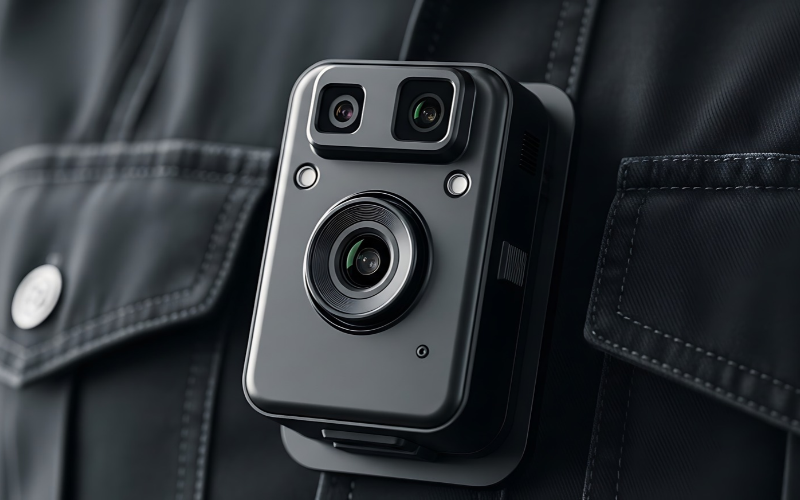
Key takeaways:
- Body-worn cameras have moved past loss prevention to help de-escalate tense encounters and protect frontline workers.
- Retailers report that deterrence and stronger incident documentation deliver more value than theft prevention alone.
- Effective use depends on clear policies, employee training and integration into a broader security strategy.
Not long ago, body-worn cameras were mainly associated with law enforcement. Today, they’re appearing on retail employees at major chains like Walmart and Target as stores respond to rising theft, aggressive customer behavior and workplace violence.
While preventing shoplifting is one objective, retailers are betting bodycams can do something even more valuable: de-escalate tense encounters, protect frontline workers and provide an objective record when incidents occur.
For retailers already using body cameras, the conversation has shifted from whether the technology belongs in stores to how much value it delivers. At Cosentino’s Food Stores, Director of Loss Prevention Chris Vandiver said the company’s experience has shown benefits that extend well beyond theft prevention.

“Our Loss Prevention team responds to unpredictable incidents, from disruptive behavior to theft, and we wanted to provide an added level of support,” Vandiver explained in an interview with Retail TouchPoints. “Improving safety and accountability was a driving factor in the decision to adopt body-worn cameras. We were also often relying on fragmented pieces of information after incidents, with critical details dispersed across video footage, witness statements, receipts, reports and other sources.”
For Vandiver, one of the biggest surprises isn’t what the cameras have captured, but what they have prevented.
“One of the most immediate outcomes was the deterrence effect,” Vandiver explained. “Going in, our primary objectives were to improve safety during high-risk interactions, improve evidence quality, and strengthen case documentation. The results exceeded our projected expectations, particularly in improved evidence collection, more complete incident documentation, and de-escalation value.”
In many situations, he added, individuals became “significantly more cooperative” once they were informed that the interaction was being recorded, allowing incidents to be resolved more professionally and safely.
While officials at Cosentino’s are still developing long-term ROI metrics and evaluating outcomes such as incident resolution, investigative efficiencies, evidence management and operational impacts, Vandiver noted, “the improvements in employee safety, incident documentation, accountability and de-escalation have already demonstrated substantial value.”
Once viewed mainly as a loss prevention tool, body-worn cameras are now being used to help employees safely manage customer interactions as confrontations become more frequent and, in some cases, more volatile. Instead of simply catching shoplifters, the value proposition now focuses on incident prevention.
“The two main drivers are de-escalation and protection,” ecommerce and retail adviser Greg Zakowicz said in an interview with Retail TouchPoints.
In a time when nearly everyone carries a smartphone and public confrontations can quickly spread across social media, Zakowicz said many people naturally moderate their behavior once they know they’re being recorded. But he’s less convinced the technology significantly deters theft.
“Body cameras help reduce false accusations against employees, allowing them to better perform their duties without fear of legal retribution and this helps protect companies against lawsuits from individuals based on false accusations stemming from an incident,” he explained. “With regard to theft, I am skeptical that body-worn cameras deter theft in any meaningful way.”
Deterrence, Theft and Real-World Value
That assessment is echoed by other retail analysts, including Neil Saunders, Managing Director and Retail Analyst at GlobalData.
“Body cams are something of a bold step to counter retail theft and violence,” Saunders said in an interview with Retail TouchPoints. “They are not a universal and default option for most retailers but, instead, are deployed in stores where there a lot of issues. They do have a psychological impact that can reduce crime if people are aware of their use.”
But some staff members feel safer using them, he added.
“The use of bodycams does require training, mostly to comply with laws regarding recording and protecting the privacy of customers and staff,” Saunders noted. “Generally, usage is increasing as crime becomes more of an issue and as customers accept the technology more, but usage is a long way short of being universal.”
Employee Confidence, Training and Operational Impact
Vandiver noted the technology has had a noticeable effect on employee confidence during difficult interactions.
“For employees, the greatest impact has been the increased confidence to manage difficult situations more effectively while reducing the likelihood of conflicts escalating,” he explained. “Team members know that encounters are being documented accurately, which provides an added level of support and accountability. We train team members on how to operate the technology, communicate that an interaction is being recorded and use de-escalation tactics accordingly.”
For example, during the six-month evaluation period, Vandiver said the company monitored usage, employee feedback, incident outcomes and the quality of evidence collected.
“The positive results, including improved cooperation during interactions, enhanced evidence collection and more complete incident documentation supported more effective investigations, case development and prosecution efforts, and reinforced the decision to expand the program beyond the pilot locations,” he said.
Why Policies and Training Determine Whether Body Cams Deliver
Body-worn cameras are most effective when they are viewed as part of an overall strategy and not just as a piece of technology, Vandiver added.
“The real impact comes when the camera is paired with clear policies, proper deployment and employee training focused on communication and de-escalation techniques,” he explained. “The (use of the) technology has continued to expand beyond our initial pilot and is now deployed across our external Loss Prevention team. The success of the program has shifted the conversation from where the technology is needed to where it can provide the greatest value for our employees, customers and organization.”