

Key takeaways:
- Retailers are divided on AI shopping agents: Amazon blocked Meta’s Muse to protect its data advantages and customer relationships, while Shopify welcomed it — a split that reflects fundamentally different strategic positions on where customer relationships will live in an agentic future.
- Consumer trust in AI shopping agents hasn’t kept pace with the technology: while 74% of shoppers have used an AI tool while browsing, only 27% are comfortable letting one handle the full purchase, according to data collected by CI&T.
- Retailers with a clear, defensible value proposition are best positioned for an agentic future: being second or third on every key purchase criterion puts retailers at risk as AI agents get better at optimizing for what shoppers want most.
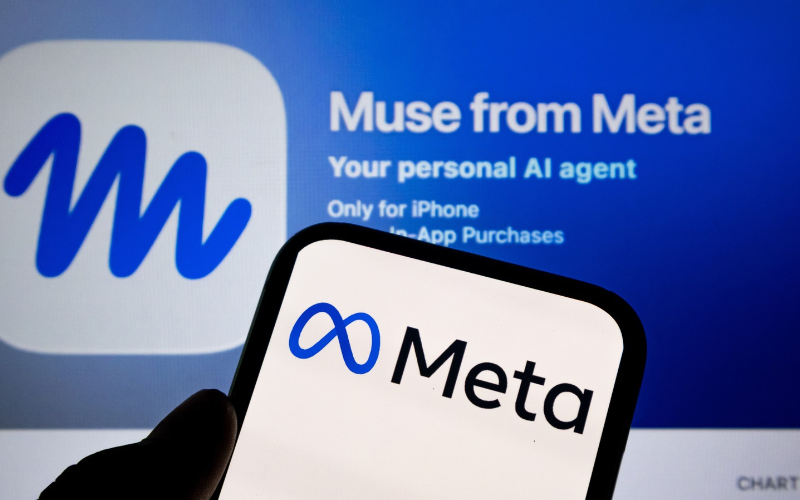
Meta introduced Muse this fall, describing it as a “secure, private personal AI agent” that can fill out forms, negotiate on a user’s behalf and check out using a digital wallet built by Stripe. But some of the biggest names in retail are divided on the technology. While Shopify merchants can let Muse shop their stores directly, Amazon took the opposite approach, blocking the agent entirely.
“We think it’s fairly straightforward that third-party applications that offer to make purchases on behalf of customers from other businesses should operate openly and respect service provider decisions about whether or not to participate,” an Amazon spokesperson said in an email to Retail TouchPoints. “This helps ensure a safe, secure and reliable customer experience, and it is how others operate including food delivery apps and the restaurants they take orders for, delivery services apps and the stores they shop from, and online travel agencies and the airlines they book tickets with for customers. Agentic third-party applications such as Muse have the same obligations, and we’ve requested that Meta remove Amazon from the experience.”
Amazon also said that Muse never identified itself when accessing its store, and that the agent appears to capture and store customer credentials without the retailer’s knowledge.
Aaron Cheris, Global Head of Retail at Bain & Company and Melissa Minkow, Global Director of Retail Strategy and Insights at CI&T, shared what retailers need to understand about agentic AI tools like Muse, and whether shoppers are actually ready to hand over their payment information.
Why Did Amazon Block Muse While Shopify Embraced It?
Cheris said Amazon’s move isn’t out of character. “Amazon’s approach to Muse is not that different from their approach to other 3P agentic players,” he said in an interview with Retail TouchPoints. “As the far and away leader in U.S. ecommerce, with 45%-plus share, and the starting point for the majority of U.S. ecommerce searches, Amazon does not want to cede its position to 3P agentic agents. It also wants to make sure to protect its data advantage from reviews and other data. Shopify represents a collective of smaller merchants who do not have the share position and top of mind leadership to make that choice.”
Minkow sees Amazon’s resistance as a pattern that could backfire over time. “Amazon has an interesting history of attempting a more closed approach in the agentic world as they compete,” she told Retail TouchPoints. “In the long run, I think the winners here will be those that are most open and interoperable. With agentic, ‘omnichannel’ will be defined less by where consumers shop and more by how seamlessly different agents, platforms and retailers can work together.”
How Ready Are Shoppers for Agentic Commerce?
Survey data suggests shoppers have warmed to AI as a research tool, but not as a wallet. According to CI&T’s Retail Tech Report: Agentic Edition, a survey of 1,011 U.S. consumers, 74% have used an AI agent such as ChatGPT, Google Gemini or Perplexity while shopping, and 90% have either tried one or are open to it. But comfort drops sharply once money changes hands: only 27% said they’re comfortable with an AI agent handling their full shopping journey, according to Minkow.
“Based on our research, I do not believe consumers are comfortable enough yet to share financial information with companies like Meta,” Minkow said. “While our data shows that third party agents are the most likely choice for trust when it comes to outsourcing the full shopping journey, only 27% are comfortable with that being a future reality. Further, we didn’t include Meta as an option when we asked this question, we specifically asked about ChatGPT, Google Gemini, Claude, etc. Meta is potentially a more complicated name when it comes to trust. Trust will certainly grow here, but it will take time.”
Cheris pointed to similar findings from Bain’s research.
“People are open to sharing personal preferences, needs and information to get better answers to their questions, but they don’t see the need to share credit card data and let the agent fully manage the transaction on their behalf,” he said. Net trust runs negative 16% on data privacy and negative 29% on giving an agent full authority to act without step-by-step approval, he said, and overall trust in AI has slipped since last fall, driven largely by younger, early-adopter users.
Neither analyst expects Gen Z to lead the charge.
“Amusingly, the earliest adopters of agentic AI may not be the youngest, most tech savvy customers, many of whom have more caution and trust barriers,” Cheris said. “Millennials and ‘regular users’ who currently use Gen AI tools on a daily or a weekly basis, followed by Gen X and Gen Z, seem to be ahead in accepting the adoption of agentic AI.”
Minkow agreed: “Millennials repeatedly have the highest usage rates of AI agents when it comes to retail, so my guess is that demographic,” she said. “They’re in the right lifestage for wanting to create efficiencies with shopping, and they’re tech native enough, so they’re in a sweet spot for adoption.”
What Does Agentic AI Mean for Retailers?
Both analysts see a real risk that agents could squeeze retailers out of the relationships they’ve built with customers, but also an opportunity if retailers play it right.
“Retailers need to balance the idea of being both discoverable and preferable on 3P agents like Muse to win the referral,” Cheris said. “So if I’m a retailer, I need to share enough data with the agents so they know what I have and explain to them why consumers get a better all in value proposition shopping with me, which includes making sure the agents know about my promotions, exclusive offers etc.”
At the same time, retailers should save some reasons for existing customers to directly visit their sites, apps or agents, he said. That can be anything from better usage of returns and review data, category-specific AI agents, a unique selection, loyalty points or special offers.
Minkow is optimistic about what agentic AI means for retailers.
“I have remained passionate about the fact that agentic AI is actually a positive for many retailers in that it will bring them into more consumers’ consideration sets,” she said. “Agents are a research tool, but they’re driving discovery for shoppers. If brands and retailers do the work of optimizing agent discoverability, this gets them earlier in the purchase funnel with shoppers. I think about it in a similar way to TikTok in that sense.”
Which Retailers Are Best Positioned?
Cheris said the retailers most likely to thrive are those with a clear, defensible edge on at least one purchase criterion. “Retailers who have a clear consumer value prop and a defensible ability to claim that they are the best on some ‘objective’ element” will win out, he said, pointing to Walmart’s low prices as an example. “That could be being the lowest price, unique high quality/good value or exclusive selection you cannot get anywhere else, the best services and experience, or the fastest delivery. Being second or third on every key purchase criteria puts retailers at risk of being in no man’s land if AI agent use grows and customers can optimize on what matters most to them for any given product category and occasion.”
Minkow put the burden on discoverability itself. “The retailers who take this seriously and optimize discoverability through improved product descriptions and investments in placement within the sources these LLMs pull from will be the winners,” she said. “Agent use definitely will grow, our survey data shows how rapidly adoption is taking off, so retailers that get on board with this reality by understanding how they’ll become referenced by agents will succeed.”