
Key takeaways:
- Ruggable’s new brand campaign, directed by filmmaker Lucrecia and produced with Mojo Supermarket, follows one woman through multiple roles in a single day, using the film to position the company as a design authority rather than a functional novelty.
- Chief Marketing and Creative Officer Lauren Sherman-Kaoud says the company’s major strategic reset stems from category success, not underperformance, as washability has become table stakes rather than a differentiator.
- Ruggable has no near-term plans to expand beyond its direct-to-consumer model, according to Sherman-Kaoud.
Ruggable built its business on a single functional promise: a rug that could survive kids, pets and spilled wine, then go through the wash like a bedsheet. Nearly a decade later, that promise no longer sets the company apart. Competitors have caught up, and washability has shifted from selling point to baseline expectation.
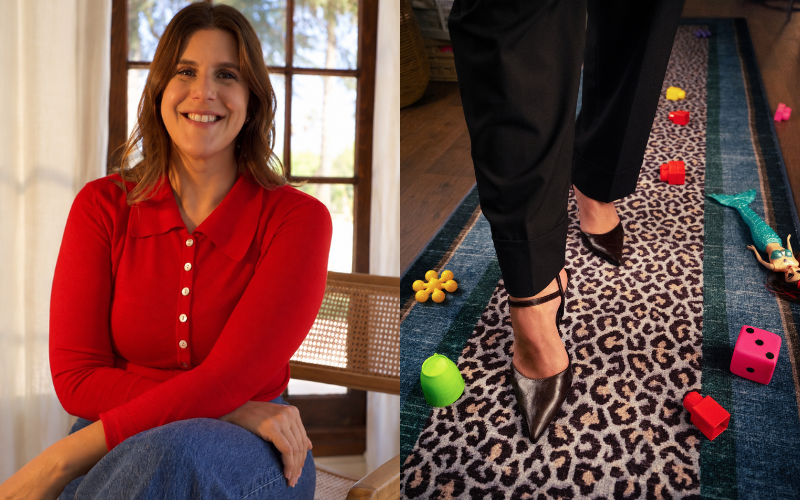
That shift is what’s driving what Sherman-Kaoud calls a “major strategic reset,” now taking public form in a new brand campaign produced with creative agency Mojo Supermarket and directed by Argentine-British filmmaker Lucrecia. The campaign follows one woman across one day, from work to parenting to hosting to rest, with a different Ruggable rug anchoring each scene. It’s set to run through the remainder of 2026 across TV, YouTube, Meta, TikTok and Pinterest.
In an interview with Retail TouchPoints, Ruggable Chief Marketing and Creative Officer Lauren Sherman-Kaoud discussed what prompted the reset, how the company is using consumer research to shape both product and creative decisions and why the Calif.-based company isn’t prioritizing new distribution channels.

Ruggable’s Strategic Reset
Ruggable’s reset isn’t about overcoming an obstacle, according to Sherman-Kaoud.
“The reset came from success, not a problem,” she said. “Ruggable created an entire category and built real design authority within it, and the idea worked so well that the market caught up. Every successful brand reaches that moment. You either keep optimizing what’s working, or decide what you want to mean to people next.”
The company chose the latter.
“We had built an incredibly efficient growth engine and a brand people knew and trusted, but much of that equity was still rooted in what the product does,” she said. “As the category became more crowded and our product became more sophisticated, we saw an opportunity to build a much more meaningful brand around it.”
That means shifting Ruggable’s identity away from a single functional innovation and moving toward being known for design, quality and an intimate understanding of its customers.
“That means building greater design authority and desire, creating more emotional storytelling, and developing a deeper relationship with our consumer beyond the transaction.”
Measuring the reset’s success, she said, will come down to whether that broader meaning takes hold:
“We’ll know it’s working when the meaning of Ruggable starts to expand. When design and quality become as strongly associated with us as washability, when consumers choose us for more than utility, and when that deeper relationship translates into stronger loyalty, repeat purchase, and more durable growth.”
Translating Ruggable’s Values to Marketing
Ruggable’s new campaign breaks from a familiar home goods advertising formula: the pristine, empty room. Sherman-Kaoud said that convention doesn’t reflect who actually buys the product.
“Early in 2025, we did a significant body of qualitative and quantitative consumer research, and one thing came through incredibly clearly: we serve families,” she said. “These are homes with kids, pets, mess, chaos and joy. They’re beautiful homes, but they’re homes that are actually being lived in. We wanted the consumer to see herself in the work.”
That research, she said, made the unconventional approach feel less like a gamble.
“Honestly, not doing it felt like the bigger risk,” she said. “For a design brand that exists to make beautiful products for real life, blending into that convention felt much riskier than breaking it.”
The decision to center the film on a woman’s day, rather than the rug itself, was deliberate.
“We could have made a film about everything a washable rug can withstand,” Sherman-Kaoud said. “Instead, we wanted to make a film about everything she can hold when her home is able to keep up with her.” She added that the subject matter is personal to much of Ruggable’s leadership: “Ruggable is led by a majority-women leadership team, and many of us are moms ourselves. I’m a mom, our CEO is a mom, our Chief Commercial Officer is a mom.”
How Consumer Feedback Shaped Ruggable’s Product Line
Sherman-Kaoud pointed to the company’s shift from a two-piece rug system to a one-piece washable rug, launched last year, as evidence that customer input is shaping product decisions rather than just marketing messaging.
“The two-piece system built this company, but our customers told us what they wanted next and we evolved to meet their needs,” she said. “More than 70% of our customers have moved to the one-piece system in less than a year.”
To close what she calls the “confidence gap” of buying a rug sight unseen, Ruggable has also leaned on augmented reality tools.
“Our augmented reality experience lets customers see a rug in their own room, under their own dining table or sofa, before they buy,” she said. “It started in our app and is now rolling out across our web experience.”
No Near-Term Plans for Distribution Expansion
Despite the broader brand overhaul, Ruggable isn’t planning to move beyond its online-only model anytime soon.
“Not in the near term,” Sherman-Kaoud said. “Being direct to consumer gives us an incredibly close relationship with our customer, and we see that as a competitive advantage. Right now, our focus is less on being available in more places and more on making the Ruggable experience exceptional wherever our customer encounters us.”
That stance reflects the broader logic behind the reset itself: rather than chasing new reach, Ruggable is betting that a sharper brand identity, built from consumer research and expressed through unconventional creative choices, will do more for the business than expanding where it’s sold.
“We’re not trying to trade washability for design,” Sherman-Kaoud said. “We’re trying to build a brand where great design creates the desire, and washability makes the decision even easier.”