
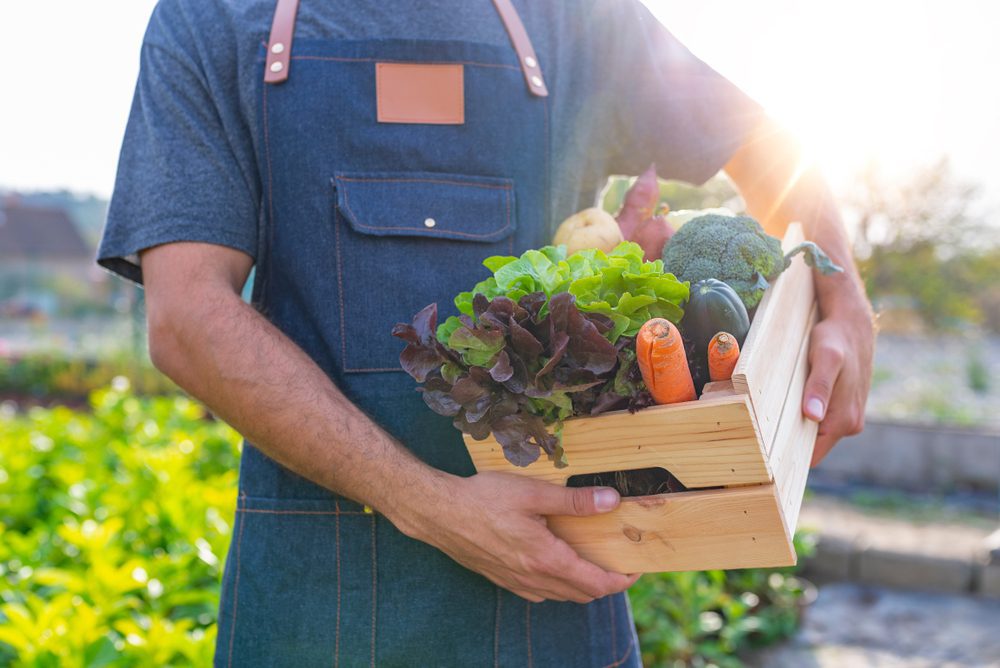
 Consumers want to know about the paths their food and drinks take from the farm to their pantry. And they want this pathway to feature sustainable choices by food producers, and for those choices to appear clearly on food packaging and branding. With the pandemic driving more people to focus on health and eating at home, there’s a further demand for sustainably sourced food and better food production choices.
According to data from the annual Food & Health Survey from the International Food Information Council, more than 80% of consumers noted the pandemic shifted their food consumption habits. This included changes in the ways they shop, prepare, eat and generally think about their food: 60% of the respondents said they are cooking at home more frequently, and one in five said they’re making healthier food choices.
Consumers’ expectations, in turn, drive the food and beverage supply chains’ actions and farm’s best practices. People want sustainability and transparency from their food brands, so these companies must improve the ways they communicate and verify their claims.
Sustainability Spending Rising
The demand for sustainability comes from multiple consumer generations, but it’s the strongest among millennials and Generation Z. Food and beverage producers and retailers should understand millennials are no longer the “young kids.” They’re the main spenders, and by 2025 three out of four workers in the U.S. will fall into the millennial group. This generation wants sustainably sourced products, and brands that ignore or downplay these desires risk losing market share or sliding into irrelevance.
Millennials and Generation Z are willing to change their brand preferences quickly when presented with a more sustainable product. They want sustainability at the heart of a brand’s decisions, from the impact of the packaging to water usage and fuel usage of the brand’s transportation infrastructure. What brands should especially note is these consumers are willing to spend more. A survey from Impossible Foods found 62% of Generation Z members would spend additional amounts on sustainable foods, underscoring the depth of their commitment and a clear financial incentive for brands.
From its early beginnings as a niche differentiator, the organic label is now a multi-billion-dollar industry. Organic food sales passed $55 billion in 2019, reflecting consumer’s desire for the products, and food and beverage makers massively expanding their offerings in response. However, just because food and beverage products are labeled “organic” doesn’t necessarily mean they are sustainable. The desire for sustainability needs to surpass the labels to incorporate the entire supply chain, including a farm’s soil practices or efforts to promote biodiversity.
On the retailer side, store managers and executives need to actively stock sustainably sourced products, and they need to recognize consumers want proof of sustainability claims. The tricky part is that acquiring this proof is often challenging, because food producers typically lack hard data about their best practices.
Tracing Sustainability to the Source
Many farms and food producers have “sustainability pledges” in place that demand, or at least encourage, the organization to follow various best practices. For example, a dairy farm in Wisconsin is producing milk for a leading cheese producer. That cheese company requests its suppliers align with its sustainability pledge, with mandates for soil health, reducing carbon output, and other areas.
The farm’s managers do their best to adapt their current practices to fit within the pledge’s goals, but they often don’t have the data to support their decisions. Do they know if they’re using less water than last year? Are they producing more corn per acre? Without data to support their sustainability efforts, the cheese brand can’t state with confidence that the farm aligns with the pledge. They can’t state impressive sustainability stats on their brand packaging or website, because the information’s not available.
Farms that are growing radishes or raising cattle might know they’re doing better with sustainability, but they don’t have the metrics that would allow them to tell an impactful story. They’re left with generalities about their efforts instead of data they can use to attract top-tier partners and retailers.
Data to Prove Sustainability Claims
A farm’s partners and the end retailer should be asking specific questions to develop a data-based sustainability report. The questions should look at the entire product lifecycle to generate a wealth of data that can satisfy even the most demanding consumer. Key questions include:
- Is a third-party firm leveraged for evaluating a farm partner’s sustainability practices? Do they compare year-over-year improvements, and can they relate them to the farm’s actions to results?
- Are the farmers employing regenerative practices?
- Are there gaps between goals for water usage, energy, biodiversity and other sustainability goals and our farm’s ability to measure those practices? How can we close those gaps?
- What are our consumers’ primary sustainability concerns, and how do we acquire the right data to match those concerns?
- Do our suppliers have plans for dynamic improvement across all the sustainability metrics?
Measuring and proving sustainability practices at the farm is best done with a third-party verification platform. For example, Sustainable Environmental Consultants, an industry leader in this space, offers EcoPractices®, a platform that involves measuring a variety of holistic metrics and then producing digestible and impactful sustainability achievements.
Armed with verified sustainability data points, food and beverage retailers can prove their brand’s claims and get help crafting marketing messages. In the dairy farm and cheese supplier example, maybe the farm is recapturing 180 million gallons of water or reducing runoff exposure by 20%. The specificity of the data means retailers can make bold yet supported claims that really stand out and give reassurances to the buying public.
A Sustainable Future
A consumer demand for sustainability is a part of the push toward a customer-centric economy that rapidly shifts due to consumer demands. The pandemic accelerated this trend, and food brands need to move quickly to tie their practices to data and act transparently when it comes to their environmental claims.
Using reputable third-party sustainability verification partners is the easiest way for food producers and retailers to validate their efforts while reassuring skeptical consumers. And retailers can hold their suppliers to sustainability benchmarks by choosing the ones that meet aggressive goals and show year-over-year improvements. The retailers can also create branding campaigns centered around their sustainability, an especially effective strategy for high-value products like produce. They can use the data to craft a long-term competitive advantage that aligns with consumer demands and helps them to build more authentic, long-lasting brands.
Rick Shanks is Chief Sustainability Advisor of Sustainable Environmental Consultants.