
Key takeaways:
- Growth in independent retail is concentrated outside major metros, with small cities and towns outpacing New York, London and their equivalents across nearly every country measured, according to a report by wholesale marketplace Faire.
- Independent retailers stocked squishy toys roughly six weeks before mainstream press and big-box chains caught on, illustrating a structural speed advantage.
- Despite tariff pressure, independent retailers adapted quickly by consolidating around domestic brands in the U.S.
As big-box chains shuttered more than 8,270 locations in 2025, according to Coresight Research, something unexpected was happening on Main Streets across the country: independent retailers were holding their ground and, in many cases, pulling ahead. A new pair of reports from wholesale marketplace Faire, based on a panel of more than 130,000 retailers active in both Q2 2025 and Q2 2026, offers a detailed look at where independent retail is winning and why.
The data reveals a structural shift shaped by migration patterns, parenting trends, tariff pressures and the limits of algorithmic shopping.
Where Independent Retail Is Growing
The fastest growth in independent retail is happening in smaller communities such as Auburn, Ala., Augusta, Ga., Hereford, England and Sarnia, Ontario.
Headquartered in San Francisco, Calif. and Kitchener-Waterloo, Ont., Faire tracked a balanced panel of more than 130,000 retailers across 20 countries, comparing each store to itself year over year to isolate real growth from new entrants. The results were consistent across markets: small cities and towns are outpacing major metros.
In addition to urbanites moving to smaller towns in the U.S., domestic travel is increasing, with Americans visiting historic towns such as Sturgeon Bay in Wisconsin or Williamsburg in Virginia, said the report.
In the U.K., the market towns of Hereford and Lyme Regis ranked first and second among 58 cities measured. Ninety percent of retailers in those towns grew, compared to 58% in London. In Canada, regional hubs like Sarnia, Prince George and Red Deer are outperforming Toronto and Vancouver, a pattern that real estate firm CBRE has called Canada’s “defining retail story,” according to the Faire report.
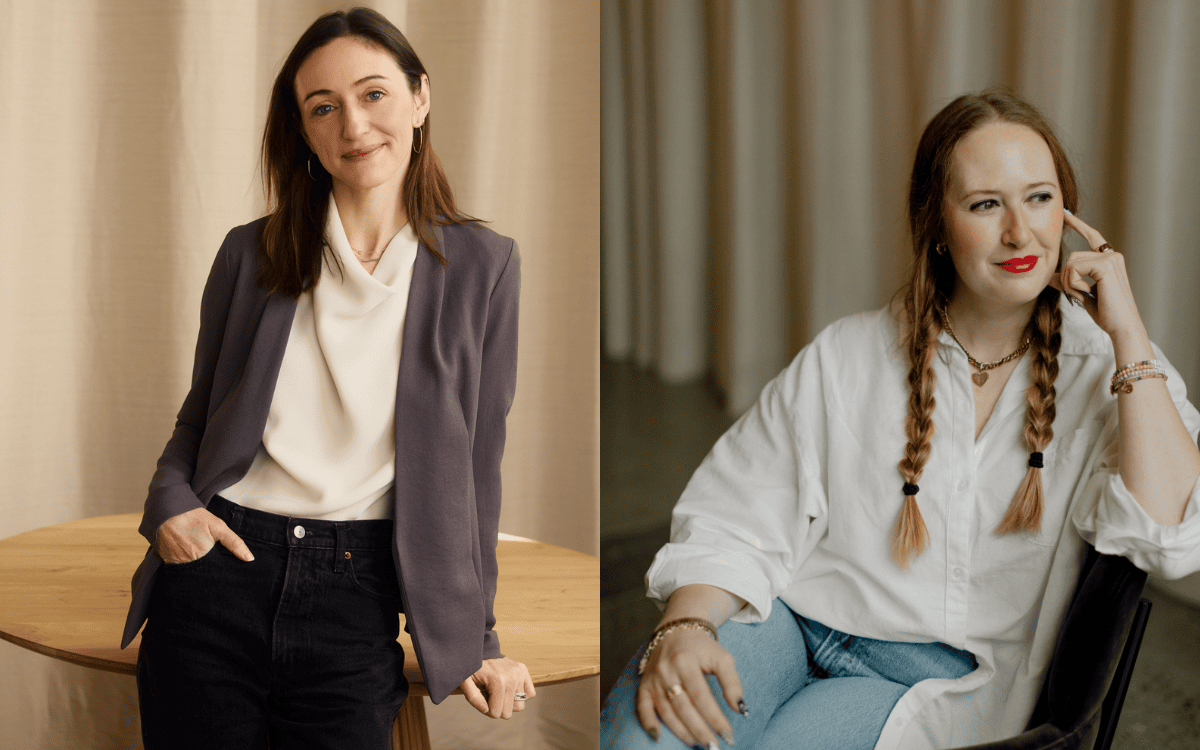
Faire Chief Revenue Officer Jen Burke attributed the shift to three converging forces: population movement to smaller towns since the pandemic, a rise in short domestic trips to smaller destinations (a travel pattern sometimes called “townsizing”) and the retreat of big-box chains from the communities independent retailers now serve.
“Don’t count out the independent retailers,” Burke said in an interview with Retail TouchPoints. “This segment is actually very healthy and very resilient, and we’re continuing to see a lot of momentum in this channel.”
The Curation Advantage
Globally, 59% of Faire’s brick-and-mortar retailers reported that their wholesale purchasing grew in Q2 2026. The typical physical or multi-channel store increased spending approximately 19% year over year, or 2.2 times the growth rate of online-only stores.
Burke pointed to the limits of algorithm-driven ecommerce as a key factor.
“Ecommerce experiences right now are very push experiences versus pull, meaning they’re algorithm-driven,” she said. “I think there’s a little bit of: we’re tired of this, and we want to go back to making our own choices.”
Independent retailers can act on that appetite in ways big-box chains structurally can’t. Because they place smaller, more frequent orders with shorter lead times, they can move on a trend quickly, test it at low cost and double down if it sells, she said. Net-60 payment terms and free returns on Faire reduce the financial risk further, allowing retailers to trial new brands almost on consignment.
That agility shows up in the data on viral trends. When mahjong sets took off on social media, Faire saw a 39% increase in retailers carrying the category. Dubai chocolate, the pistachio-kunafa confection, saw retailer numbers increase 565% by August 2024, months before “The Today Show” made it mainstream and a full year before Lindt released a version of its, said the report. The squishy toy phenomenon followed the same arc.
Squishies, Plush Toys and What’s Trending Next
Kids and Baby was Faire’s most notable growth category in Q2 2026, up 166% year over year. Most of that growth traces to a single sub-category: Stuffed and Plush, which grew 628%, with roughly three-quarters of it driven by squishies. Books increased 41% and apparel grew 36%.
Independent retailers began stocking squishy toys about six weeks ahead of mainstream press and big-box adoption, said the report. The category has since spread well beyond toy stores: squishies now account for 73% of kids-item orders in hardware stores, 67% in convenience stores, 65% in pharmacies and 63% in grocery stores, according to the Faire Independent Retail Pulse: How Modern Parenting is Reshaping Play report. A year earlier, they made up 1% to 4% of kids-item orders in every one of those store types.
Faire Trend Expert Hannah Wall attributed the durability of the trend in part to its collectible nature and its adaptability.
“What we’re watching for is whether a new format cannibalizes the old one, which would signal a fad cycling through,” she said in an interview with Retail TouchPoints. “Instead, we’re seeing seasonal adaptation: ‘Halloween squishy’ searches were trending back in June, and new animal formats like axolotls and highland cows keep appearing alongside the originals, not replacing them.”
The shape of squishies is also shifting. Generic, unshaped toys held 89% of squishy sales through mid-2025. By June 2026, that share fell to 37%, with food-shaped formats, especially dumpling and butter, leading the fragmentation. Wall flagged cheese as the next shape to watch. That trend didn’t appear until April, but has climbed every month since, said the Modern Parenting report.
The broader Kids and Baby surge connects to a shift in parenting philosophy. Small, analog and screen-free products, which include squishy toys and STEM items, are leading growth, showing a shift toward in-person, tactile play rather than screentime. Sales of classic and nostalgic games within the category increased 67.5%. Values-driven products like wooden and Montessori toys carry a median price near $18, which is close to double a squishy’s roughly $10 price, yet demand hasn’t softened.
“This is already one of the most expensive times on record to be a parent,” Wall said. “If premium, values-driven toys were purely discretionary, I’d expect them to be the first line item cut in a year like this. Instead, we’re seeing that spending hold.”
Regionally, the screen-free parenting trend plays out differently depending on local culture and policy. In the U.S. and Canada, squishies and plush dominate. In France, crafts and small-world play lead. In the U.K., it’s STEM toys. Australia presents the most striking case: after introducing a world-first ban on under-16 social media accounts in December 2025, the country saw STEM toy growth of 91%, nearly matching squishies and plush at 108%.
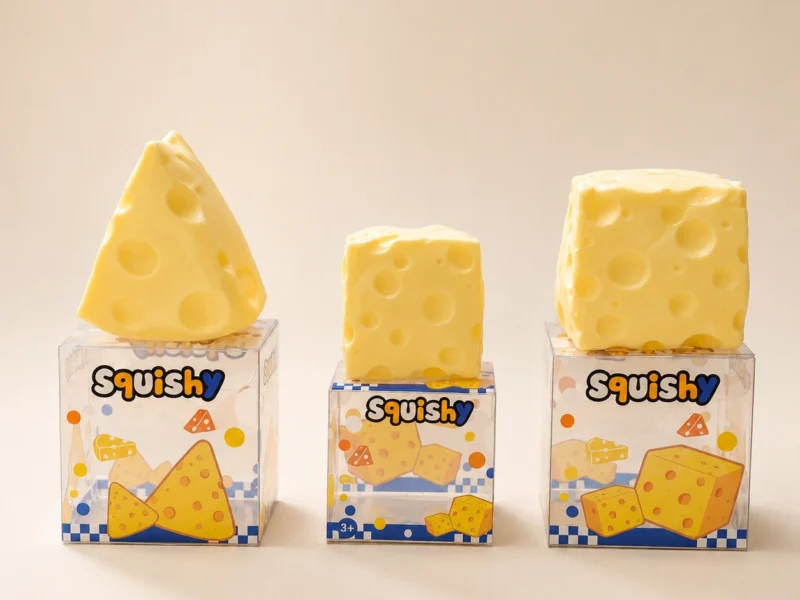
Photo: Faire.
Tariffs and Sourcing
Tariffs complicated the picture considerably. In the U.S., interest in “made in USA” searches tripled in the week after Liberation Day. Domestic brands’ share of retailer spend on Faire rose from around 94% through 2024 to roughly 96% by early 2026 and has held there.
In Canada, the story is more unsettled. Canadian retailers bought fewer U.S. brands after tariffs hit in Q2 2025. By Q2 2026, U.S. brands’ share of spend among Canadian retailers had risen 1.7 percentage points year over year, from 40.6% to 42.3% on a same-store basis. There was a surge in “buy Canadian” searches that peaked in 2025 has since fallen from about 247 to 65 searches per 10,000 searches.
In February 2026, a Supreme Court ruling struck down reciprocal tariffs under the International Emergency Economic Powers Act, and replaced them with lower rates. But that relief may be temporary: Washington declined to renew the USMCA pact in its current form earlier this month, and the administration has signaled more tariff action could follow.
Faire noted some exceptions to imported goods to U.S. retailers: Premium Italian leather accessories grew 571% in imports. Handwoven Moroccan bags and baskets rose 214%, appearing in 592 U.S. stores. Finnish bat and bee houses were up 423%, concentrated in birding shops, garden centers and conservation groups. Premium Irish artisanal chocolates climbed 233%. What those products had in common, according to the report, was differentiation: products that buyers couldn’t easily be substituted elsewhere.
Scout Retailers and the Geography of Discovery
Among the retailers Faire tracks, a subset stands out for consistently betting on genuinely new brands. Faire calls them Scouts: stores that place first-ever orders with at least three new-to-them brands in a single quarter, with at least two of those brands less than a year old on the platform.
Scouts, retailers such as The Daisy in Cedar Rapids, Iowa, Poppy’s in Petaluma, Calif. and Cabin Fever Outfitters in Rhinebeck, N.Y. buy two to 2.5 times the volume of an average active shop and carry about twice as many brands. They’re also, perhaps counterintuitively, not the newest or trendiest stores. They’re established, high-volume, brick-and-mortar retailers, often outside major cities.
In the U.S., 19.3% of active retailers qualify as Scouts in Mississippi, and North Dakota (19.2%) and Maine (19%) follow. Retailers in Nevada, Wyoming and Arizona trail. Globally, Scouts are most concentrated in Germany and the U.K.
“What we see in our data is that discovery isn’t about being new or buzzy,” Wall said. “It’s about having the curiosity and the trust to take a chance on something unproven, backed by long-standing knowledge of your customer base. A brand-new shop often can’t afford that gamble; an established one can absorb it.”
What’s to Come
Consumers are increasingly bringing their values to the checkout counter, both in terms of product origin and materials. Physical retail is outperforming ecommerce among independent retailers, small towns are outperforming major cities and independent retailers are maintaining a speed advantage that their larger competitors can’t easily replicate.
“Don’t assume your best retailers are in the obvious places,” Burke said. “We’re seeing so much more cross-category purchasing. It could be the apparel store or the hotel boutique or the barbershop or the spa and salon that are all shopping on Faire.”