
Key Takeaways:
- Bed Bath & Beyond’s parent company will become Neighborhood Intelligence, trading on Nasdaq under the ticker NXH beginning Aug. 17.
- Second-quarter net revenue rose 28% year-over-year to $361 million, marking the company’s second consecutive quarter of revenue growth after 19 straight quarters of decline.
- CEO Marcus Lemonis is steering the company away from retail toward a three-pillar platform built around the entire homeownership journey, from furnishing a first apartment to selling a home.
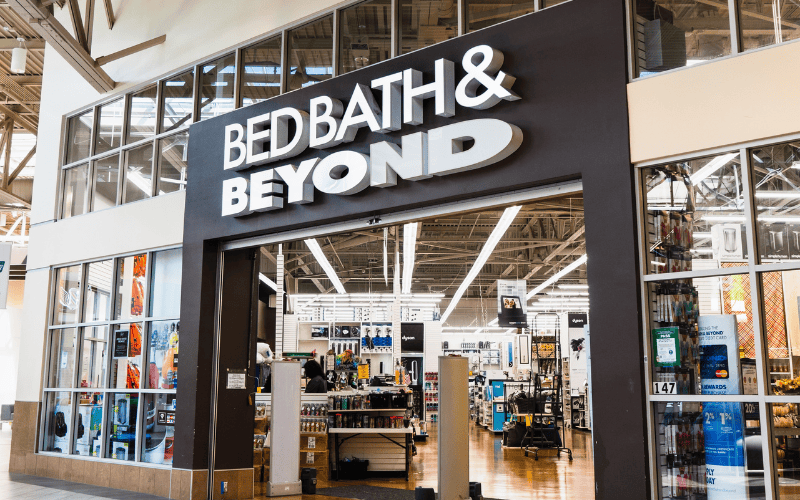
Bed Bath & Beyond’s parent company is changing its name to Neighborhood Intelligence, a move that reflects the company’s transformation from a retailer to a service provider to homeowners throughout their journey, according to CEO Marcus Lemonis.
Effective Aug. 17, Neighborhood Intelligence will move from the New York Stock Exchange to Nasdaq under the ticker symbol NXH. The announcement came alongside second-quarter results that showed $361 million in net revenue, a 28% year-over-year increase and the second consecutive quarter of growth following 19 straight quarters of decline.
“This is not a story about a name change, a collection of acquisitions or a single improved quarter,” Lemonis said on the company’s earnings call on Tuesday. “It’s about the transformation of a business from disaster recovery into a platform built around the homeowner, built by the employees from around the country.”

The company will relocate its corporate headquarters from Utah to Nashville, Tennessee.
Second-Quarter Results
Bed Bath & Beyond’s active customers rose 47% year-over-year to 6.4 million in the quarter ended June 30, while orders delivered more than doubled, increasing 117% to 2.8 million. Orders per active customer climbed to 1.79 from 1.32 in the prior-year period. Gross margin expanded 310 basis points to 26.8%.
The company reported a net loss of $39 million, compared with a net loss of $19 million in the same period a year ago. That widening loss reflects $21 million in special items, including acquisition-related costs, restructuring charges and non-cash store-closure impairments. Adjusted EBITDA came in at a loss of $12 million.
“While two quarters are not a victory, and the work is far from finished, what matters is that the operating model is now producing measurable evidence that it is working: Revenue growth, order growth, margin expansion and early integration results from the businesses we’ve acquired,” Lemonis said. “When I officially assumed the role of CEO in January, we saw the company could no longer organize itself around disaster recovery. Protecting liquidity, building working capital, improving operations, and rebuilding credibility were necessary.”
The company ended the quarter with $126 million in cash, cash equivalents and restricted cash.
The Strategy: Following the Homeowner Journey
The rebrand reflects a strategic bet on the full arc of homeownership, which has included several acquisitions in recent months, such as The Container Store and real estate brokerage Fathom Holdings. Lemonis described a framework built around the observation that the average homeowner stays in a home for roughly 11 years, a period that includes renovations, refinancing, growing families and, eventually, a sale.
The company is organizing around three pillars: omni-channel retail, which introduces customers to the brand; home services, which deepens those relationships through installation and improvement; and home ownership, which covers the financial and transactional side of owning property.
“Retail can only introduce us to the customer,” Lemonis said. “Home services allow us to deepen that trust. Quite frankly, it’s where the real margin exists.”
The company’s consumer brands, including Bed Bath & Beyond, Overstock and buybuy BABY, remain at the center of customer relationships, Lemonis said. Neighborhood Intelligence functions as the connective layer, designed to make each brand smarter and more integrated without erasing its individual identity. The company is also building a proprietary AI agent called Norm, with its first customer-facing version expected later this year.
Acquiring Fathom and Expanding Into Home Transactions
Bed Bath & Beyond announced it would acquire Fathom Holdings, a top-10 U.S. real estate brokerage built on an asset-light, technology-focused model in June.
“The larger opportunity is connecting them because the home transaction should not begin and end with the relationship,” Lemonis said of the suite of services Fathom brings, including appraisals, brokerage, mortgage, title and closing. “It should be one important moment inside of a relationship that lasts for years.”
Lemonis identified Fathom’s title business, which operates in 36 states, as a central reason for the acquisition. Title records, he argued, are the foundational layer where the home, the owner and the transaction history converge. The company intends to explore placing authenticated, customer-controlled title records on blockchain infrastructure, building on more than a decade of investment through Overstock’s tZERO and GrainChain assets.
“The technology is not the point,” Lemonis said. “The point is giving homeowners greater control over the information and reducing the cost, delay and uncertainty of rebuilding that same record every single time a transaction occurs.”
More acquisitions are expected. Lemonis said total revenue from all transactions currently on the table would exceed $2.5 billion, depending on timing of closings.
Blockchain, Tokenization and a Proprietary AI Agent
The company’s blockchain portfolio, which includes tZERO and GrainChain, has drawn skepticism from investors but Lemonis pushed back. He said he believes the market significantly undervalues those assets and that management teams at both companies are refining infrastructure and controlling costs. Discussions about monetizing proprietary technology are in early stages.
The title-on-chain concept represents the most concrete application of those assets. The logic is straightforward: each time a home sells, the process of verifying and rebuilding title records from scratch adds cost and delay. A blockchain-anchored record could reduce that friction.
The company is also building Norm, a proprietary AI agent designed to help homeowners navigate their journey. No financial details or specific capabilities were disclosed, but management described it as part of a broader technology transformation intended to produce a unified customer experience across all brands and services.
Acquisition Spree Update: The Container Store and More
The company closed its acquisition of The Container Store, Elfa and Closet Works on July 8. That deal brought organized-storage expertise and, through SFV Services, a Detroit-based installation network with more than 20 years of experience serving Elfa, Closet Works, Lumber Liquidators and Cabinets To Go.
Kirkland’s and Kirkland’s Home, acquired through The Brand House Collective earlier in the quarter, contributed meaningfully to second-quarter revenue. The company also announced agreements to acquire F9 Brands in April.
President Amy Sullivan said the company has begun converting Container Store locations to combined-format stores that include Bed Bath & Beyond products, Kirkland’s decor and more home services space. A Fort Worth location added Cabinets To Go, flooring and Elfa offerings alongside traditional retail inventory.
“We added about 2,000 square feet of home services space, which is what’s going to drive this margin expansion that we’re talking about for the future,” Sullivan said.
Supply Chain Consolidation
Lemonis outlined a significant supply chain overhaul, describing the current warehouse network as fragmented and inefficient. The goal is to consolidate down to two or three facilities nationwide. Addressing margin leakage across the full product lifecycle, from international sourcing to last-mile delivery and returns, is central to the plan.
The company is also rethinking returns. It has begun testing a program that routes returned items back to physical stores for resale rather than liquidation, a process Lemonis said could recover one full point of margin in the marketplace business alone.
The company expects to spend approximately $20 million over the next six months to terminate legacy technology contracts, consolidate warehouse infrastructure and exit other agreements. CFO Brian LaRose said the company entered the quarter with $164 million in combined cash, restricted cash and net inventory, a figure essentially flat from the prior quarter.
Outlook
For the third quarter, the company guided net revenue in the range of $505 million to $525 million and expects gross margins to approach 30%. Transaction-related costs will continue to weigh on reported results.
Looking further out, Lemonis said 2027 is the year shareholders should expect to see the company reach cash flow neutrality to positivity. He outlined a path to mid-to-high single-digit adjusted EBITDA margins that requires gross margins around 35%, $50 million in additional annualized cost savings and a housing market where roughly five million to 5.3 million existing homes are sold annually, compared with approximately four million over the past year.
“We’re going to take a more conservative approach based on the timing of certain transactions closing and providing what will start to become better guidance for quarters going forward,” Lemonis said. “It is our goal in 2027 that we provide a much more rigorous forecast of what could be expected, including top-line margin performance and earnings on a regular basis. We hope to be able to, in the very distant future, break the reporting out by segment between our omni-channel business, our home services business, and our home ownership and transaction businesses.”
The company’s last day of trading on the NYSE is Aug. 14. Neighborhood Intelligence begins trading on Nasdaq under the ticker NXH on Aug. 17.