
Key takeaways:
- Ulta Beauty executives say the retailer’s 47 million-member loyalty program, built on years of data infrastructure investment, is becoming a foundation for AI-driven personalization.
- CEO Kecia Steelman said prestige brands that exited the company’s Target partnership have returned to Ulta’s stores, along with the customer data to win those shoppers back.
- Wellness, a category Steelman calls a $400 billion market that no single retailer has yet won, is emerging as what she believes could become Ulta’s next billion-dollar business.
Ulta Beauty has spent years and considerable capital rebuilding the technology underneath its stores and loyalty program. Now, according to its top executives, the payoff is starting to show up in how the company markets to customers, predicts demand and, in one notable case, retains shoppers after exiting its partnership with Target.
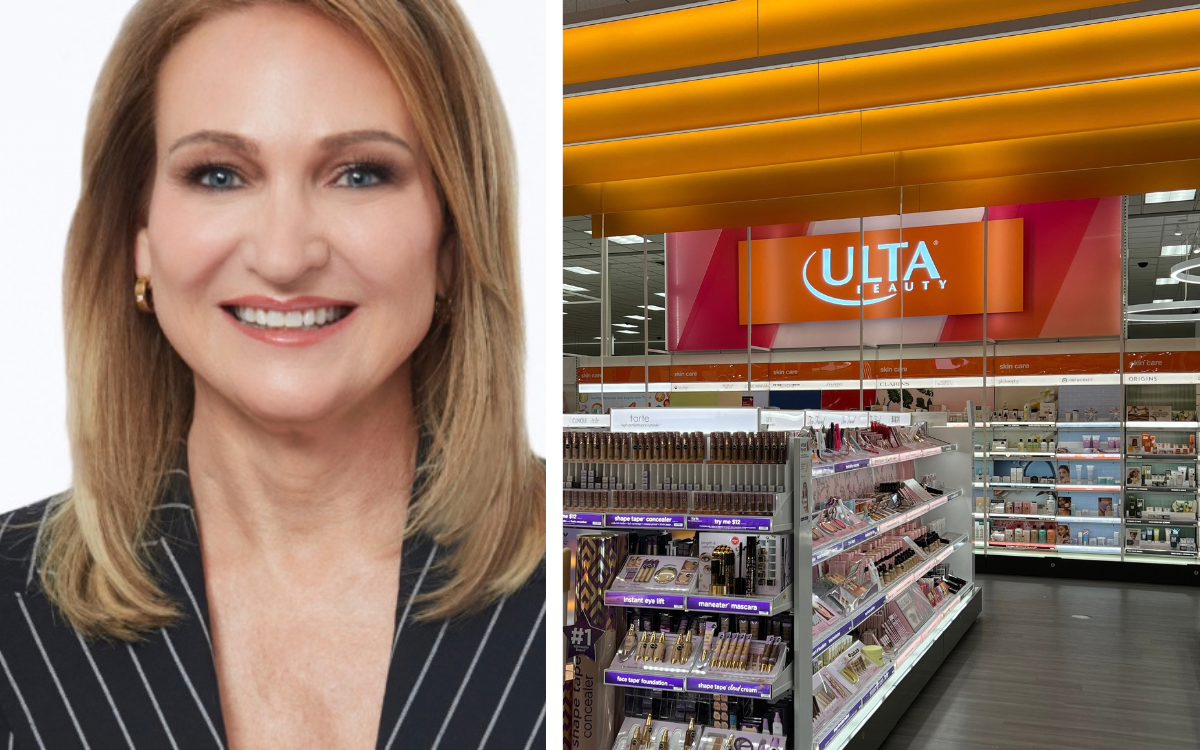
Speaking at the Barclays 19th Annual Global Consumer Conference last week, Steelman and CFO Christopher DelOrefice laid out a vision for Ulta that stretches well past its core makeup and skincare aisles, touching wellness, men’s grooming, marketplace expansion and international growth. Underpinning all of it, they said, is a loyalty program and data infrastructure the executives argue would be extraordinarily difficult for a competitor to replicate.
Steelman said Ulta’s position spanning low-price and prestige beauty has become more valuable as shoppers grow more selective about spending.

“We’re really the only ones that do end-to-end, low-to-luxury,” Steelman said. “So I do think that puts us in a different element around specialty beauty, and especially as the consumers’ wallets (are) pressured, I do think it puts us in a really different situation.”
On Exiting the Target Partnership
Ulta ended its in-store partnership with Target in mid-August, the same month Target launched its own Beauty Studio concept. Steelman said prestige brands, including L’Oreal, Estee Lauder and LVMH, chose to exit the Target arrangement alongside Ulta and return fully to Ulta’s ecosystem.
“I’m very thankful for our big brand beauty brands, L’Oreal, Estee Lauder, LVMH for successfully exiting the partnership along with the other prestige beauty brands that came with us,” Steelman said. “They all came back into the Ulta Beauty ecosystem.”
She said those brands recognize the value of Ulta’s trained store associates in selling higher-priced products, something a general merchandise retailer’s staff isn’t positioned to replicate. “We’ve been at this for 35 years to be able to articulate and give service to a guest that is looking for spending a little bit more on a product,” she said. “You have to have the expertise to be able to do that.”
Steelman also said the company retained data on customers who had shopped both retailers, giving the company a direct marketing path to bring them back. “We’ve got full marketing efforts of keeping them and getting them back into this ecosystem because they can only buy those prestige beauty products back in Ulta now,” she said.
Asked to compare the two companies’ beauty offerings, Steelman drew a clear distinction. “I’ve seen the Beauty Studio. I think it’s great what Target is doing,” she said. “However, what we’re doing is very different than what they’re doing today.”
Ulta’s Differentiators
Pressed on what would be hardest to rebuild if someone tried to recreate Ulta Beauty from scratch, Steelman pointed not to inventory or real estate but to people.
“Anybody can sell products or put products on a shelf, but how you bring those products to life and the experience that you give … that’s really difficult to get into your DNA as a company,” she said. “I would say the one thing that’s really difficult to replicate is the associates that we have working in our store, the love for beauty and wellness, and how they bring beauty and wellness to life.”
Orifis described that advantage as a self-reinforcing cycle. “There is literally like an embedded flywheel in our growth algorithm that allows us in a very attractive market to deliver strong growth, win share,” he said, tying that dynamic to Ulta’s path toward double-digit earnings-per-share growth.
Loyalty Data and AI
Ulta’s loyalty program, which has roughly 47 million active members, generates the vast majority of the company’s sales. Steelman said years spent cleaning up the company’s underlying data systems, an investment that weighed on spending during that period, are now paying dividends as the company applies AI to that information.
“If you leverage AI, but you don’t have clean data, you’re going to get hallucinations, and it’s not going to really work well for you,” Steelman said. “While it was tough for a period of time that we were so heavily weighted on our capex, opex investments on foundational — it’s paying off for us now.”
She said that clean data also strengthens Ulta’s pitch to brand partners investing in its retail media business, UB Media. “We can really show the return on that investment. It’s really starting to work right now,” she said.
Trends to Watch
Steelman highlighted fragrance as one of the company’s largest and fastest-growing categories, pointing to rising demand for layered, personalized scenting and a new wave of younger male shoppers entering the store through that aisle. She also cited the momentum behind K-beauty, which is being followed by C-beauty (China), and that Ulta is now looking for unique products from multiple international sources to bring into the fold.
Heavier makeup trends inspired by the 1980s are cycling back into fashion, and GLP-1 drugs and their impact on skin elasticity are reshaping demand in skincare and hair care. Beyond category trends, the executives touched on men’s grooming, marketplace expansion and international growth as the next vectors of scale.
Steelman named wellness as the clearest white space opportunity ahead. She described it as a $400 billion category still lacking a dominant winner, despite most of Ulta’s shoppers already buying wellness products elsewhere.
“When we did some research with our consumers, they trust Ulta Beauty,” she said, adding that 95% of Ulta’s guests currently shop wellness products in general. The company has narrowed its focus to four areas: supplements and nutrition, rest and renewal, intimate care and everyday essentials.
“We do believe that wellness could be the next billion-dollar category for us,” Steelman said.
Orifis noted the category also carries an attractive financial profile since it uses Ulta’s existing stores and infrastructure. “It’s an incremental purchase,” he said. “This one can be high value creation as you think of it, kind of end to end down through the PnL.”
What Do Investors Misunderstand About Ulta Beauty?
Asked what investors get wrong about the company, Steelman challenged three assumptions: that beauty is primarily a replenishment business, that value is driven only by price and that online shopping will eventually dominate.
She said 80% of Ulta’s sales still come through physical stores, and 75% of members shop exclusively in-store, while just 5% shop online only. On replenishment, she said only 15% to 20% of member sales are repeat purchases of items customers have bought before.
“That means that 80(%) to 85% of our sales coming through our members are new items that they’ve never purchased before,” Steelman said. “This is a growing category. We’re leaning into newness, exclusivity and innovation, and I think that’s what separates us from everyone else.”
In Q2 of fiscal 2026, Ulta reported net sales of $3 billion, up 8.9% year over year, with net income climbing roughly 8% to $282 million and comparable sales rising 3.8%. Fragrance was a standout performer, delivering high-teens comparable sales growth on the back of new launches and sustained shopper enthusiasm. Ulta raised its full-year net sales growth outlook to between 6.7% and 7.2%, up from its prior forecast of 6% to 7%.