
Every founder who sells a physical product eventually learns how much time sourcing can consume. Comparing suppliers, chasing quotes, negotiating terms, and following up on orders can swallow entire days, often when a small team is already stretched across product development, marketing, fulfillment, and customer service.
Founders have tried plenty of workarounds. Spreadsheets can organize quotes, but they cannot chase down a supplier. Part-time sourcing support adds a cost many early-stage businesses cannot justify. Even the general AI chatbots that companies have adopted over the past few years tend to stop before the work is finished. They may draft a supplier message, but someone still has to send it, monitor the response, and follow up when the conversation stalls.
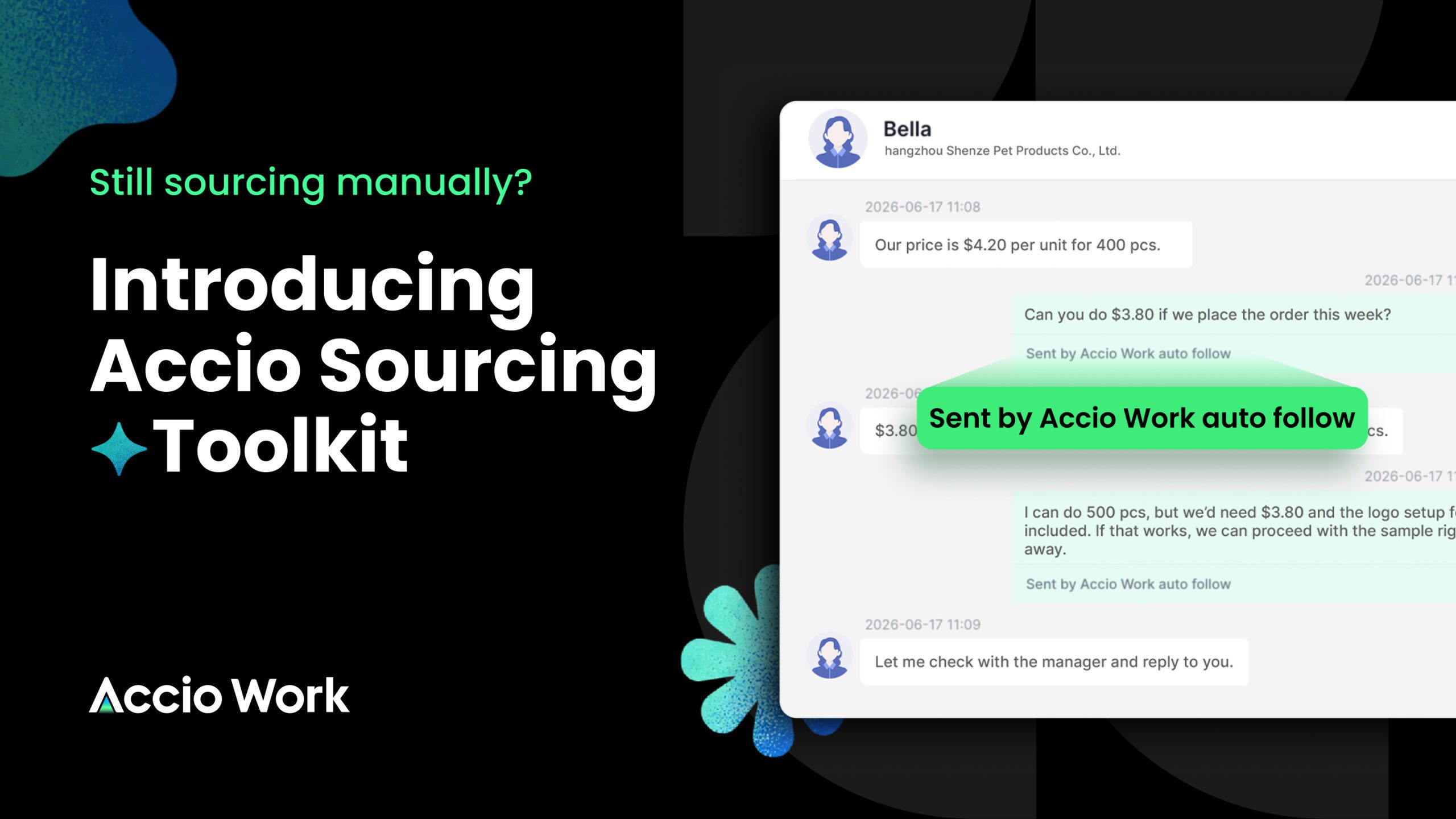
The Accio Sourcing Toolkit, a plugin inside Accio Work, Alibaba.com’s AI-powered business agent, is designed to carry out those steps directly. It can find suppliers, compare offers, send outreach, negotiate pricing, and support order placement without requiring a founder to manage every interaction manually.
Consider a founder in Austin sourcing 500 units of a new product. They can enter the target price, quantity, specifications, and delivery requirements before signing off for the night. While the founder sleeps, the toolkit can continue conversations with suppliers in Asia, where the business day is already underway.

That matters because time zones remain one of the most persistent challenges in global sourcing. A question sent at the end of the U.S. workday may not receive a response until the next morning. By then, a supplier may need clarification, creating another full-day delay. For a solo entrepreneur or small team, a negotiation that should take hours can stretch across a week.
The toolkit can keep those conversations moving by asking for missing details, following up on unanswered questions, and maintaining multiple supplier discussions at once. By morning, responses can already be logged and compared, with quotes flagged when they appear high relative to prevailing market rates.
Its negotiation capabilities go beyond sending a standard request for a lower price. A buyer can set a target cost, lead time, minimum order quantity, and other commercial requirements. The system can compare offers across suppliers, use the strongest available terms as a reference point, and request revised quotes. It can also negotiate around factors such as FOB and CIF pricing, sample costs, production schedules, and minimum order quantities, while escalating important decisions to the buyer for approval.
For example, if one supplier offers a better unit price while another provides a shorter lead time or a lower minimum order, the toolkit can continue both conversations and surface the trade-offs. The founder can then decide whether speed, margin, or order flexibility matters most.
The same applies when the scope changes. If a sample needs to move from 180 grams to 200 grams, the revised specification can be shared across the active supplier conversations at once. The founder can then review the resulting changes in price, lead time, or minimum order quantity rather than repeating the same message and rebuilding the comparison manually.
For sellers running lean operations through Amazon, Shopify, or their own storefronts, the practical benefit is time. Fewer hours are lost to monitoring inboxes and maintaining sourcing trackers, leaving more capacity for product decisions, customer acquisition, and the other work that determines whether a young business grows.
Businesses can access the Accio Sourcing Toolkit through Accio Work and begin a sourcing task right away by entering their product requirements, target terms, and delivery needs.