
Victoria’s Secret is marking nearly five years as a standalone company with a remarkable business bounce-back. The retailer achieved a 5% sales increase in FY 2025, which ended Jan. 31, 2026, to $6.55 billion, and its guidance for the coming year forecasts sales in the $6.85 billion to $6.95 billion range.
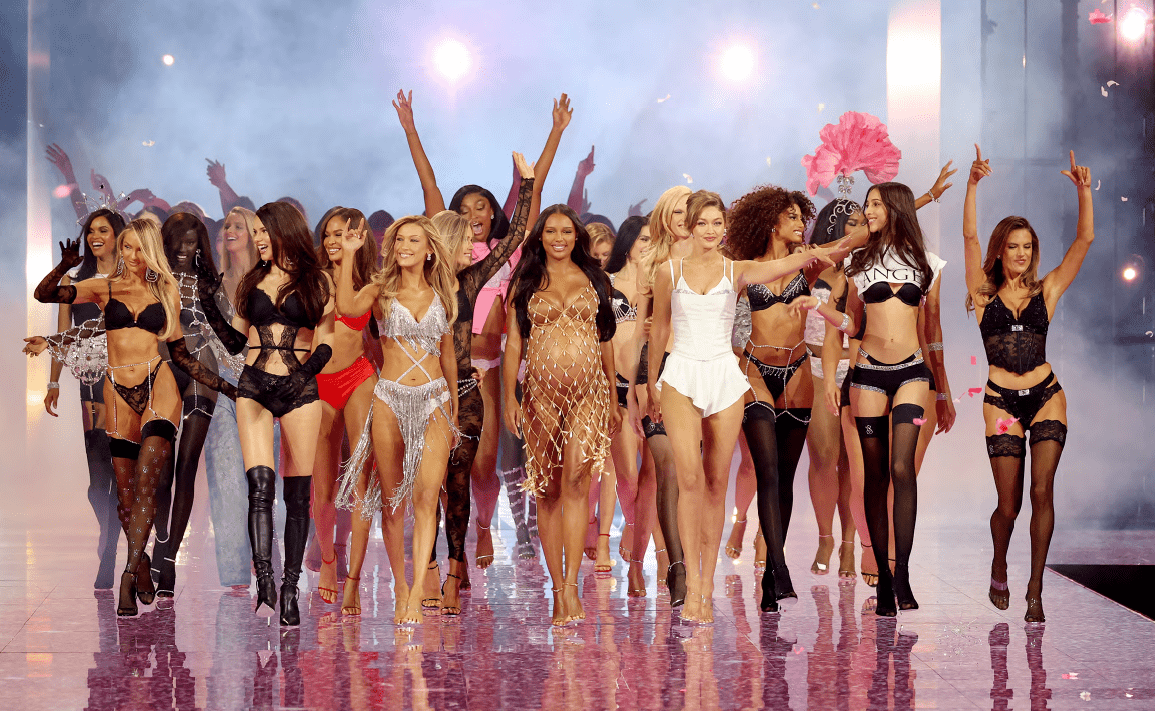
Another sign of the brand’s resurgence was the positive reception to the Victoria’s Secret Fashion Show in October 2025, which featured a broader, more inclusive approach to the intimates category, with female athletes sporting bombshell hair and “baby bumps” paired with angel wings. The 2024 iteration of the fashion show — which had been the first in five years — was criticized for leaning too heavily on nostalgia and lacking inclusivity.
“We were ‘sexy’ in a way that was very prescriptive for a long time,” said Hillary Super, CEO of Victoria’s Secret during a session at Shoptalk this week. “It was ‘If you’re not this, you’re not sexy.’ But we believe in sexiness on your terms, about inspiring your most confident and sexy self.
“All great brands stand for something, and in the case of Victoria’s Secret, that’s sexy, glamourous and luxurious,” Super added. “That doesn’t change for us, but what we’re doing is asking, ‘What is the cultural lens that we’re putting these attributes into?’ We’re a global business, and there are so many micro-cultures around the world [with their own ideas] about being sexy. Opening that aperture has been really important for us, and resonated very deeply.”
Creating Change Without Losing Customers’ and Associates’ ‘Deep Brand Love’
Super, who was interviewed by Simeon Siegel, Senior Managing Director and Consumer Equity Research Analyst at Guggenheim Securities in a session titled, The New Era of Sexy: Strategy, Storytelling and Customer Truths, shared that she took on the tough job because “I felt deeply that I knew where the brand needed to go. It’s one of the few brands that are about women feeling great about themselves, and feeling comfortable.”
When she took the job in October 2024, she quickly discovered that she wasn’t alone in having strong feelings about the brand. “The biggest surprise for me was how deep the brand love was both internally and externally — even when the brands, including Pink, weren’t executing well,” said Super. “That’s also reflected in tenure within the organization. When I go to stores, it’s rare to meet an associate who hasn’t worked in the store for 10 or 15 years. A salesperson in a Las Vegas store just marked 41 years. They have hung in through the bad times — they’re here for the customers and the love.”
The flip side of those strong feelings? “It’s hard to change culture in a legacy organization, and I learned that very quickly,” said Super. “Creating change and giving ourselves permission to do things differently — that’s been a journey,” she said diplomatically.
Building a Team that Could Execute Change Quickly
Super got a rare opportunity to start reshaping the Victoria’s Secret C-suite even before she officially started. “The day I signed, I was told the CFO was retiring and I would have to hire a new one, so I hired a change agent who really believed in the brands,” said Super, calling the onboarding of Scott Sekella as Chief Financial and Operating Officer a “pivotal first hire.”
She then evaluated the rest of the current team, asking “Do you have the skill sets needed for this next chapter? It will require significant brand-building and brand-sharpening, and a real shift to modern marketing methods. Do you have the desire to make those changes, or are you going to work against those changes?”
Super now has new brand presidents for Victoria’s Secret, Pink and the brand’s beauty segment, as well as a new EVP and Chief Creative Officer, Adam Selman.
Pulling Apart Pink and Victoria’s Secret, but Gently
One of the trickiest parts of the turnaround has been adjusting the relationship between the Victoria’s Secret and Pink brands. The latter began struggling about 10 years ago, said Super, and “in the absence of knowing how to fix it, it kept getting whittled down. We closed more than 300 stores in the 2020 time period, and then decided to close all standalone Pink stores and have dual locations, to ultimately ‘smerge’ the two brands.
“The ecosystem of shared real estate and a website, and shared loyalty files, makes it really powerful,” Super added, noting that different seasonality curves and traffic for each brand make dual store operations easier to manage.
“As we’ve pulled the two brands apart, we’ve leveraged speed with Pink, and a more precise, artisan and technical approach for Victoria’s Secret,” said Super. “It’s a bespoke experience that’s unlocked a lot of power for the brands.”
She admitted that there are sometimes heated negotiations over issues such as store selling space and marketing budgets, and that finding the right balance of when to synergize and when to separate is “a work in progress.”
Operating in the ‘Soothing Economy’
A key part of that bespoke customer experience has been shopping for bras. “These are intimate experiences and emotionally significant moments — buying your first bra, one for your wedding, pregnancy, work events,” she said. “Every associate in every store is trained to fit bras, and to do it in a supportive way. It’s part of what I call the soothing economy; people are looking for moments of comfort, and it creates a halo effect for the rest of the brand.”
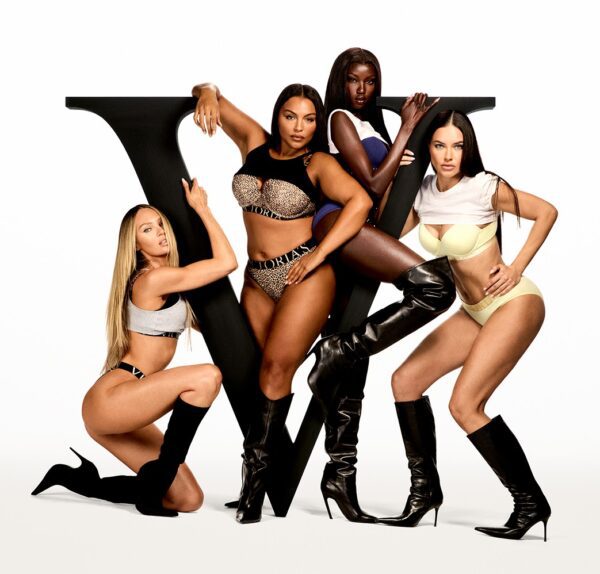
The VS Signature wireless T-Shirt Bra. (Image courtesy Victoria’s Secret)
Victoria’s Secret also sets itself apart with product innovation, such as its Flex Factor Bra. “We saw that wireless bras were trending, so we wanted to create a sexy bra with real comfort, with the tagline that it’s ‘Better than Braless,’” said Super. “Now it’s a top-10 Victoria’s Secret bra.
Super definitely does not want Victoria’s Secret to be competing on price in the intimates consumer’s mind: “The market insights we’ve gotten are that what shoppers want is price, value and comfort,” she said. “But if we go out as a price vehicle, we’re never going to win — and comfort is table stakes.”
Asked by Siegel what she specifically brings to this tough job, Super said: “I’m very driven by intuition and gut — but it’s informed by listening to customers and associates, watching people in the world, media, social media — and then connecting the dots.”