

The AI Shopping wars continue to advance at lightning speed with OpenAI, Shopify and Meta announcing new capabilities this week, following fast on the heels of similar updates from Google and Amazon.
OpenAI is improving the shopping experience in ChatGPT to enhance discovery, which it acknowledges is, at the moment, the primary way shoppers are using the platform. Shopify is advancing its partnerships with all the major players in the space, including Google, OpenAI and Microsoft, while also positioning itself as the go-to for AI catalog enhancement and integration for any brand (even those without Shopify stores). And not to be left behind, Meta has introduced its own in-platform one-click checkout feature within ads.
ChatGPT Shifts Away from Checkout to Discovery
OpenAI announced a series of enhancements to shopping on ChatGPT and none of them have to do with checkout, seemingly a tacit confirmation of reports from earlier this month that after disappointing results in early trials, the platform was moving away from in-chat checkout.

OpenAI is making shopping in ChatGPT more visual and informative. (Image courtesy OpenAI)
Speaking on background, an OpenAI spokesperson said the company’s priority at the moment is making the discovery and decision-making moments world-class, and the latest updates are certainly geared toward that goal.
ChatGPT users can now browse products visually; compare options side-by-side with not just images but details like reviews, product details and price; upload images as inspiration for similar items; and refine results conversationally until they land on the right option, driving home the platform’s core utility as a place to explore, compare and figure out what to buy without hours or effort of tiring tab-hopping.
Counter to its September 2025 Instant Checkout rollout, the OpenAI spokesperson said that for now checkout will continue to happen on merchants’ websites and apps, with ChatGPT’s primary goal being to serve as an entry point for high-intent shoppers.
To power these improvements, OpenAI has expanded its Agentic Commerce Protocol (ACP) to bring in more relevant, up-to-date information directly to ChatGPT. The company also said it has improved speed, relevance and product coverage to ensure results are more up-to-date and useful.
These updates are rolling out to all ChatGPT free, Go, Plus and Pro users this week, with more enhancements to come, including personalization features and local availability. Merchants can take part by sharing their product data through ACP, with deeper integrations available via ChatGPT apps, that will enable things like account and loyalty linking.
Further underlining OpenAI’s shift away from direct checkout and toward app integration, it was also announced Tuesday that Walmart has debuted an in-platform app experience in ChatGPT backed by its commerce agent Sparky that supports the full shopping journey.
“All eyes are on OpenAI. They were first to market for mass consumer LLM adoption, and now they’re first to make major moves for agentic commerce,” said Joe Doran, Chief Product Officer at Botify, an AI Search partner for retailers including Macy’s and Sephora, in comments shared with Retail TouchPoints. “Instant Checkout was a bold step that tested the market’s readiness for agentic commerce, and their latest move shows they’re listening to retailers” by pulling. Many retailers are concerned about losing their coveted “merchant of record” status (and the data) that comes with it, if the transactions shifts to third-party platforms like ChatGPT.
“The market is already moving from hype to reality, and we’re seeing it in the surge of bot-driven traffic and AI-led product exploration,” Doran added. “This time next year, we can expect that the two-horse race between Google and OpenAI will have a clear winner. The foundational elements OpenAI is betting on with today’s news sets them up to take the lead, and it’ll be exciting to see how Google responds.”
It’s worth noting, that Google has already made several rounds of enhancements to its experience akin to what OpenAI is now rolling out, and just last week introduced new capabilities for UCP that not only enable direct checkout but also loyalty integration, multi-item carts and real-time catalog updates. Gap Inc. has signed on as an early adopter.
Shopify Opens AI Catalog Integration to Any Brand, Even Those Without a Shopify Store
In its own announcement, Shopify, which was a launch partner for ChatGPT Instant Checkout, reiterated that it now enables native commerce at scale across all major AI channels.
After co-developing the Universal Commerce Protocol (UCP) with Google, the company said native shopping for Shopify merchants will roll out on Google surfaces soon, allowing those merchants to sell directly in AI Mode in Google Search and the Gemini app. Shopify also is releasing an update to its Microsoft Copilot integration that includes a new embedded checkout experience.
And millions of Shopify merchants can now sell in ChatGPT through an integration with Shopify Catalog, Shopify’s global product catalog. Purchases are completed via an in-app browser that will carry over all merchant customizations from their online store, such as brand experience, pricing logic and payment methods. This involves no separate integration by the merchants and no extra fees.
Perhaps most interesting, that Shopify Catalog is now open to any brand through Shopify’s new Agentic plan. This means brands on any platform can now use Shopify’s infrastructure to sell on AI channels without needing to have a Shopify online store. Any merchant can now list their products in Shopify Catalog, which uses specialized LLMs to categorize, enrich and standardize product data to be more findable by AI answer engines, as well as enabling them to sell in the Shop app (Shopify’s multi-brand shopping app).
“Shopify has a history of building checkouts for millions of unique retail businesses,” said Vanessa Lee, VP of Product at Shopify in a statement. “Agentic commerce has so much potential to redefine shopping and we want to make sure it can scale to every product a customer might want to purchase.”
Meta Makes its Ads Work Double Time with New Checkout Experience
For years, Meta has been improving its suite of ad tools to help drive more moments of relevant discovery for brands. As a result, the platform says that conversion growth is accelerating year-over-year and ad impressions increased 18% in Q4 2025.
Now, Meta wants to bump up that conversion metric even more with new features that help close the sale. Noting that even when an ad is interesting and relevant to a user, it can still be difficult to make a purchase without having the right information, the company shared that it is testing a new AI experience that allows people to see more of the information they need to make a decision after clicking an ad or visiting a website from Facebook or Instagram. These new browsing capabilities will surface information like reviews, brand details, discounts and product recommendations.
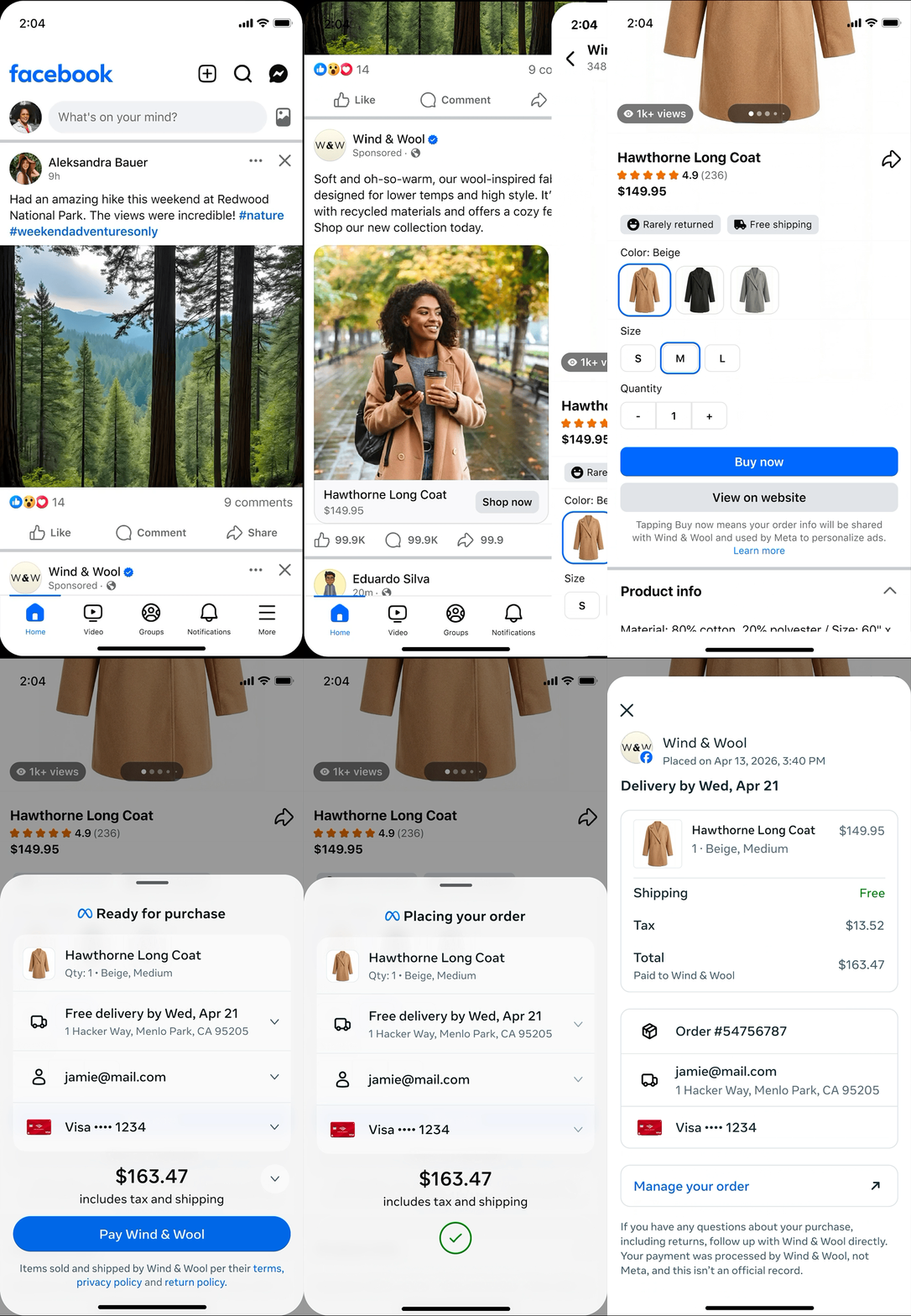
Demonstration of the new checkout feature in Meta ads. (Image courtesy Meta)
And when a customer is sold, Meta no longer wants them to have to leave the platform to complete their purchase. To that end, the company is introducing a new checkout experience that helps people make a purchase in just one tap. Meta is working with partners across the payments ecosystem to provide merchants the flexibility to choose the right integration that works for them, starting with PayPal and Stripe, with Adyen and Shopify coming soon.
“At Fanatics, we’re obsessed with the fan experience, which means meeting fans wherever they are and making it easy to shop across their digital journey,” said Sashanka Vishnuvajhala, SVP of Technology at Fanatics, in a statement. “This new [Meta] checkout experience is opening up new ways for us to do that: fans can move from discovery to purchase in just a few taps, unlocking faster, more seamless ways to shop the gear they love.”
Now after clicking on an ad in Facebook or Instagram, a user might see a “Buy now” button. Advertisers choose the checkout partner that works best for them and fulfill the order directly.
“What we’re doing is bringing the promise of what we all love about retail [to life on our platforms],” said Nicola Mendelsohn, Head of the Global Business Group at Meta during at keynote address at Shoptalk on Tuesday. “It’s deeply personal, and that’s what the future is all about — a world where discovery and commerce happen almost seamlessly together, connecting people so many different ways. …The future of shopping is discovery that feels natural, and buying that’s frictionless.”