
For years, ecommerce growth followed a relatively straightforward path: launch a brand, build a loyal direct-to-consumer (DTC) customer base, and eventually expand into retail.
That playbook still holds true. What has changed is the operational foundation required to make it work.
Too often, I see brands invest heavily in customer acquisition and product development but fail to build a fulfillment strategy that can support the business they hope to become. By the time they land their first major retail account, they’re forced to rethink their entire logistics operation.
Many assume the answer is adding another warehouse or bringing on a second 3PL to handle wholesale and retail orders. In reality, that often creates more complexity than it solves.
Consumers don’t shop through a single channel anymore. They discover products on TikTok, buy through Shopify, compare prices on Amazon and pick up products at retail stores. The brands winning today are the ones that can serve every channel without creating separate operational silos behind the scenes.
After decades of helping omnichannel brands scale, I’ve seen one strategy consistently outperform the rest: operating from a single pool of inventory under one fulfillment partner.
Each new sales channel creates opportunity, but it also introduces operational complexity that many brands underestimate. The biggest challenge isn’t getting onto retail shelves, it’s preventing inventory, operations, and customer experience from becoming fragmented as your business grows. I’ve watched brands celebrate signing their first national retailer contract only to discover that the real work begins after the purchase order arrives.
Growth Shouldn’t Mean More Complexity
When brands expand into retail, the instinct is often to build separate operational processes for every channel.
One warehouse managing DTC, while another handles all retail, Amazon inventory lives somewhere else, international or region-specific stock in additional warehouses, and returns follow an entirely different workflow. I even know of warehouses that handle just orders for Influencers. Inventory becomes stranded in one channel while another experiences stockouts. Customer service teams struggle to answer simple availability questions. Finance teams carry more working capital than necessary because inventory and its safety stock is spread across multiple locations. Not to mention the operational resources and soft costs it takes for the supply chain and logistics teams to rein in and manage disconnected inventories, each with its own rules, systems, forecasts, and priorities.
The result isn’t just operational inefficiency, you are risking your business. In many cases, the cost of this fragmentation quietly erodes the margin gains that retail expansion was supposed to deliver.
Inventory Is No Longer Channel-Specific
Consumers don’t think about channels. They expect products to be available wherever they choose to shop. Whether they purchase from a brand’s website, Amazon or a national retailer, they expect the same experience: accurate inventory, reliable delivery, and consistent service. Your operations should reflect that reality.
The strongest fulfillment strategies no longer view inventory as “DTC inventory” or “retail inventory.” They manage inventory as a shared business asset that can flex to support changing demand across every sales channel.
That flexibility becomes especially valuable during periods of uncertainty.
Retail promotions may outperform expectations while ecommerce demand softens. A viral social campaign might unexpectedly spike direct orders. Seasonal shifts can move demand from wholesale to online almost overnight. The same principle applies to returns. Quickly returning inspected A-stock inventory to available inventory, or using it for warranty replacements, helps brands reduce waste while getting more value from inventory they already own.
When inventory can move fluidly across channels instead of sitting inside operational silos, brands gain the agility to respond without creating unnecessary shortages or carrying excess inventory.
Operational Excellence Starts Before the Order Ships
Retail expansion often shines a spotlight on transportation costs, but transportation is rarely the root cause of operational problems. Most issues begin much earlier.
Brands should look for fulfillment partners with direct EDI management capabilities, rather than relying entirely on third-party middleware, reducing implementation time and creating better operational visibility.
At the same time, ecommerce customers continue to expect same-day fulfillment, rapid shipping and seamless returns. The strongest operations also treat reverse logistics as part of inventory strategy, quickly inspecting, grading, refurbishing and returning sellable inventory back into circulation, instead of letting it sit idle.
Supporting both environments requires more than warehouse capacity. It requires disciplined operational processes that allow very different order types to move through the same operation without sacrificing quality. It requires warehouses with a culture of agility rather than rigidity.
That means investing in standardized workflows, quality assurance, technology visibility, and experienced teams that understand the nuances of every fulfillment channel.
Technology plays an important role, but it isn’t a substitute for operational discipline.
Visibility Is the Competitive Advantage
One of the biggest differences between companies that scale successfully and those that struggle isn’t warehouse space. It’s visibility.
As brands grow, decisions become increasingly dependent on accurate, real-time information.
- How much inventory is actually available?
- Which fulfillment center should ship the order?
- Which channels are consuming inventory fastest?
- What happens if a retailer doubles next month’s forecast?
Without clear operational visibility, companies often compensate by holding more inventory than necessary. While that may reduce short-term risk, it ties up working capital that could otherwise fund marketing, product development, or expansion into new markets.
Unified fulfillment isn’t simply about consolidating physical inventory. It’s about creating a single operational view of the business that allows leaders to make faster, better-informed decisions.
The Right Partner Grows with Your Business
One mistake I see growing brands make is selecting fulfillment partners based only on today’s requirements. The better question is what your business will look like three years from now. Will your partner support retail routing guides when you land your first national account? Can they manage DTC, wholesale, Amazon, marketplaces and value-added services without forcing you into separate operations? Can they scale during peak seasons without compromising service levels? Can they adapt as your business evolves?
Growth rarely follows a straight line. Consumer demand changes. Sales channels shift. Retail opportunities emerge unexpectedly. New marketplaces appear almost overnight. Your fulfillment strategy shouldn’t have to be rebuilt every time your business changes direction.
The most resilient supply chains aren’t necessarily the most automated or the least expensive. They’re the ones built around flexibility, operational consistency, and a unified view of inventory across every channel.
As retail and ecommerce continue to converge, brands that eliminate operational silos will be better positioned to protect margins, improve customer experience, and scale with confidence.
Because in today’s omnichannel environment, success isn’t determined by how many channels you sell through. It’s determined by how seamlessly you operate across all of them.
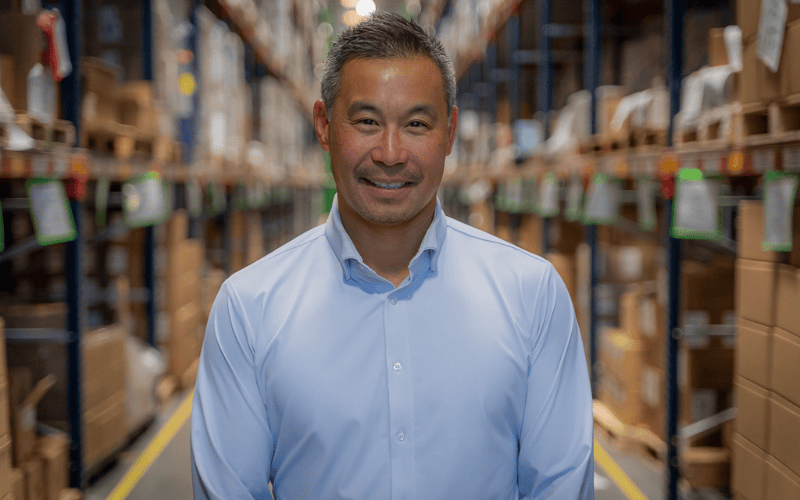
Dave Tu is President at DCL Logistics, where he has led the company’s expansion from a regional fulfillment provider to a national omnichannel 3PL with operations across the US and internationally. With more than 20 years of experience spanning finance, operations, and logistics, he champions technology-driven innovation to help ecommerce brands scale efficiently. Before joining DCL in 2014, Dave held finance roles at Boeing Capital and JPMorgan and earned his MBA from London Business School.