

Key takeaways:
- Fabletics announced plans to open approximately 20 new international stores over the next 12 months, targeting markets in Asia, South America, Central America and the Middle East.
- The expansion follows a milestone year in which the company surpassed $1 billion in net revenue and comes alongside plans for 25 additional U.S. locations.
- Company leadership says growth will be guided by local expertise and market-specific tailoring.
Fabletics is accelerating its international growth plans.
The El Segundo, Calif.-based activewear brand has plans to open roughly 20 new international stores over the next 12 months, tripling its current international retail footprint in 2026. The targeted markets include India, the United Arab Emirates, Colombia, Peru and several countries across Central America.
Fabletics crossed $1 billion in net revenue for the first time in 2025, and the company says it’s aiming to double that figure while quadrupling earnings before interest, taxes, depreciation and amortization over the next five years. Fabletics plans to open 25 new stores domestically over the same period, continuing a U.S. expansion that the company says has delivered three consecutive years of double-digit same-store sales growth. The dual strategy, scaling both at home and abroad simultaneously, carries obvious operational demands.

Co-Founder and CEO Adam Goldenberg pointed to the performance of the company’s existing U.S. retail model as the basis for confidence abroad.
“As our retail model continues to deliver strong results in the U.S., we’re confident it can scale globally,” he said in a statement. “This expansion will allow us to reach more customers, grow the Fabletics brand and create long-term value.”
“Our international growth is driven by a disciplined approach to market expansion and a commitment to delivering a consistent brand experience for customers around the world,” said Meera Bhatia, President, in a statement. Bhatia added that the company intends to enter the right markets, use local expertise and adapt to regional needs without losing the core identity of the brand.
A Bet on “Lifewear” Beyond the Gym
Bhatia laid out the strategic pillars that drove the company’s growth thus far in an episode of Retail Remix in February 2026 (see episode below).
Much of Fabletics’ domestic success traces back to its membership model, which Bhatia described as a key driver of customer loyalty, purchasing predictability and reduced supply chain waste. Members receive personalized offers and early access to new products, creating repeat engagement that one-time buyers rarely generate. That membership base now exceeds three million active customers globally.
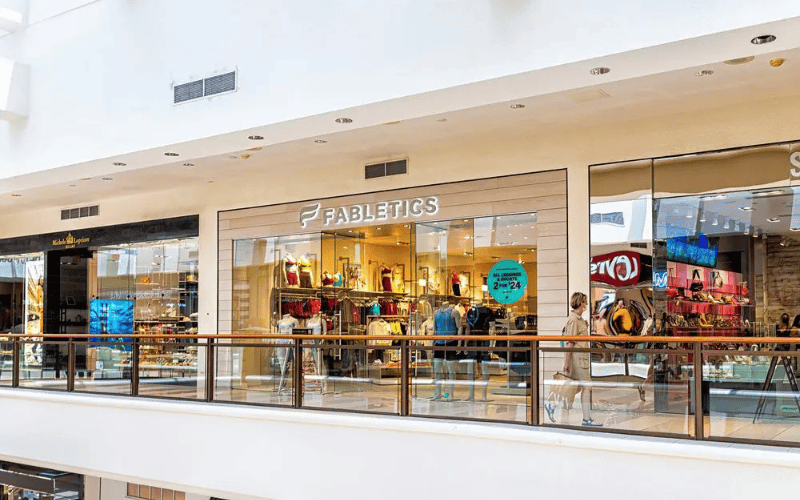
Physical retail has also played a bigger role than many observers expected from a brand that started as a direct-to-consumer, digital-first operation. Fabletics operates more than 135 stores globally, and Bhatia told the podcast that retail has become an increasingly important growth channel rather than just a brand-awareness tool. The stores aren’t simply showrooms; they’re contributing meaningfully to revenue.
The company has also invested in technology at the store level. Its AI-powered flagship location uses smart fitting rooms and real-time coaching tools for store associates, part of a broader effort to use technology to improve operational efficiency without abandoning the fundamentals of good retail. As Bhatia put it in the podcast, AI at Fabletics is less about replacing what works and more about delivering it better.
Fabletics has been deliberately expanding its product positioning beyond traditional activewear. The company is leaning into the concept of “lifewear,” a category that encompasses comfortable, functional clothing designed for everyday use, not just workouts. That positioning gives the brand more room to grow in international markets where athleisure adoption is still accelerating.
The company has also pursued category expansion, moving beyond leggings and sports bras into categories that broaden its potential customer base. That diversification matters when entering markets where brand recognition is still limited and the company needs to attract new customers across a wider range of occasions and purchase motivations.