
Key takeaways:
- Walmart U.S. comparable sales grew just 2.6% in the second quarter, the slowest pace in six years, weighed down by pharmacy deflation and a softening consumer.
- The company received substantially all of an estimated $2.9 billion in tariff refunds, deploying much of it into more than 11,000 price rollbacks, up from roughly 7,200 at the end of the first quarter.
- Walmart raised its full-year net sales outlook to 4% to 5% growth in constant currency, up from an initial range of 3.5% to 4.5%, even as fuel costs are expected to add more than $2 billion in incremental expenses.
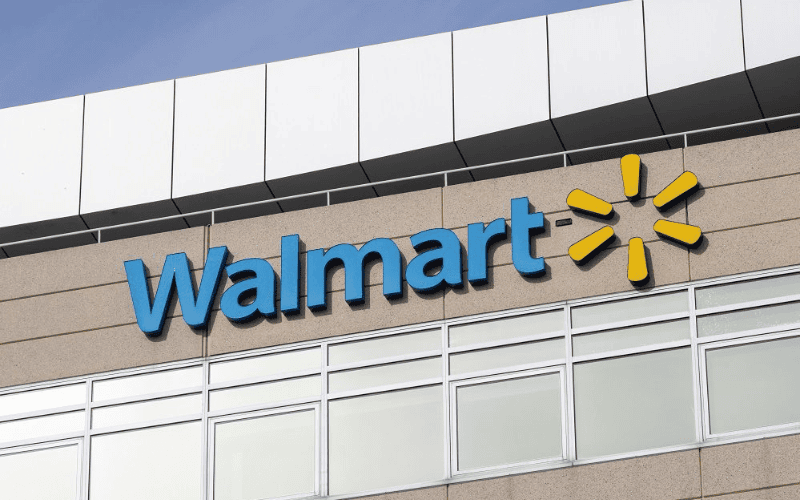
Walmart Inc. reported its slowest comparable sales growth in six years Thursday, as a softer consumer environment, higher fuel prices and pharmacy deflation weighed on results at its flagship U.S. business. Executives said on the Arkansas’-based company’s Q2 earnings call on Thursday that a wave of tariff refunds reinvested into price cuts will accelerate growth in the second half.
“We’re investing heavily in price because customers need us to, and because we believe it drives market share gains over time,” said John Furner, President and CEO of Walmart, on the call.
Second Quarter Results
Total revenues for the second quarter ended July 31 increased 5.9% to $187.9 billion, or 5.1% in constant currency, compared with $177.4 billion a year earlier.

Operating income jumped 28.8% to $9.4 billion from $7.3 billion, a figure heavily influenced by the receipt of tariff refunds in the period. On an adjusted constant-currency basis, which strips out those and other one-time items, operating income grew 17.4%. Adjusted earnings per share came in at $0.81, up 19.1% from $0.68 a year ago.
Walmart U.S. comparable sales, excluding fuel, increased 2.6%, down from 4.6% in the second quarter of fiscal 2026. Transactions rose 1.5% and average ticket increased 1.1%. Ecommerce contributed roughly 510 basis points to the comp, with U.S. online sales growing 24% year over year.
Tariff Refunds and Price Rollbacks
Walmart said it was eligible for roughly $2.9 billion in refunds, equivalent to about half a percent of annual U.S. net sales, and had received substantially all of it by the end of the quarter. Rather than flow the money to the bottom line, management said it funneled the bulk of the funds into price.
The gross profit rate increased 96 basis points to 25.4%, with the tariff refund benefit as the primary driver. Walmart U.S. gross profit reached $36.8 billion, up 9.4%, with the gross profit rate at that segment expanding 158 basis points to 29.4%.
The company logged more than 11,000 price rollbacks during the quarter, up from about 7,200 at the end of the first quarter. Furner acknowledged the timing of those investments was intentional, noting that rollbacks in consumable and food categories typically take time to translate into sustained traffic growth.
“We exited the first quarter at about 7,000 rollbacks. That’s normally about (5,000). At the end of the quarter, we have (11,000),” Furner said during the earnings call. “When you take rollbacks in consumable categories like food, you tend to see first a unit increase, and we saw transactions and units grow in the quarter, and then that does create a temporary deflationary effect, but as the units grow over time, particularly in food, then the share gains come through.”
Operating income for Walmart U.S. rose 20.6% to $8.1 billion from $6.7 billion. The gains were partially offset by a 72-basis-point deleverage in operating expenses, driven by higher self-insured liability claims, depreciation tied to capital spending and rising healthcare costs from increased associate enrollment.
State of the Consumer and Fuel Prices
Walmart’s management painted a cautious picture of the American shopper, particularly lower- and middle-income households navigating higher gas prices. June was described as a notably soft month as fuel prices climbed above $4 a gallon.
“We are no doubt seeing some incremental pressure on the consumer relative to the beginning of the year with higher fuel prices,” said CFO John David Rainey on the call. “As you go through month by month in the last quarter, you can tell when fuel prices increased and got above $4, and perhaps there’s a psychological impact to that.”
Fuel costs are not just a consumer issue; they’re a direct cost pressure for Walmart’s distribution and fulfillment network. The company said it now expects to absorb more than $2 billion in incremental fuel-related costs this fiscal year above its original internal assumptions, a headwind that factored into management’s caution on the operating income outlook for the third quarter.
Despite the pressure, Walmart continued to attract higher-income households. The company said share gains persisted across income tiers, with upper-income shoppers continuing to shift spending toward Walmart for grocery staples and general merchandise.
The Impact of GLP-1 Deflation and Maximum Fair Price Regulation
Grocery in Walmart U.S. had mid-single-digit comparable sales growth, driven by strong unit volumes and market share gains. Like-for-like grocery inflation ran at 1.3%, with egg deflation creating a negative 60-basis-point drag within the food category. Strength in pantry staples and fresh foods reflected what management described as solid seasonal execution.
General merchandise had low-single-digit comp growth, led by toys and fashion. Private brand sales mix improved 130 basis points, and Marketplace sales in key categories grew more than 40%. Like-for-like general merchandise inflation ran at 1.7%, roughly 270 basis points lower than the first quarter.
Health and wellness was the clear drag on the quarter, declining in the low-single-digit range. Pharmacy script counts grew mid-single digits and over-the-counter sales held up, but the category suffered a roughly 900-basis-point headwind from deflation tied to maximum fair price regulation that took effect Jan. 1. That regulation, which introduced price controls on certain drugs, lopped 125 basis points off Walmart U.S. total comp sales for the quarter, a larger impact than initially anticipated.
“During each of fiscal year ’25 and fiscal year ’26, we realized 100 basis points of a tailwind from sales of GLP-1 branded drugs,” Rainey said. “In fiscal year ’27, the benefit from GLP-1 is expected to be roughly half that amount, as script count growth is more than offset by price mix headwinds. New in fiscal ’27, we cited a 100 basis points headwind to total comp sales from deflation and brand-to-generic transfers under the first year of maximum fair price regulation.”
At Sam’s Club U.S., comparable sales excluding fuel rose 4.4%, with transactions increasing 7% even as average ticket declined 2.5%. Ecommerce grew 26%. Operating income reached $678 million, up 44.3% from $470 million; on an adjusted basis, operating income grew 23.3% to $678 million. Membership fee revenue rose 6%, driven by growth in member counts and Plus penetration, with Gen Z and millennials accounting for more than half of new sign-ups.
Walmart International posted net sales of $35.2 billion, up 12.8% as reported but 7.9% in constant currency, as favorable currency movements added $1.5 billion to reported results. China led the segment with constant-currency net sales growth of 20.7%, while Mexico slowed to 3.2% constant-currency growth, reflecting price investments and wage spending.
Outlook
Walmart raised its full-year fiscal 2027 guidance, projecting net sales growth in constant currency of 4% to 5%, up from the original range of 3.5% to 4.5%. Adjusted operating income is now expected to grow 7% to 8.5% in constant currency, up from a prior range of 6% to 8%. Adjusted EPS guidance was nudged up to $2.80 to $2.87, from $2.75 to $2.85.
For the third quarter, the company projected net sales growth of 3% to 3.75% in constant currency and operating income growth of 2% to 4%. Adjusted EPS is expected to fall between $0.62 and $0.64. Management flagged a headwind of more than 100 basis points to third-quarter sales growth tied to the timing of Flipkart’s Big Billion Days shopping event, which will shift from the third quarter to the fourth quarter this year.
Rainey was direct in asking investors not to evaluate the third quarter in isolation, noting that the full impact of price investments made late in the second quarter will weigh on Q3 operating income before the expected payoff in traffic and share gains materializes.
“Our business model is only getting stronger and more durable, and we’re pleased to raise our guidance for the year,” Rainey said. “Our operating income outlook reflects the continued prioritization of tariff refunds received in Q2 into customer experience and price investments in the second half. For this reason, I encourage you to consider Q2 and Q3 performance together to assess the underlying growth of the business.”