Every few months, a new wave of commentary declares that artificial intelligence is about to replace marketers, ecommerce managers, media buyers and brand operators. The prediction is usually framed in dramatic terms. Teams will shrink. Functions will collapse. Software will replace judgment. Human operators will become obsolete. I think that gets the story exactly backwards.
AI is not going to replace brand operators; it is going to make average brand operators impossible to justify. That is a very different shift, and a much more important one.
For years, the ecommerce and brand-services world has been crowded with businesses that survive by owning a narrow task rather than a business outcome. One partner handles ads. Another does creative. Another manages listings. Another sits in analytics. Another offers strategy in decks and calls. Each one can point to activity. Few are fully accountable for whether the brand is actually growing profitably.
If your value proposition is writing acceptable copy, producing a passable product listing, summarizing performance data, generating a handful of ad variations or turning common patterns into generic recommendations, AI will absolutely put pressure on you. In many cases, it already has.
That does not mean the work disappears. It means the market will stop paying premium prices for people and firms that only produce middling outputs without real accountability.
Average operators have historically survived because complexity created cover. When the channel stack is messy enough, it is easy for everyone to blame everyone else. The ad partner blames the content. The content partner blames the inventory picture. The logistics team blames forecasting. The strategist blames execution. The brand is left coordinating a committee. AI will not fix that problem on its own, but it will expose it much faster.
Once machines can do more of the baseline work, the gap between activity and value becomes much more visible. The question will no longer be, “Did you produce the deliverable?” It will be, “Did you improve the outcome?” That is where real operators separate themselves.
The best operators are not just executors. They are decision-makers. They know how to weigh tradeoffs across pricing, inventory, creative, advertising, channel expansio\and margin. They know when to move fast and when not to. They understand that profitable growth is not the same thing as topline growth, and that clean reporting matters because blind spots compound quickly.
AI can support those decisions. It can accelerate them. It can improve visibility, speed and consistency. But AI cannot own consequences. It cannot carry inventory risk. It cannot make judgment calls in the context of a real P&L. It cannot stand in front of a brand and say: this is the strategy, we are accountable for it, and our economics are tied to whether it works. That is why I do not see AI as a threat to serious operators. I see it as a sorting mechanism.
It will reward the firms and individuals who pair automation with judgment, responsibility, and economic alignment. And it will punish those who were already living in the gap between being useful and being indispensable. This shift is going to hit the middle of the services market especially hard.
The firms most at risk are not the truly elite operators and not the lowest-cost commodity providers. It is the broad layer in between: the agencies, consultants, and service partners whose work is competent enough to get hired, but not differentiated enough to be essential once AI raises the baseline.
In that environment, “we can help with ecommerce” is not a strategy. Neither is “we use AI.” Soon, everyone will.
The operators who win will be the ones who can answer harder questions. Who owns the outcome? Who sees across the full system? Who makes the tradeoffs? Who absorbs the risk? Who creates clarity instead of more handoffs? Who can use AI to simplify the business rather than adding another layer of abstraction? Those are operational questions, not software questions.
And they matter because the modern commerce environment is only getting more complex. We see today’s reality as one in which Amazon is still central, but brands are increasingly expanding across other marketplaces, social commerce, and direct-to-consumer channels, with one inventory bank and one P&L becoming more valuable as the channel mix gets harder to manage. In that world, average coordination will not hold. AI will make that obvious faster than ever.
So no, I do not believe AI will replace brand operators. I believe it will expose which ones were never really operating in the first place. The future belongs to operators who can combine machine leverage with human judgment, real accountability, and a deep understanding of how brand, channel, and profit actually interact. Everyone else is about to find out that “good enough” was only ever temporary.
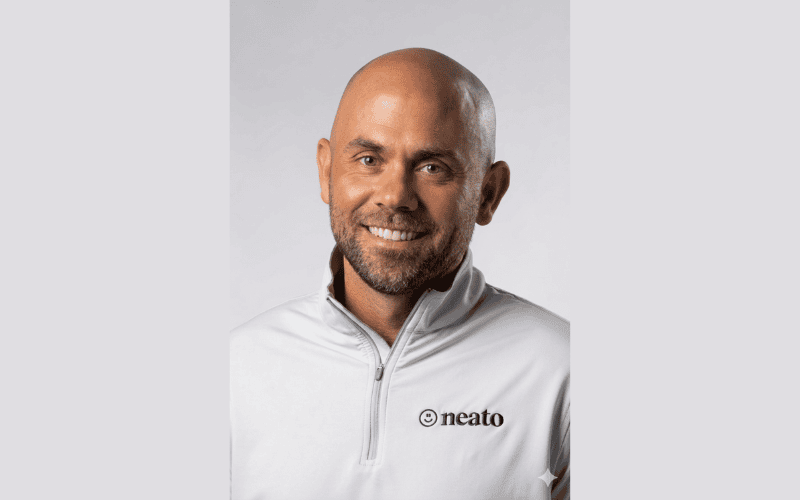
Anthony Connelly is founder and CEO of Neato, a second-party commerce operator that buys inventory directly from brands and manages execution across marketplaces and related channels so brands can step out of day-to-day complexity while retaining strategic control.