
Key Takeaways:
- Lowe’s reported Q2 2026 total sales of $26 billion, up 8.3% year over year and comparable sales growth of 0.2%.
- An $80 million tariff refund under the IEEPA framework contributed $0.11 to EPS, but was largely offset by elevated fuel and transportation costs; competitors used similar refunds to fund aggressive seasonal price cuts that Lowe’s declined to match.
- Online comparable sales surged 15.7% year over year, driven in part by Mylow, Lowe’s AI-powered digital shopping agent, whose users convert at three times the rate of those who don’t engage with the tool.
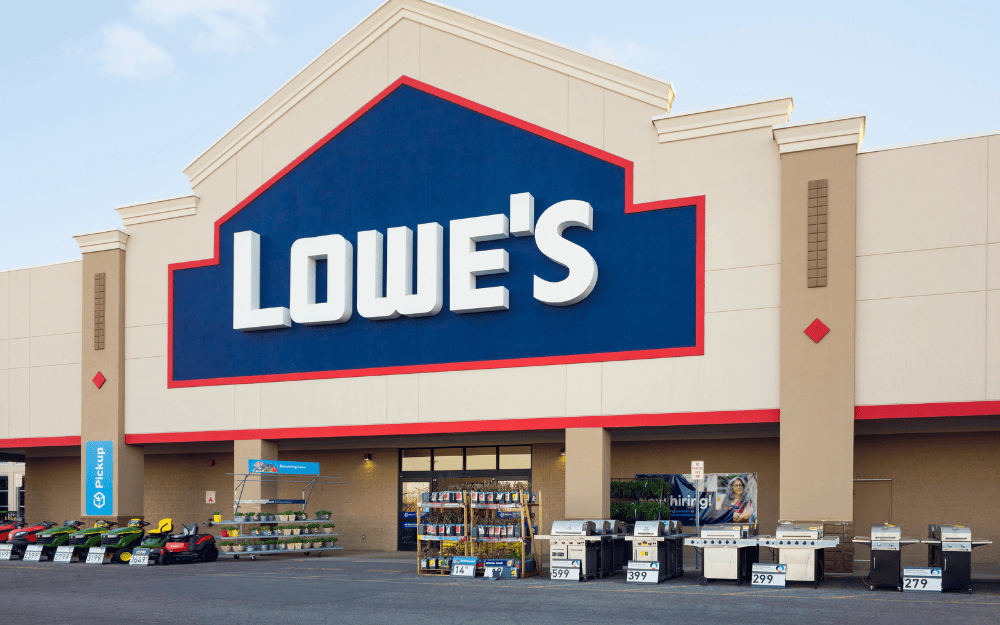
Total sales at Lowe’s increased more than 8% in the second quarter as DIY spending remains under pressure, housing turnover is sluggish and mortgage rates continue to weigh on new construction activity.
CEO Marvin Ellison, CFO Brandon Sink, EVP of Merchandising Bill Boltz and EVP of Stores Joe McFarland shared details about how the company navigated tariff windfalls, how its AI rollout is moving conversion rates and how the company is responding to housing market challenges on the company’s second-quarter earnings call on Wednesday.
Total sales reached $26 billion in the quarter ended July 31, up 8.3% from the second quarter of 2025. Comparable sales rose 0.2%, with online comparable sales surging 15.7% year over year. Nine of 13 merchandise divisions posted positive comps, with particular strength in rough plumbing, millwork, electrical, lumber, appliances and paint.
Comparable transactions declined 2.1%, driven by pressure in weather-sensitive outdoor and seasonal categories. Comparable average ticket rose 2.3%, reflecting modest price inflation and continued strength in the Pro segment.
May comparable sales declined 0.4%, June rose 1.7% and July fell 1.2%. A shift in the timing of the July 4th holiday created an approximately 75-basis-point benefit to fiscal June, offset by a similar drag to fiscal July, a dynamic management was careful to flag for analysts.
Looking ahead, the South Carolina-based retailer updated its full-year 2026 outlook to the bottom end of prior guidance: approximately $92 billion in total sales, roughly flat comparable sales and adjusted diluted EPS of approximately $12.25.
The Cautious Consumer and What the Housing Market Means for Home Improvement
Lowe’s core customer is a middle-income homeowner with a strong balance sheet, real disposable income growth, rising home equity and an aging house, executives said on the call. But for now, they’re being cautious with spending.
“But the caveat to all of that is that this consumer is being cautious, and it’s not just about fuel prices,” Ellison said. “Fuel prices make up roughly 2% of their annual spend, but it’s a combination of fuel prices, geopolitical events, and other uncertain things in the macro. When you combine all these things together, people are just being cautious with their discretionary spend.”
Discretionary DIY spending remains soft, while repair and maintenance projects continue to hold up. Pro backlogs are steady, but homeowners are greenlighting smaller projects rather than large remodels.
When it comes to the housing market, elevated mortgage rates, rising insurance costs, geopolitical uncertainty and broader macro noise are keeping homeowners in place and keeping transaction volume depressed. That has direct downstream effects on home improvement demand.
John Burns Real Estate Consulting estimates there’s between $20 billion and $50 billion in pent-up deferred home improvement demand sitting on the sidelines, a figure Lowe’s management cited as central to its long-term investment thesis. Lowe’s acquired Foundation Building Materials and Artisan Design Group in 2025. Both face near-term pressure as single-family and multifamily construction are at multi-year lows. ADG is 100% exposed to residential construction; FBM carries about 45% exposure, with its commercial business, representing 55% of revenue, performing more steadily. Lowe’s expects the headwinds on both fronts to persist through the second half but views each as a long-term bet on the roughly 14 million homes the company expects to be built over the next decade.
“We’re expecting that the housing market is going to recover gradually, but we do believe that there is extreme value in the older homes that our customers are living in,” Ellison said. “We’re better positioned today, and we’ll be better positioned in the future than we’ve ever been in the history of this company.”
AI and Retail Technology: From the Shop Floor to the Digital Cart
Ecommerce was a bright spot in Q2 results, and Lowe’s reported a 15.7% comparable sales increase in its digital business, the second consecutive quarter above 15%, with growth across both Pro and DIY segments. Higher traffic and improved conversion drove the results, supported by enhanced digital experiences, expanded visualization tools and strong customer adoption of free delivery and same-day fulfillment options launched earlier in the year, executives said.
AI played a meaningful role. Mylow, Lowe’s AI-powered digital shopping agent, has fielded approximately 25 million customer questions since its launch. More importantly, customers who engage with Mylow while browsing online convert at three times the rate of those who don’t.
On the store side, the Mylow Companion tool gives frontline employees real-time product knowledge across departments. The goal is straightforward: let associates answer questions faster and spend more time on the floor helping customers rather than hunting for information across disconnected systems.
“This AI-powered resource is being leveraged in a big way by our teams,” McFarland said. “More associates are engaging with the tool every day as it gives them greater confidence to help customers across departments and enables them to answer questions more quickly and spend more time doing what matters most: serving customers.”
Behind the scenes, Lowe’s is also investing in back-end promotional tools designed to sharpen its promotional strategy and respond more quickly to competitive dynamics. FreightFlow 3.0 and full-shelf replenishment systems are rolling out to improve inventory accuracy, reduce out-of-stocks and simplify the product flow from truck to shelf.
The MyLowe’s Pro Rewards ecosystem rounds out the picture on the Pro side, giving professional customers tools to plan, quote, manage and grow their businesses within Lowe’s platform.
The Tariff Refund Effect: A Competitive Wildcard
Lowe’s recognized an $80 million, or 30-basis-point, tariff refund in Q2, contributing $0.11 to both diluted and adjusted diluted EPS. The benefit was largely offset by elevated fuel and transportation costs during the quarter.
CEO Marvin Ellison said that competitors received similar tariff refunds and used them to fund aggressive price cuts, particularly in seasonal categories like grills, patio furniture and live goods. Lowe’s declined to match those promotions, accepting a short-term hit to July comps in exchange for margin protection.
“We think it’s transitory,” Ellison said on the earnings call. “We think it’s the result of competitors having tariff refund dollars and looking for different ways to use those dollars to drive the top line, and so we don’t see this as something that’s going to shift historically.”
The company’s position is that home improvement has historically been a rational and predictable promotional environment, and that it expects to return to that norm in the second half of the year. CFO Brandon Sink noted that Lowe’s is actively filing for additional IEEPA refunds, but excluded any second-half benefit from its outlook given timing uncertainty. Any future refunds, Sink said, would be reinvested in customer-facing actions.
Outlook
Lowe’s updated its outlook for fiscal year 2026 to reflect operational results for the first half of the year as well as current demand trends. The new outlook also includes tariff refunds recognized during the second quarter and excludes any potential refunds in the second half of the year.
Lowe’s anticipates:
- Total sales of $92 billion rather than the previous outlook of $92 billion to $94 billion.
- Flat year-over-year comparable sales rather than flat to up 2%.
- Operating income as a percentage of sales to be 11.2%, instead of 11.2% to 11.4%.
- Capital expenditures of up to $2.5 billion.
“We’re just trying to be prudent, and we’re trying to just take a view of the first half and basically make the the assumption that the second half is going to look a lot like the first half,” Sink said.