
Key takeaways:
- Shein drew approximately 2,000 visitors on opening day of its Toronto pop-up in May, with long lines forming outside the storefront on Queen St. West.
- The brand has hosted dozens of pop-ups globally since 2018, including five in Canada and three in the U.S. so far this year.
- Shein’s controversial shop-in-shop partnership with Paris department store BHV ended in June.
- Everland acquired eco-conscious brand Everlane in May.
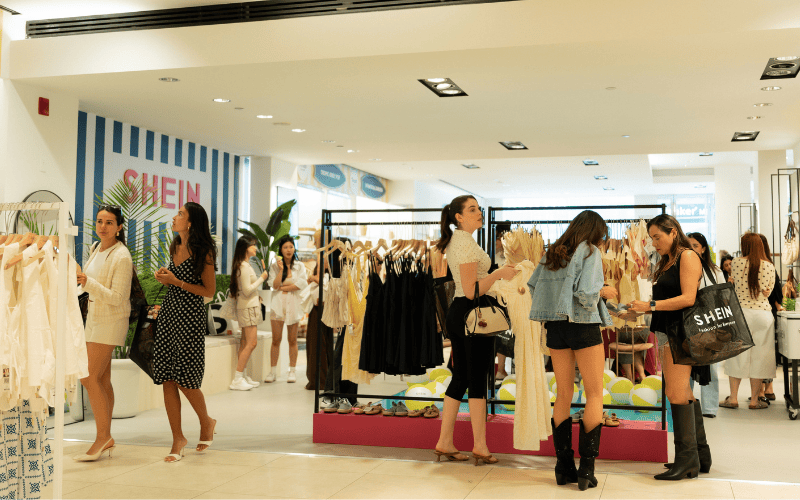
Despite the controversy surrounding fast fashion ecommerce retailer Shein, thousands of shoppers lined up outside a former Zara location on Toronto’s busy Queen St. West to check out the company’s latest pop-up in May.
“Shein has always been a digital-first brand, but our pop-ups are an important extension of that experience,” a Shein spokesperson said in an email to Retail TouchPoints. “They give us the chance to connect with local communities, hear directly from shoppers and better understand what resonates in different markets. That real-time feedback is incredibly valuable and helps inform future experiences and offerings.”
Since 2018, Shein has hosted events in major cities across North America, including Miami, Los Angeles, Chicago, New York, Montreal, Calgary and Vancouver. Last year, Shein hosted eight pop-ups in the U.S. and three in Canada. So far in 2026, it’s hosted three in the U.S. and two in Canada.

Most events run three to four days, typically over a long weekend, giving the brand a concentrated window to generate buzz, gather data and connect with shoppers who’ve never set foot in a Shein store because, for now, no such thing exists. Shein’s shop-in-shop partnership with Paris department store BHV ended in June after seven months and plenty of controversy, as tenants and consumers protested the retailer’s bargain prices, allegations of the sale of illegal products such as childlike sex dolls and an addictive website design, which are both under investigation by the European Commission. And the company, which also acquired sustainable brand Everlane for $100 million earlier this year, hasn’t shared plans to open any permanent stores.
The Toronto pop-up drew approximately 2,000 visitors on its opening day. Social media activity followed, with shoppers posting about the event and the items they found. The brand said the response reinforced what it’s seen at dozens of similar events globally.
Top-performing categories included menswear and what Shein called its “Vacation Vibes” collection, a trend-driven assortment that included tropical handbags, a yellow embellished sequin skirt and a matching yellow top.
“The pop-up also gave us valuable insights into what resonated most with customers,” the spokesperson said. “The Toronto pop-up is another example of how these experiences allow us to connect directly with customers, understand what they’re excited about and continue delivering the trends and categories they’re looking for.”
Shein’s Community and Culture
Shein’s pop-up approach fits into a broader effort to position the brand as more than a retail platform. The company points to creator partnerships, campus programs and in-person activations as part of how it tries to build a sense of community around shopping.
“We think today’s consumers want to feel like they’re part of the conversation, and that’s something we continue to prioritize,” the spokesperson said.
For now, the pop-up format appears to be Shein’s preferred mode of in-person engagement. The Toronto lines made clear is that there’s plenty of interest in checking out the brand in-person.
“Our momentum comes from listening to our customers and moving at the speed of culture,” the spokesperson said.