
Meta has released the first in a series of new large-language models, Muse Spark, intended to lay the foundation of what Mark Zuckerberg calls “personal superintelligence,” that is, AI systems designed to help anyone, anywhere with the things that matter to them.
Muse Spark is rolling out in the Meta AI standalone app in the U.S. today, and will make its way over to Meta platforms like Facebook, Instagram, Messenger and WhatsApp in the coming weeks.
While Meta touted use cases from travel planning to health care to coding in its announcement, shopping is definitely a big part of the mix. What may end up setting Muse apart from the other LLMs of the moment is the fact that it is purpose-built for Meta’s slate of social tools. Muse Spark draws on what Meta already knows about a user and their interests based on their activity across Meta’s apps, creating what the company believes will be a much more personal experience.
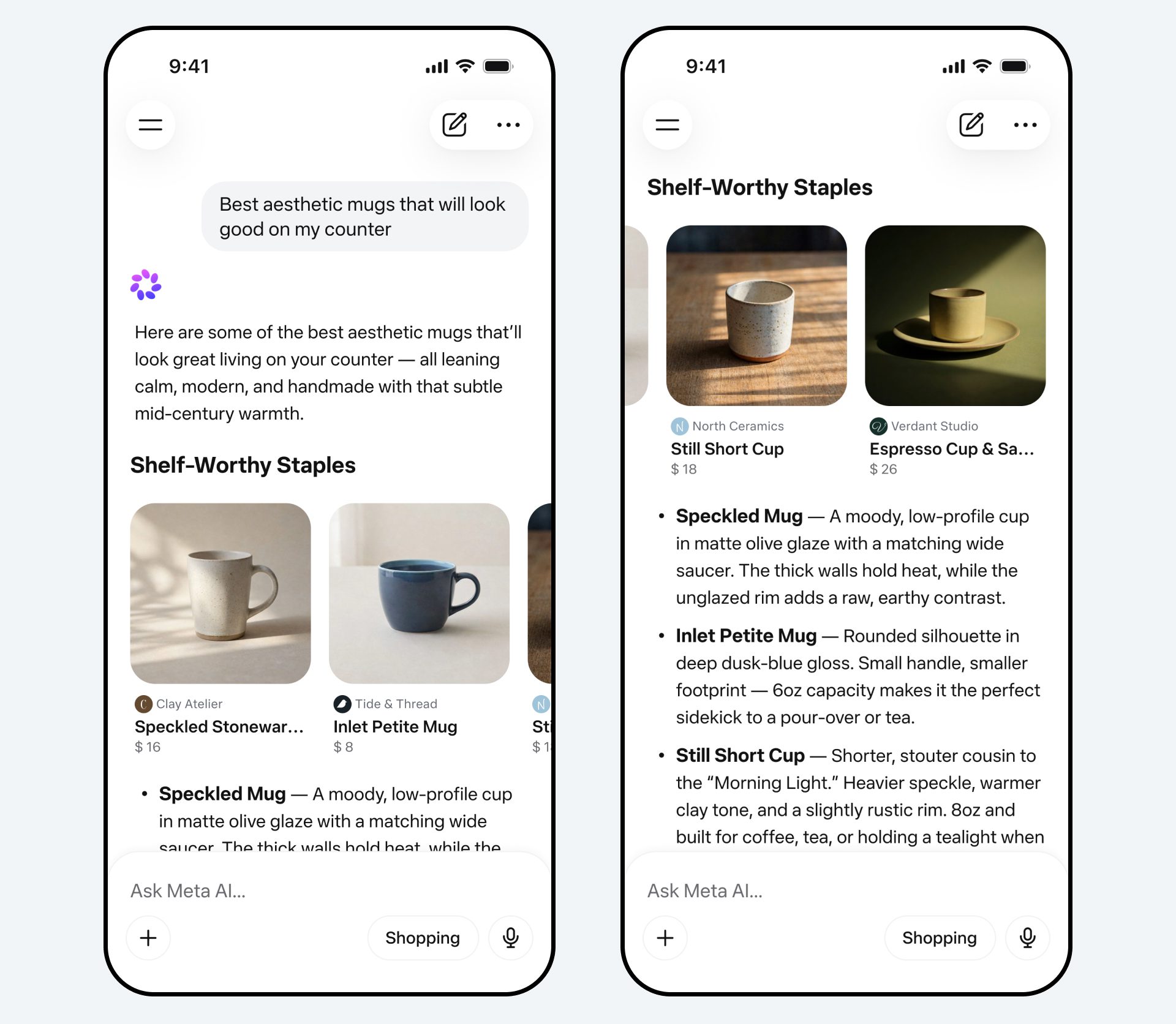
For example, Meta AI’s shopping mode will draw on the styling inspiration and brand storytelling that is constantly happening across the company’s apps, surfacing results from the creators and communities that a user already follows. Queries could range from what to wear to what to buy for someone you know or how to style a room, and results will include products shared or discussed by people or companies a user already follows. If any of those businesses have uploaded their catalog to Meta for ad purposes, the product details and listings also can be shown. “It is context from your people, right where you need it,” explained the company in its announcement.

Subagents can Handle Related Tasks Simultaneously
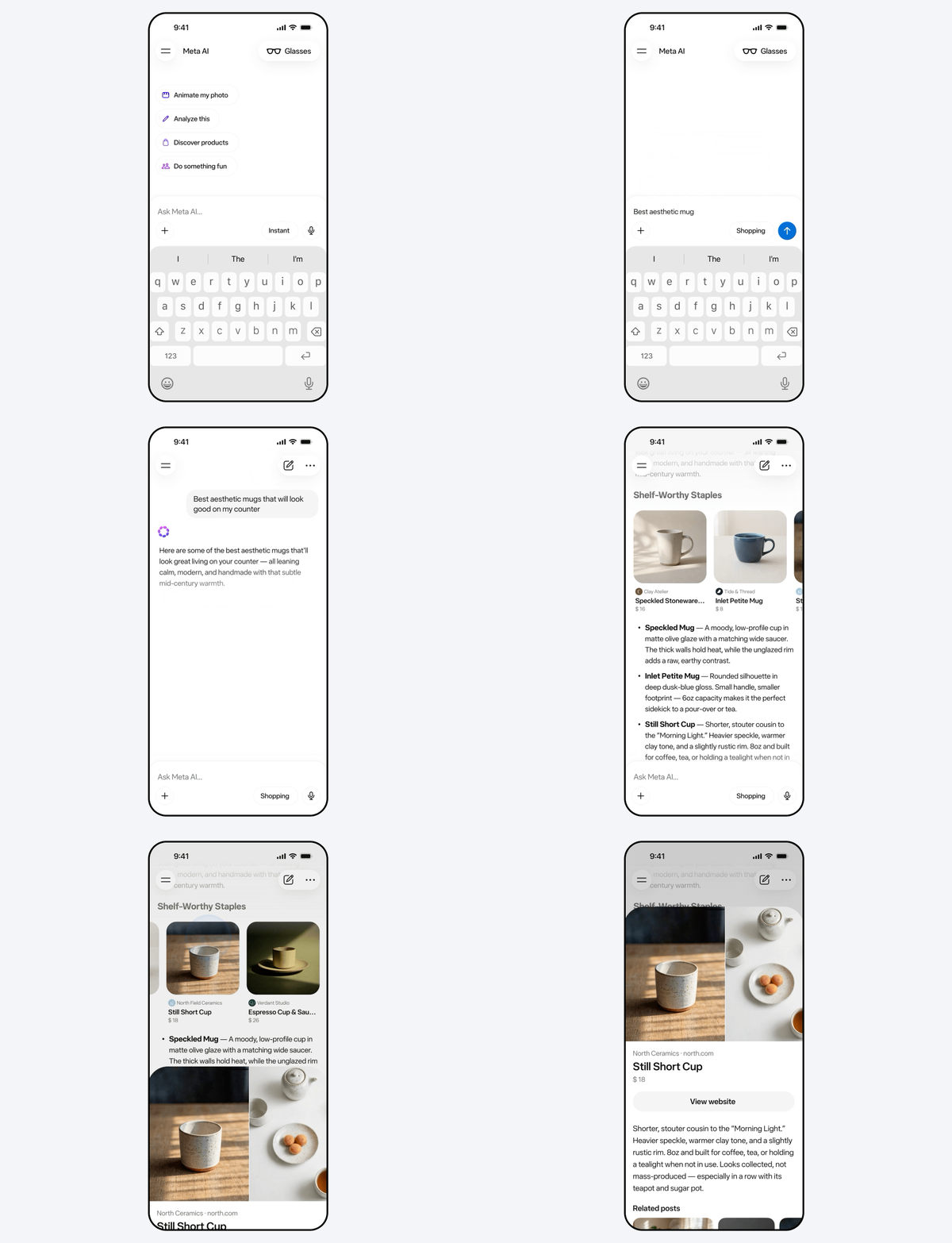
Meta AI powered by Muse Spark in action. (Image courtesy Meta)
As part of this upgrade, the Meta AI app is getting a new look, in addition to added functionality to support complex reasoning and multimodal tasks. For more intricate tasks, Meta AI can also now launch multiple subagents in parallel to tackle a question or problem.
For example, a family planning a trip to Florida might end up with one agent drafting the itinerary, another comparing Orlando to the Keys, and a third out being sent out in search of kid-friendly activities — all at the same time — resulting in a more robust, complete answer.
Meta AI also will surface relevant context right alongside the conversation, allowing users to, for example, tap into a location and see public posts from locals who know the area when looking at places to go, or learn what people are buzzing about by viewing content and community posts alongside the Meta AI responses about hot topics or trends.
“The future of Meta AI is rooted in the relationships and context already at the center of your life,” the announcement concluded. “We are building toward personal superintelligence — an AI that does not just answer your questions but truly understands your world because it is built on it.”
Meta is a Bit Late to the AI Shopping Party, but That Might not Matter
When it comes to AI shopping at least, Meta is a bit behind the curve. ChatGPT, Google’s Gemini, Amazon and others have taken big strides (as well as a few notable steps back) recently in building out effective, natural-language shopping experiences that are already being used by large numbers of consumers.
Earlier this month though, Meta did make another big move in the realm of AI shopping with the announcement of a new one-tap checkout experience that will enable social scrollers to make purchases directly from ads in Meta platforms.
And honestly, in a space moving as fast as this — with the results of existing offerings far from proven (and in the case of some of ChatGPT’s earlier efforts, somewhat disappointing) — arriving first may not ultimately matter. It’s becoming clear that the AI shopping race is going to be a marathon, not a sprint.
Meta: Muse Spark is Just the Beginning
This marks the first time that Meta is bringing the AI models being developed in its new Superintelligence Labs division, which was launched in mid-2025, and applying them to everyday use cases like shopping.
Muse Spark is the result of a complete rebuilding of Meta’s AI stack that was launched nine months ago along with that division, and it’s only the beginning. Spark is the first model in Meta’s new Muse series, representing “a deliberate and scientific approach to model scaling, where each generation validates and builds on the last before we go bigger.” That next generation is already in development.
While noting that Spark is “small and fast by design,” Meta also highlighted its skill with multimodal perception. “Meta AI can see and understand what you are looking at, not just read what you type,” the announcement explains. “Snap a photo of an airport snack shelf and Meta AI can identify and rank the snacks with the most protein — no label-squinting required. Scan a product and ask how it compares to alternatives. It is the difference between an AI that waits for you to explain the world and one that can simply look at the world with you.”
This will become even more true when Meta AI powered by Muse Spark arrives on Meta’s line of AI-powered glasses, which the company said is also in the works.
“This is only the start,” reads the announcement. “As we expand these features, expect richer, more visual results, with Reels, photos and posts woven directly into your answers, with credit back to the content creators. And as our models improve, we’ll continue to build safeguards for things like safety and privacy, starting with the strengthened risk framework and other protections we’re sharing today.”