

By making search more natural and conversational, generative AI, along with its retailing buddy agentic commerce, are creating myriad opportunities for brands and retailers to discover and deepen their understanding of shopper intent. Longer, more detailed searches are providing a peek into not just the products a shopper is looking for but also why they want them and what they’ll use them for.
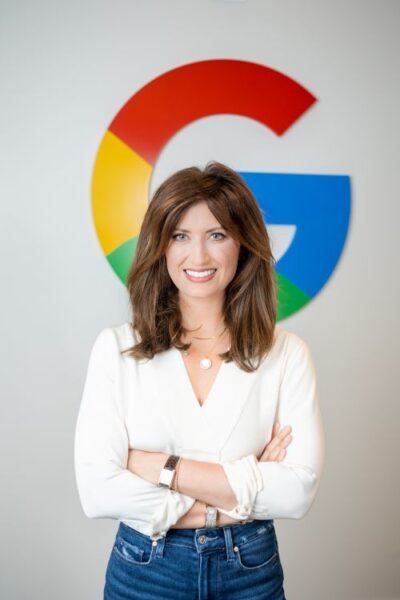
Courtney Rose
This is all valuable information, but only if the intent signals and richer context of AI-powered search can connect to products that meet those needs — and that requires far more detailed product information, capable of being “read” and accessed by AI-powered tools.
That’s where Google Ads, with its merchant center data foundation — containing 50 billion product listings refreshed at the rate of 2 billion per hour — is playing an increasingly important role, according to Courtney Rose, VP of Google Ads. She sat down with Retail TouchPoints at Shoptalk last month to provide a snapshot of the current AI-infused search and advertising environment.
Retail TouchPoints (RTP): Google has long been known for its search capabilities. How has the rise of AI-powered tools changed searching?
Courtney Rose: Overall, searches in AI mode are 2X to 3X longer than you would typically see in a search bar. That’s because previously, for a consumer to be “best at search,” i.e. getting the results you’re looking for in only a few words, meant you needed Google-specific skills. Now, though, you can speak like a human, and it’s much more conversational.
For example, traditionally you might type “casual sweater” in a search box if you’re looking for something for an upcoming trip to Atlanta. With AI, you might type “I’m going to Atlanta in a few weeks and need a casual sweater.” Now, advertisers can understand consumer intent in a wholly new way. In this case they know more about an upcoming trip, so they might match ads for jeans or a purse to go with the sweater. Because AI mode is an immersive search experience, [consumers] are saying so much more about this moment in their life — what they want and also why they want it.
If you have those intent signals, you can make good product matches, which ultimately drives sales for retailers and brands. Retailers are seeing higher sales and more customer acquisitions, because they’re being discovered and matched in ways they haven’t before.
RTP: How else is Google Ads using AI to open up new opportunities for retailers?
Rose: We have the AI Max tool, which is able to “understand” all the landing pages, products, ads and creative assets that make up a merchant’s website — and it’s able to match items to those consumers who have an intent to purchase those things. In the example above, where the user is searching for a sweater to wear in Atlanta in the springtime, maybe the retailer didn’t use those actual, specific keywords in their campaign, but now it doesn’t matter, because the AI Max tool can surface an ad [to show the shopper] based on all those intent signals that you might never have been able to gather before, leading to net-new sales. The marketer couldn’t have anticipated [every intent signal], but now they’re providing the shopper with highly personalized and relevant ads. And these AI-powered ads are infused across all Google products. Aritzia has used AI Max and achieved an 80% incremental uplift in conversion value, due to sales they would have missed otherwise.
RTP: Where do you see Google’s role in retail now?
Rose: Consumer behavior overall has gotten more fluid; people are searching, streaming, scrolling and shopping, and it’s all happening at the same time. Google and YouTube meet consumers across all those behaviors. In fact, there were 35 billion hours of shopping-related content watched on YouTube over the past 12 months.
People are researching and getting inspired — that’s a huge behavior we’re seeing on YouTube, and YouTube’s creators are highly trusted by users. If you’re a marketer, you can tap into that. For example, during the last holiday season, Mattel partnered with eight YouTube creators on a takeover devoted to the card game Uno, which led to a 25% increase in searches for Uno.
RTP: What about moving forward? How will Google be facilitating commerce in an even more AI-influenced environment?
Rose: There will be a lot of investment in ad experiences, to connect with those consumers searching, streaming, shopping and scrolling, across all types of Google searches and across the entire web.
The big thing is agentic commerce, and it’s supported by the technology foundations that we’re building, including Google’s new Universal Commerce Protocol (UCP). The UCP will provide a common language for agents and systems to operate together, and it also allows merchants to give us even more of their structured data. That could lead to identity linking, e.g. within a retailer’s loyalty program; real-time inventory data being made available; and even further personalization and customization.