

Key takeaways:
- Levi Strauss & Co. reported Q2 fiscal 2026 net revenues of $1.6 billion, up 8% on a reported basis and 6% organically, marking the company’s 17th consecutive quarter of direct-to-consumer comparable sales growth.
- A World Cup marketing moment at Levi’s Stadium generated approximately one billion press impressions and became the most viewed, shared and commented post in the brand’s history.
- Levi’s raised its full-year adjusted diluted EPS outlook to $1.46 to $1.52 and now expects reported net revenue growth of 7% to 7.5%, up from a prior range of 5.5% to 6.5%.
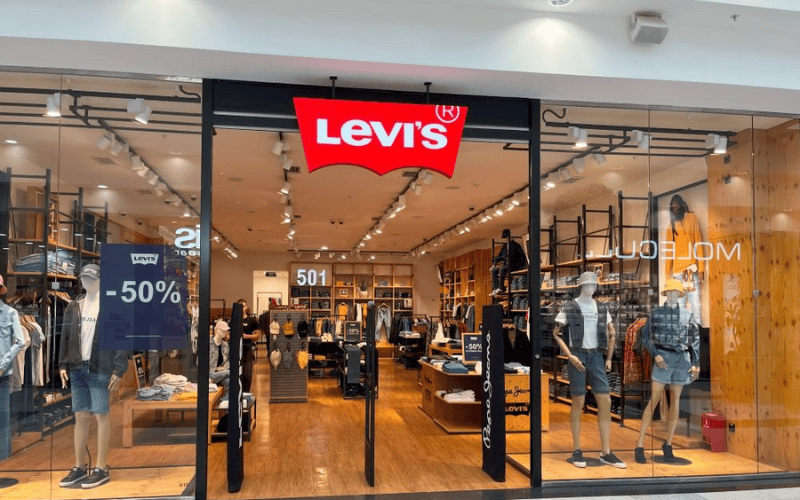
Levi Strauss & Co. delivered a second quarter that beat expectations on both the top and bottom lines, extending a streak of direct-to-consumer comparable sales growth to 17 consecutive quarters while a viral marketing play tied to the FIFA World Cup fueled brand heat across global markets.
Overall, the San Francisco-based apparel company, which includes the Levi’s, Beyond Yoga and Levi’s Signature value brands, posted net revenues of $1.6 billion for the quarter ended May 31, 2026, up 8% on a reported basis and 6% organically compared to Q2 2025. Adjusted diluted earnings per share reached $0.28, up 27% year over year.
“The Levi’s brand is connecting with consumers around the world in more powerful ways than ever before, and our Q2 results are another proof point that our strategies are working and our team is executing,” said Michelle Gass, President and CEO of Levi Strauss & Co., on the company’s earnings call on Wednesday. “Our evolution into a DTC-first, denim lifestyle company with a much larger addressable market is translating to faster growth and higher profitability.”

Levi’s Viral World Cup Moment
One of the quarter’s most-discussed highlights was Levi’s viral World Cup marketing play.
When the 2026 FIFA World Cup came to Levi’s Stadium in Santa Clara, Calif., the company was asked to cover its logo on the venue because it wasn’t an official sponsor of the tournament. The marketing team seized the moment, uploading video of the covered up logo to social media with the caption, “Welcoming the world to the beautiful [redacted] stadium!”
“Our team turned a branding restriction into a viral marketing campaign, demonstrating our ability to operate at the speed of culture through bold agile execution,” Gass said. “This drove the most viewed, shared and commented post in Levi’s history, generating approximately a billion press impressions.”
View this post on Instagram
The company followed the moment by launching limited-edition T-shirts in a matter of weeks and extending the campaign to flagship stores worldwide.
Levi’s broader “Behind Every Original” marketing campaign featured celebrities such as Questlove and basketball star Shai Gilgeous-Alexander. To drive local relevance in key markets, Levi’s partnered with Mexican pop star Belinda and K-pop star and brand ambassador Rosé, whose pop-up shops and product collaborations in Asian markets are helping fuel growth in the women’s business across the region, Gass said.
Product: Expanding the Total Addressable Market
Levi’s continued its push beyond denim bottoms, with newer categories contributing roughly a third of top-line growth in the quarter, Gass said. Women’s increased 11%, with white denim growing 70% and shorts up 11%. Bottoms overall were up 6%, driven by loose silhouettes, including the 501 90s for her and baggy, wide-leg and cinch styles. Tops grew 5%, or 7% excluding the impact of the European distribution center transition, with blouses, wovens, sweaters and polos outpacing legacy categories like graphic tees.
“We’re going from playing in the denim bottoms business to apparel with a very focused view on what fits in our vision of head-to-toe denim lifestyle,” Gass said. “The team is doing a great job, and we’ve got a lot of upside, and as we sit here today, the consumer is responding, and we have more ways to win than we’ve ever had.”
Levi Strauss Signature value line revenue increased 1.6% in Q2 and was up 9% for the first half of the year. Gass called Signature “an important business” at approximately $300 million in annual revenue, with acceleration expected in the second half of the year as the brand expands its lifestyle assortment and women’s offering, which currently makes up 30% of the business.
“It’s a solid, resilient business,” Gass said. “They’re taking a page out of a cultural Levi’s Red Tab playbook and really leaning into newness and lifestyle offerings, and that’s resonating.”
At the premium end, the Blue Tab sub-brand with bottoms priced from $200 to $350, increased 40% in Q2. Gass said there’s “no reason why this can’t be $100 million, $200 million-plus over time,” with a fuller lifestyle assortment including tops, sweaters and shirting expected later this year.
Levi’s consumers across the spectrum are healthy, she said. “I think overall our consumer is proving to be quite resilient,” Gass said.
DTC: Now the Majority of Revenue
Direct-to-consumer net revenues grew 11% on a reported basis and 8% organically to $793 million. DTC comprised 51% of total company revenue for the quarter, with comparable sales up 6%, marking the 17th consecutive quarter of comp growth. Ecommerce increased 17% organically, driven by increased traffic, better conversion and higher average unit retail as Levi’s reduced promotional activity on its site. The ecommerce business has grown nearly 60% over the past three years, yet still represents only about 12% of overall revenues. Three million new members joined the loyalty program during the quarter, bringing global membership to nearly 50 million.
“We delivered another strong quarter driven by broad-based growth across markets, channels and categories,” said Harmit Singh, Chief Financial and Growth Officer of Levi Strauss & Co., on the call. “That growth translated into higher profitability through gross margin expansion and disciplined SG&A leverage, demonstrating the strength and scalability of our operating model.”
Wholesale increased 3.1% to $768 million.
“The women’s business was a particular standout, and sellout trends across the U.S. wholesale channel remain healthy globally,” Gass said. “Our wholesale partners are increasingly leaning into our diversified lifestyle assortment, reflecting strong consumer demand and confidence in our broader offerings.”
Regional Breakdown
International markets, representing approximately 60% of the company’s business, continued to outperform expectations:
- Asia net revenues rose 12% organically, with strong results across Turkey, Japan and India. China showed early signs of progress following new leadership and product improvements.
- Latin America delivered double-digit growth led by Brazil, the Andes and Colombia.
- Revenue in the Americas increased 9% year-over-year to $815 million.
“This year, we celebrate 60 years of the Levi’s brand in Mexico, our second largest market globally, and a key contributor to international performance, with Q2 growth of 15% supported by strong brand equity,” Gass said.
Europe declined 1% organically in Q2, which was attributed to the prior-year distribution center transition, but grew 5% in the first half in line with full-year guidance. European DTC increased 7%, and wholesale pre-orders for the second half are up high single digits.
Beyond Yoga: Linen Capsule Clicks
Beyond Yoga net revenues increased to $42.6 million in Q2.
“Beyond Yoga was up 16%, led by strength in ecommerce, and momentum continues to be fueled by newness and expansion into lifestyle categories, including the launch of a new linen capsule, which quickly became one of the brand’s top-selling collections,” Gass said.
The brand is expanding into casual pants, travel wear, sweaters and dresses, with men’s emerging as an additional opportunity. The company currently operates 15 Beyond Yoga stores, and the brand is refining its merchandising approach.
“We’re learning a lot, and the newer stores that we’re opening are working,” Gass said. “There’s a new merchandising approach, we’re building slightly bigger stores, so we can bring the full expression. I would also say, in Beyond Yoga’s standpoint, men’s is an untapped opportunity, and as we’ve been bringing the men’s category forward, that consumer is responding.”
Infrastructure Shifts
Singh flagged two significant operational milestones. In Europe, the transition to an omnichannel distribution network is complete, with ecommerce fulfillment consolidated into facilities in Germany and the U.K. In the U.S., the company remains on track to close its Hebron distribution center by the end of Q3 and move operations to a facility in Obetz, Ohio.
The company also migrated its Asia business and Beyond Yoga onto its new global ERP platform. Europe and the remaining Latin American countries are on track for completion by mid-2027.
“Once complete, the company will operate on a single ERP, enabling faster decision making, supporting our DTC-first model, all while creating the foundation to scale AI and automation globally,” Singh said.
Tariffs Remain a Headwind
The updated guidance assumes U.S. tariffs on imports from China remain at 30% and the rest of the world at 20%. Gross margin expanded 10 basis points to 62.7% in Q2, with tariffs and foreign exchange acting as headwinds. The company has received approximately $80 million in tariff refunds to date but hasn’t incorporated potential refunds into guidance given ongoing policy uncertainty.
Raising the Outlook
Levi’s raised its full-year outlook for the second consecutive quarter. The company now expects reported net revenue growth of 7% to 7.5%, up from a prior range of 5.5% to 6.5%. Adjusted diluted EPS guidance was raised to $1.46 to $1.52 from $1.42 to $1.48. Adjusted EBIT margin is expected to reach 12% for the full year, up 60 basis points to prior year. The company also increased its quarterly dividend to $0.16 per share, a 14% increase over the prior year, payable Aug. 5, 2026.
“We remain confident in our path to $10 billion in revenue and 15% operating margin, supported by an expanded TAM and a clear road map for profitable growth,” Singh said. “Given our strong first-half results, we are passing through our full Q2 beat and raising our full-year guidance.”