
Retail has never lacked data. What it has consistently lacked is clarity.
At NRF this year, the conversation was dominated by AI — agentic systems, automation layers, conversational interfaces and promises of faster decision-making. All of it is directionally correct. But beneath the excitement sits an uncomfortable truth many retailers already know: adding new layers of intelligence does not help if the underlying signals are delayed, fragmented or mistrusted.
Retail’s challenge is no longer understanding what happened. It is knowing what to do next — and trusting the answer enough to act on it.
That is why many retailers are quietly rediscovering an asset they have had all along: video.
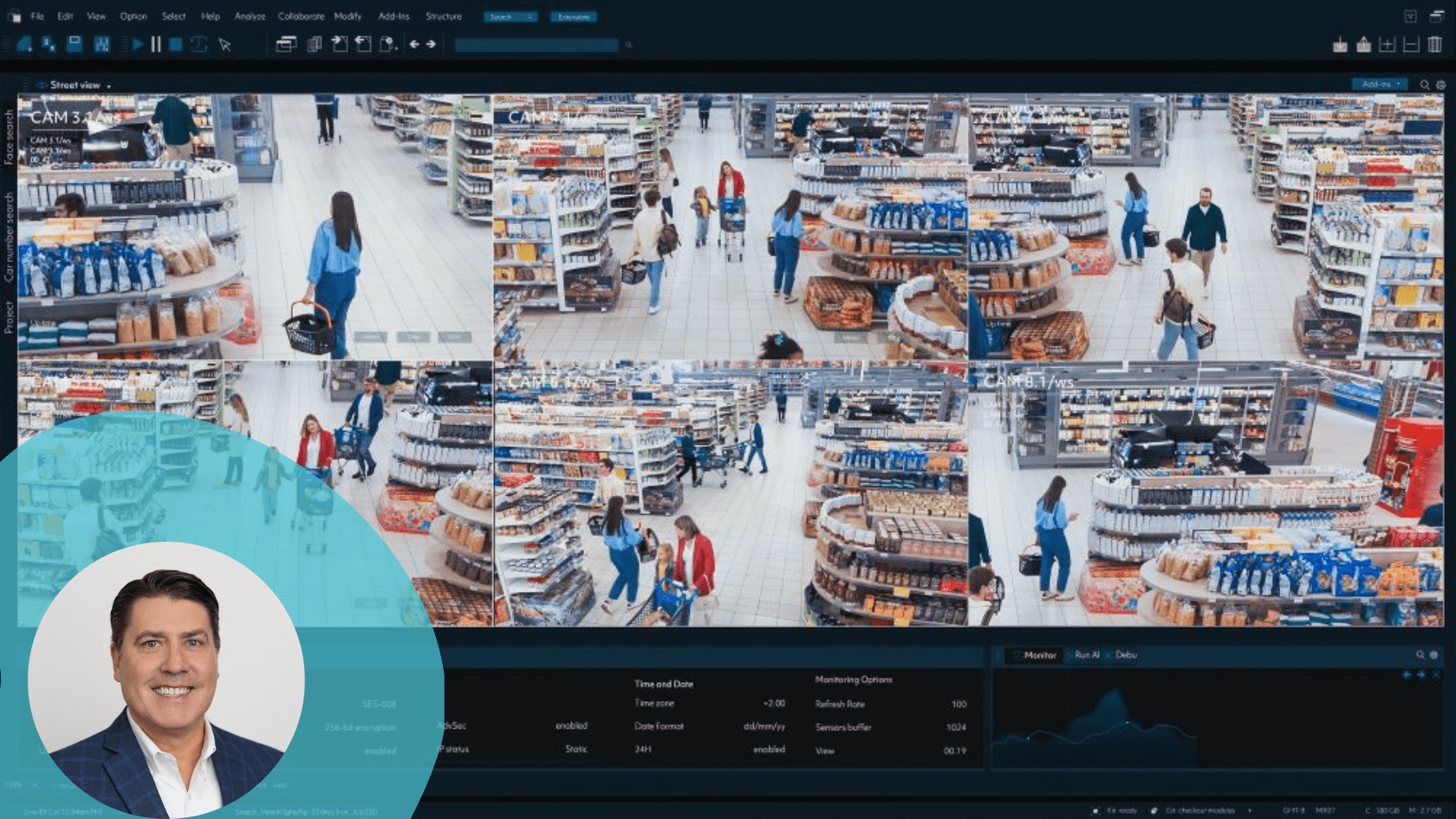
Video is Retail’s Most Underused Data Source
For decades, retailers have invested heavily in cameras, especially at the front of the store. Yet video has largely been treated as passive evidence — something reviewed after an incident, not a live source of operational intelligence.
The result is a paradox. Retailers operate in one of the most instrumented physical environments in the world, yet still rely on abstract metrics and delayed reports to diagnose what went wrong. Video captures reality: what customers and associates actually did, how processes broke down, and where friction occurred. But without the ability to interpret it at scale, most of that value has remained locked away.
Going back to video is not nostalgia. It is a recognition that the richest, most objective data in retail has been hiding in plain sight.
Behavior is the Real Battleground
One of the most persistent myths in retail is that loss and inefficiency are primarily driven by bad actors. In practice, they are far more often driven by behavior under pressure.
Consider self-checkout. Associates are managing multiple lanes, handling customer questions and responding to alerts in real time. When systems flag a potential issue — such as a weight mismatch — what happens next is rarely malicious; it is human. Overrides are issued quickly to keep lines moving. Context is lost. Revenue quietly walks out the door.
This is not unlike cybersecurity. Early antivirus software relied on static rules and known signatures. It worked — until threats evolved. Modern systems focus on behavior: patterns, anomalies and context. Retail operations face a similar challenge: Static rules struggle in environments where human behavior is dynamic and constantly adapting.
Understanding behavior — not just transactions — is where video becomes indispensable.
From Loss Prevention to Loss Recovery
Historically, retailers have framed video and analytics through the lens of loss prevention. That framing is limiting.
Loss prevention focuses on identifying incidents. Loss recovery focuses on changing outcomes. It asks different questions: How early was the issue detected? Was intervention possible? Did the system help an associate respond effectively in the moment?
This distinction matters at the executive level. Loss is not simply an LP metric — it is a margin issue. Missed scans, process breakdowns and delayed interventions accumulate into material financial impact. Retailers that shift from post-incident reporting to real-time recovery are not just reducing shrink; they are protecting revenue and improving productivity.
That is why video-driven intelligence is increasingly viewed not as a niche security tool but as a core operational capability.
Why the Front of the Store Changes Everything
If retail intelligence works anywhere, it must work at the front of the store.
Checkout lanes — particularly in grocery — are among the most complex operational environments in retail. They combine technology, human judgment, customer behavior and time pressure in a way few other workflows do. When lanes go down or errors spike, the impact is immediate and visible at the highest levels of the organization.
This is precisely where traditional analytics fall short. Reports arrive too late. Alerts lack context. Teams debate which system is “right.”
Video, when activated intelligently, cuts through that ambiguity. It provides shared, objective evidence of what happened and why. It aligns executives and frontline teams around the same reality, reducing friction and accelerating response.
Operational intelligence only works when everyone is looking at the same truth.
Where AI Helps — and Where it Doesn’t
Conversational and agentic AI interfaces are gaining attention for good reason. They promise to reduce friction, surface insights faster and make complex systems easier to navigate. For time-constrained retail leaders, that is appealing.
But interfaces are not the primary constraint.
Retail already has more data than it knows how to use. The harder problems are inconsistent signals, delayed visibility and low trust at the store level. If teams do not believe the data reflects reality, a more elegant interface simply delivers confusion more efficiently.
AI delivers real value when it is grounded in clean, timely and trusted inputs. Video plays a critical role here — not because it is new, but because it is shared, explainable and rooted in observable behavior. It helps close the gap between insight and action.
Moving from Reporting to Intervention
Retail does not need more dashboards. It needs systems that support intervention.
That means:
- Detecting issues early enough to matter
- Providing evidence that teams can understand and trust
- Recommending actions that fit real-world workflows
When video is treated as a core data source — rather than a forensic afterthought — it becomes possible to move from reporting on what went wrong to influencing what happens next.
A Question for Retail Leaders
As AI continues to reshape retail operations, the most important question is not which interface is most impressive. It is whether your organization can act confidently on what the data is telling it.
- Do your teams trust the signals they receive?
- Do they understand why an alert matters?
- And does the system help them intervene — or merely inform them after the fact?
For many retailers, the path forward starts by going back to video and finally unlocking the intelligence it has always held.
Joe White is the CEO of Everseen, a leading Vision AI platform for retailers. He previously served as Chief Product and Solutions Officer at Zebra Technologies, where he oversaw strategy, investment and product development across the company’s extensive solutions portfolio. White joined Zebra in 2014 following the acquisition of Motorola Solutions’ Enterprise Business and held senior leadership roles at Motorola, Motorola Solutions, CAIS Internet and Digex. He is passionate about driving the adoption of enterprise technologies and is a strong supporter of those who serve in the U.S. Armed Forces.