

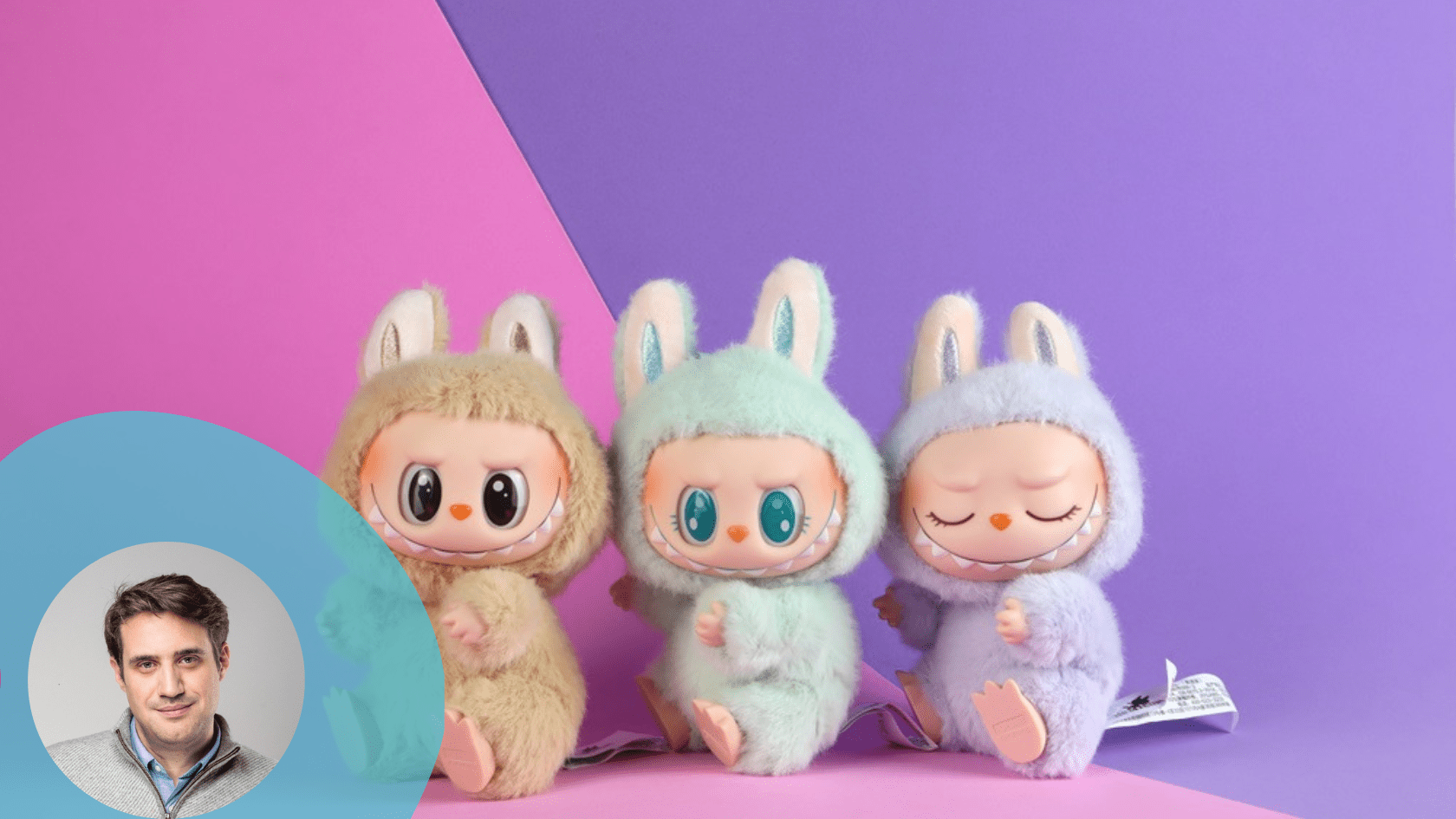
In Q1 this year, Chinese retailer Pop Mart saw market capitalization surge to nearly $40 billion, outpacing established global rivals like Hasbro and Mattel to become China’s most valuable toy company.
The charge was led by their viral breakout product, the Labubu doll. The blind box offering became an overnight success, scoring over 1.5 million dedicated TikTok videos, selling out livestream drops in seconds and even causing fights to break out in stores.
This success goes beyond a distinctive product: Pop Mart executed a sharp social commerce strategy that aligns closely with platform culture to create a frenzy of user-generated content (UGC).
This is a growing trend, with other Chinese brands like DHGate and Taobao — which both entered the top three free apps on the U.S. Apple App Store in April this year — similarly focused on seamlessly blending social media and commerce. This represents a unified strategy from Chinese brands to expand globally through culturally resonant exports and digital offerings, reflecting a broader ambition to ‘spark desire’ among domestic and international consumers alike.
Let’s explore how U.S. brands can take a page out of their playbook.
Social Commerce Must be Designed for the Algorithm
First, U.S. retailers must consider social media “shareability” as a core commerce design principle, not a campaign add-on.
Labubus were built to be sold on TikTok. Their blind box format fits perfectly into the ever-popular “unboxing” genre. TikTok alone has over 14 million videos under the “unboxing” tab and counting. Buyers have no idea which Labubu they’re getting, and unboxings of the rare or “secret” figures, designed to create scarcity, often perform the best on social media.
This is a basic formula for building hype. Not only do viewers get a good look at the product they’re interested in; they also can share in the thrill of discovering a rare or wished-for Labubu from someone else’s video – offering them a “preview” of their own consumer experience that pushes them to the checkout button.
With over 300 (and counting) Labubu variants available, spanning both blind box series and individual listings, Pop Mart ensures consistent conversation around their products online while encouraging their growing fanbase to start up a collection. If the Labubu is out of stock, customers flock to other items, like the Crybaby or the SkullPanda, willing to compromise on products to buy themselves a place in the community. It’s a great example of a brand improving its reach and revenue with a single strategy.
Embracing Community-Driven Narratives
As a brand, it’s natural to want your customers to describe your products in the same way you do – but sometimes, the only way to accelerate social engagement is to go off-script. Labubus are becoming known by their community-approved tagline: “ugly, but cute.” This messaging has never been pushed by Pop Mart, but they’re wise not to push back on it. Not only does it differentiate them from more polished, corporate brands like Mattel, it’s a springboard for discussion.
Product impact speaks louder than marketing copy. These discussions create communities, and these communities enrich social commerce by creating large volumes of UGC to boost discovery on the algorithm.
Brands can incentivize users to start these conversations, for example by joining the TikTok Shop Affiliate Program. This allows brands to let accounts of a certain quality earn commissions on products by producing promotional content, without being brought on as an official influencer. UGC can contain affiliate links without being labelled as an outright ad (Affiliate Program content uses the “Paid Partnership” or “Commission Paid” tags that show up more naturally on TikTok feeds, and are broadly presented as organic content), helping your brand maintain word-of-mouth momentum.
In short, don’t be afraid of losing control. The most powerful brand stories are often the ones your customers tell for you.
Putting These Learnings into Practice
Brands are now recognizing that they need to sell everywhere – but many don’t know where to start. We saw this shift with the rise of Amazon in the 2010s: Brands knew they needed a presence on marketplaces, but they were worried about getting their strategy wrong. The brands that seize the TikTok opportunity now stand to gain a huge share of Gen Z spending power, so what should they be focusing on, and what missteps should they avoid?
Firstly, there’s no harm in brands becoming ‘TikTok-first,’ but they should avoid being ‘TikTok-only.’ Pop Mart aims to reduce checkout abandonment by letting users go from TikTok to checkout without ever leaving the app, but this brings its own problems, as TikTok Shop doesn’t always provide the best user experience. Unclear shipping updates, inconsistent customer service channels and obscure return policies can lead to unhappy buyers.
For all of TikTok’s merits, this is a significant pain point for brands, which are themselves at the mercy of the app’s customer support and likely to take the fall for its failures.
Brands must look to optimize their entire omnichannel, not just the platform that has the best chance of making their product go viral. A viral moment might generate clicks, but it’s a joined-up ecommerce experience that turns those clicks into long-term customer value. This means ensuring the customer journey is consistent no matter which platform it begins on, with easy access to fulfillment, returns and customer service regardless of if the channel is owned or third-party. If one channel fails, it can undermine trust across all others.
For example, while Pop Mart’s TikTok prominence is a success story, its website isn’t – with customers complaining about bots scalping the website on new drops and some threatening to abandon the brand entirely if they don’t increase security. The same goes for DHGate and Taobao, both of which don’t fare well on user review sites like Trustpilot.
Third-party channels can’t be blamed if website and app storefronts aren’t up to standard – these are the next best options for consumers when social commerce starts to chafe. These owned channels still have to be closely optimized for your customer base – they are your saving grace when social platforms fail.
Pop Mart’s rapid growth offers a masterclass in designing for virality, but it also highlights the risks of chasing scale without shoring up basic customer experience. For U.S. brands, the takeaway is clear: Embrace the chaos and authenticity social commerce offers, but don’t let it come at the expense of user experience on your other channels.
Jake Wright is Director of Growth, Americas at SCAYLE, one of the world’s fastest-growing enterprise commerce platforms. He leads the go-to-market strategy and execution across North America, with a focus on direct sales, business development and strategic partnerships. With over a decade of experience in digital commerce, retail strategy and growth across B2B and B2C, Wright brings extensive commercial and operational expertise to scaling enterprise commerce platforms.