
Key Takeaways:
- Neighborhood Intelligence, the parent company of Bed Bath & Beyond, has terminated its agreement to acquire F9 Brands, the owner of Cabinets To Go and Lumber Liquidators, after determining F9 couldn’t meet closing requirements in time.
- The deal, first announced in April 2026 at a value of nearly $150 million, is now dead. No shares will be issued and no acquisition capital will be deployed.
- The termination comes as Neighborhood Intelligence continues an aggressive acquisition strategy under Executive Chairman Marcus Lemonis, who says the company remains focused on its Home Services pillar even as it walks away from this particular deal.
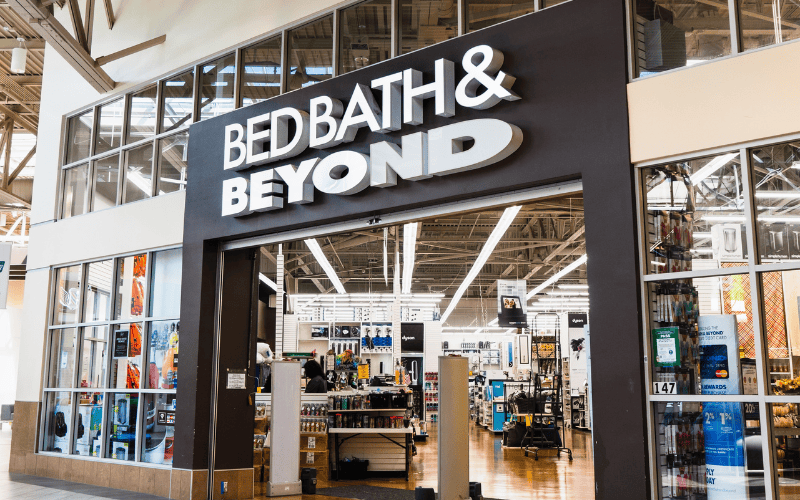
Neighborhood Intelligence, Inc., the Nashville-based company formerly known as Bed Bath & Beyond, announced Sept. 8 that it has terminated its proposed acquisition of F9 Brands, Inc. The two companies had agreed in April to a deal that would have brought Cabinets To Go, Lumber Liquidators and other F9 properties into Neighborhood Intelligence’s growing Home Services division.
“We determined F9 was unable to satisfy all closing requirements within the contemplated timeframe,” the company said in its announcement. Neighborhood Intelligence said it won’t proceed with the acquisition or pursue a commercial or strategic collaboration with F9. The companies will continue to operate independently, and the terms and economics of the original acquisition agreement no longer apply.
“Disciplined capital allocation and protecting shareholder value are central to how we evaluate every transaction,” said Executive Chairman and CEO Marcus Lemonis in a statement. “We evaluate opportunities continuously, and this is one of many transactions we have considered that we elected not to pursue. In this case, we determined the seller was unable to satisfy the closing conditions, which are essential to our confidence in any business we acquire.”

Lemonis also acknowledged the work done by F9’s team throughout the process. “We appreciate the time and effort contributed by the F9 management team and employees throughout the process,” he said.
The announcement confirmed that as of August 31, after accounting for completed acquisitions of The Container Store, Kirkland’s, Installed Right and SFV Construction Services, Neighborhood Intelligence had approximately 97 million shares of common stock issued and outstanding. No shares will be issued and no acquisition capital will be deployed in connection with F9, according to the release.
Despite walking away from the F9 deal, the company reiterated its commitment to its broader Home Services strategy.
“We remain focused on the strength of the Home Services platform, anchored by Elfa, Closet Works and SFV Construction Services, and on pursuing opportunities that meet our strategic, financial and operational standards,” Lemonis said.
Bed Bath & Beyond’s Acquisition Spree and Rebrand
Bed Bath & Beyond, as the company was known at the time, announced its agreement to acquire F9 Brands on April 8, 2026, just days after unveiling plans to purchase The Container Store. The F9 deal was valued at nearly $150 million, funded through $37 million in cash, approximately 16 million shares of BBBY common stock priced at $7 per share and an additional $40 million in financing from an existing lender.
F9 Brands owned Cabinets To Go, the largest specialty cabinet retailer in the country with more than 100 stores, along with Lumber Liquidators, Gracious Home/Thos. Baker and Southwind Building Products. F9 generated approximately $522 million in net delivered sales in fiscal 2025. The deal would have brought F9 CEO Jason Delves into the company’s executive leadership team to run the newly formed Beyond Home Services division, with a potential earnout of $25 million tied to future EBITDA targets.
The F9 acquisition was part of a broader transformation. In August, the company rebranded from Bed Bath & Beyond to Neighborhood Intelligence and moved its stock listing from the New York Stock Exchange to Nasdaq under the ticker NXH. The rebrand accompanied a shift in strategy toward three pillars: omni-channel retail, home services and home ownership. “Retail can only introduce us to the customer,” Lemonis said on the company’s second-quarter earnings call in August. “Home services allow us to deepen that trust. Quite frankly, it’s where the real margin exists.”
The company’s second-quarter results, reported alongside the rebrand announcement, showed signs of improvement after a prolonged slump. Net revenue rose 28% year-over-year to $361 million, marking the second consecutive quarter of growth following 19 straight quarters of decline. Active customers climbed 47% to 6.4 million, and gross margin expanded 310 basis points to 26.8%. Still, the company reported a net loss of $39 million, wider than the $19 million loss posted a year earlier, driven in part by acquisition-related costs and restructuring charges.
For the third quarter, Neighborhood Intelligence has guided net revenue between $505 million and $525 million, with gross margins approaching 30%. Lemonis has told investors that 2027 is the year he expects the company to reach cash flow neutrality, a target that depends on continued margin expansion and cost savings across its consolidating supply chain.