
Key Takeaways:
- Anthropologie window displays begin as everyday moments of inspiration.
- Each seasonal display is hand-executed by in-store artists who adapt the concept to their store’s unique architecture.
- Anthropologie measures display success through a combination of customer engagement, social sharing, and store team execution.
Modern consumers are fickle, slinking between brands to search for inspiration and new products. Given that brand agnosticism, merchandising and visual displays play an increasingly important role in inviting shoppers to discover something new.
When consumers lack rigid brand loyalty, a generic, uninspired storefront can quickly fade into the background. Conversely, an elevated, beautifully lit window display creates an immediate lifestyle narrative that can capture attention and foot traffic on the spot.
Perhaps no retailer better illustrates the power of visual storytelling than Anthropologie. The URBN-owned fashion and lifestyle brand has built a reputation for transforming its storefront windows into immersive works of art, creating larger-than-life installations that stop passersby in their tracks and invite them into the brand’s world.

But while customers see the finished product, they rarely see what happens behind the scenes. Each display begins as a spark of inspiration before evolving through months of brainstorming, prototyping, problem-solving, and collaboration between home office teams, merchandisers and in-store artists.
“For me, the most successful displays sit at the intersection of artistry and purpose,” said Erika Lavinia, Global Display Director for Anthropologie. “They create a sense of wonder, but they also help communicate what Anthropologie is all about. When we can visually amplify the stories we love as a brand and invite customers into them, that’s where display can have its most meaningful impact, both creatively and commercially.”

Anthropologie Global Display Director Erika Lavinia. Photo courtesy of Anthropologie.
Where Inspiration Begins
Given how elaborate and eye-catching Anthropologie’s displays are, it’s almost hard to believe that these grandiose visual installations began as simple ideas inspired by everyday moments.
“Story is always the most important ingredient,” said Lavinia. “When we tell a visual story that captures someone’s imagination, creates a sense of wonder, or simply makes them smile, I consider that a success. The displays I’m most proud of are often the ones that create an emotional connection and invite people into a different world for a moment.”
With one of the brand’s foundational creative principles centered around remaining unexpected, Lavinia said that inspiration is found everywhere. That includes everything from a memorable trip or art exhibition to a walk in the woods or even something unexpectedly delightful her children say. With inspiration all around them, Anthropologie’s creative team is constantly pushing the boundaries of what’s possible and finding new ways to surprise customers.
“It starts with creative people sharing ideas, brainstorming, problem-solving, and building on each other’s perspectives,” said Lavinia. “Merchandising brings a deep understanding of the product and customer journey, while display brings storytelling, artistry, and experiential thinking.”
When those perspectives come together, Lavinia said they help shape a richer, more cohesive customer experience. As customers increasingly seek memorable and engaging retail experiences, displays that spark curiosity can influence what they notice, explore, and ultimately connect with.
“We constantly challenge ourselves to do things we’ve never done before, whether that’s exploring new materials, new techniques, or new ways of seeing familiar ideas,” said Lavinia. “We want our displays to feel imaginative, crafted, and emotionally engaging. We want them to tell a story and create a sense of discovery for the customer.”
But inspiration alone isn’t enough. The real challenge is transforming a fleeting idea into a physical experience that feels distinctly Anthropologie.
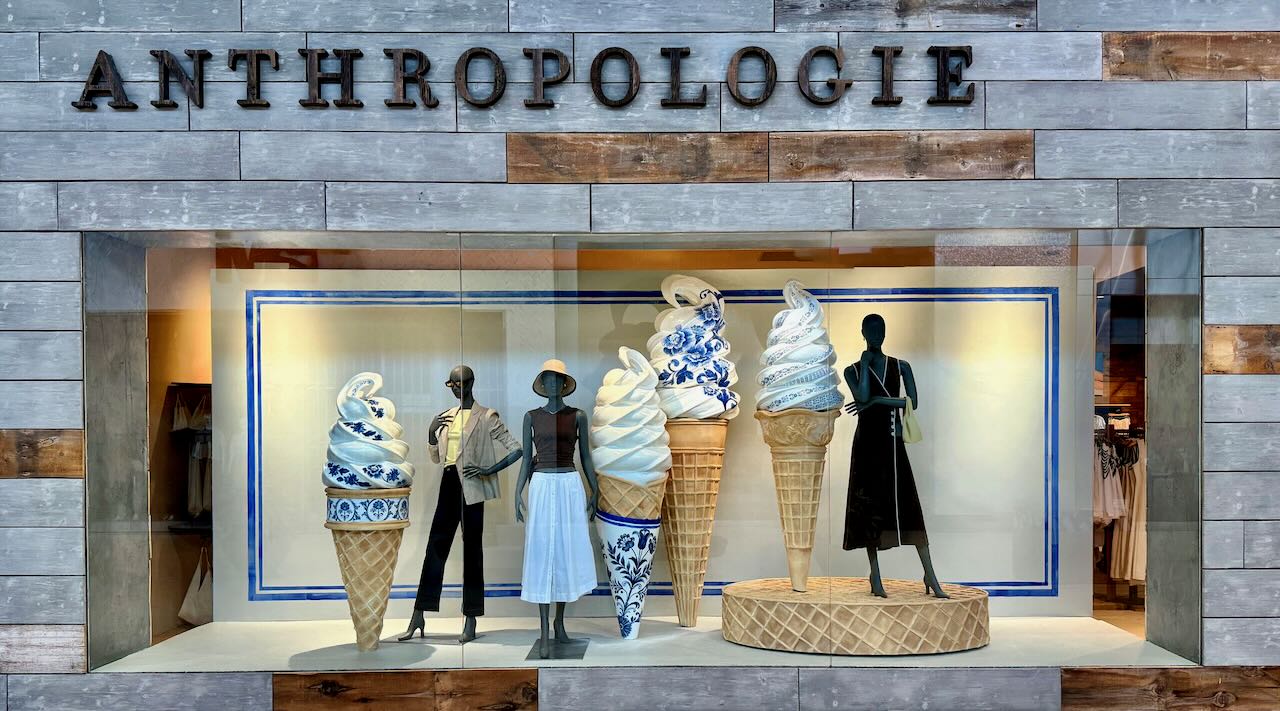
Finding summer inspiration with ice cream. Photo courtesy of Anthropologie.
The “Anthro” Twist
Once inspiration strikes, the next phase involves determining how to transform an everyday idea into something unexpected. The challenge extends beyond finding a compelling concept and into the logistics of scaling it, reimagining it and bringing it to life.
“We love concepts that feel clever, imaginative and a little bit magical,” said Lavinia, pointing to the company’s 2025 holiday windows, which featured whimsical, oversized holiday ornaments. The inspiration, something familiar and nostalgic, was then scaled up, saturated with color, and transformed into oversized sculptures.
She noted that each display has an “Anthro twist,” which involves taking the displays one step further into the unexpected.
“The ‘Anthro twist’ came when we installed them as though they were floating through the windows like festive balloons,” said Lavinia. “Suddenly, something traditional became playful and unexpected. We want our windows to feel handmade, thoughtful and full of wonder, while always offering a perspective people haven’t seen before.”
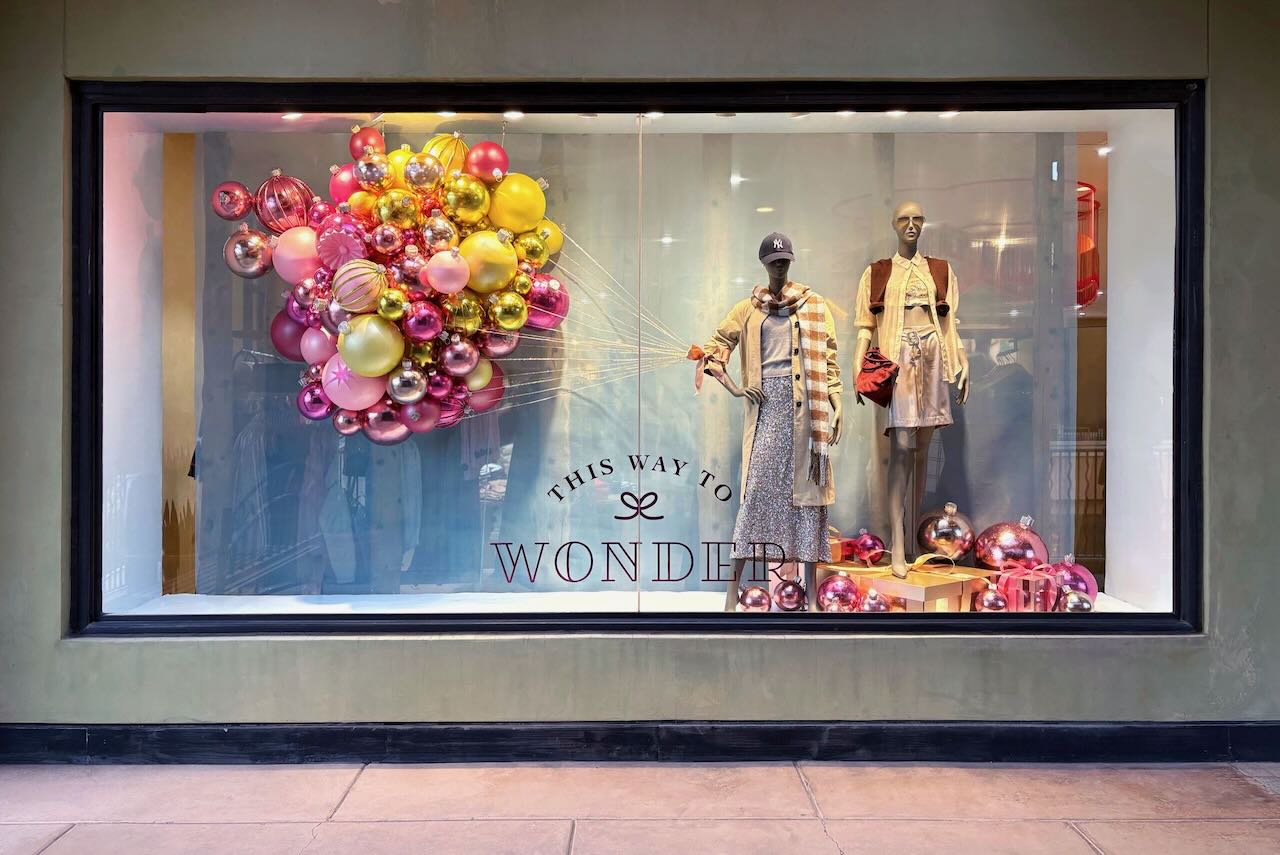
A holiday window in 2025 featured ornaments that floated through the air like festive balloons. Photo courtesy of Anthropologie.
Bringing the Vision to Life
Creating something beautiful is only the first step. The next challenge is translating that idea into a physical experience that customers can interact with and understand at a glance.
With Anthropologie’s home office and stores working hand-in-hand, the company begins with expansive brainstorming sessions where no idea is too big or too unexpected. Lavinia said that the team is constantly asking itself questions:
- Where is the product already telling such a strong story that it can stand on its own?
- Where can display step in to elevate the experience, add emotion, or create a moment of surprise and discovery?
“It’s a thoughtful balance,” said Lavinia, “and the best results happen when both disciplines support and strengthen one another.”
From there, concepts are translated into digital renderings before moving into material exploration. Lavinia described this as her favorite phase because it allows the team to test materials, techniques, colors and construction methods before settling on a final direction.
“We move into physical prototyping, a process that can take weeks,” she said. “We build, critique, refine and push ideas further, always asking how we can make the experience richer, more beautiful, and more complete. It’s a process rooted in curiosity and craftsmanship.”
After concepts are fully developed, they’re ready to be brought to life. While installation week may look like a quick transformation to customers, Lavinia noted that it’s actually the culmination of months of creative development and hands-on crafting.
Lavinia pointed to the company’s recent waterlily display as an example, as the installation challenged the team to completely rethink how the window itself could be used.
“Rather than treating the window as a single environment, we explored how to create both above and below the waterline of a pond,” she said. “The result was an immersive scene filled with oversized sculptural waterlilies, lily pads, and mannequins, all working together to create a layered, dimensional world.”
She continued that the display allowed the team to experiment with color, light, scale, and handcrafted natural forms, but it also required extensive problem-solving, experimentation, and collaboration to bring the concept to life.
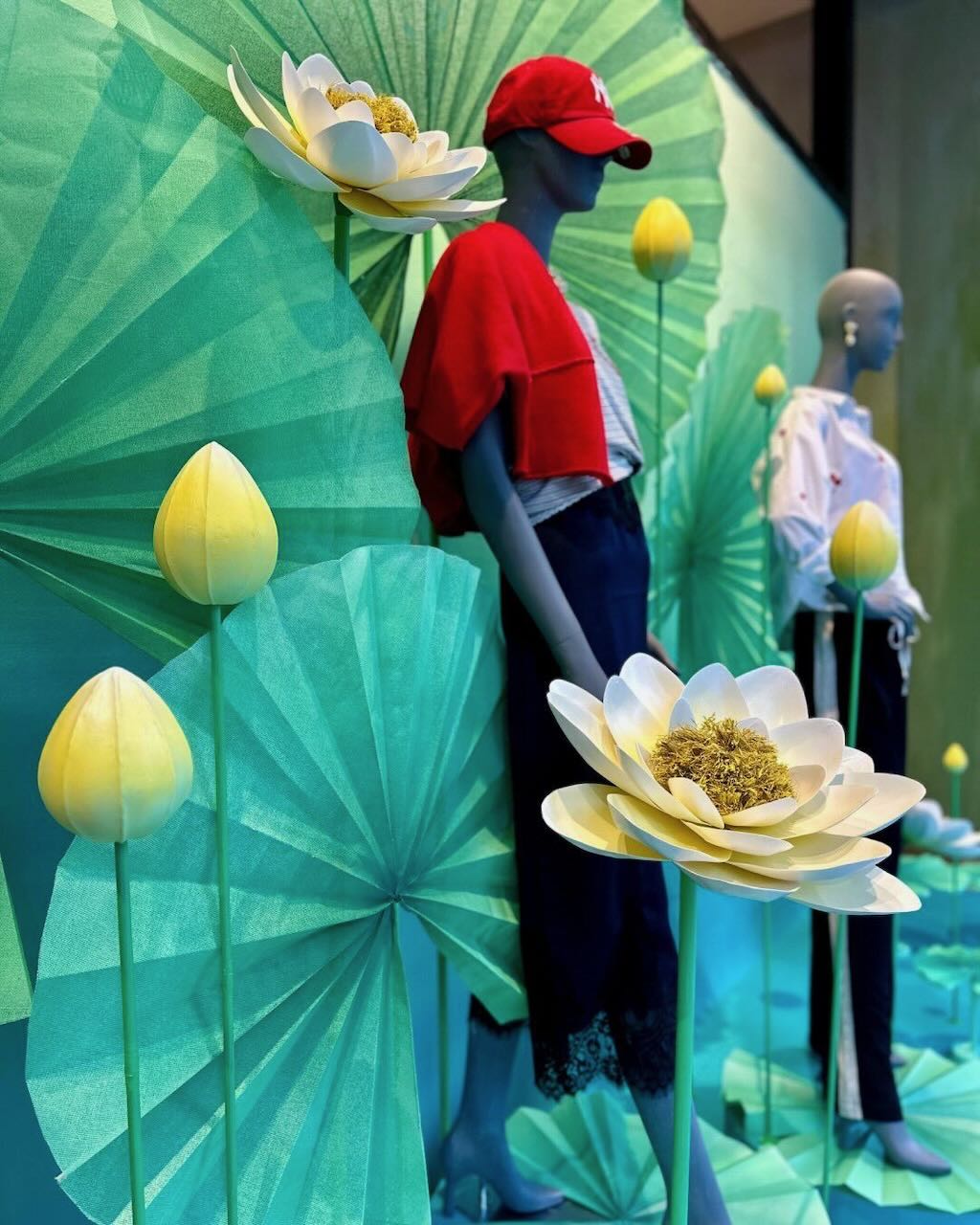
The water lilies window. Photo courtesy of Anthropologie.
Empowering Store Artists
When it’s time to execute the designs in physical spaces, Anthropologie spends a “tremendous” amount of time developing instructions, testing techniques and creating resources that help store teams achieve the vision.
The retailer doesn’t ship finished displays to stores. Instead, it provides in-store display artists with the vision, detailed instructions, renderings and insight into the creative intent behind the installation before inviting the store artists to bring it to life within their own spaces.
“Every Anthropologie store has its own architectural personality, so a display that works perfectly in one location may need to be reimagined in another,” said Lavinia. “Our display artists become problem-solvers, adapting the story to fit the unique proportions and character of their store. They sketch, plan, and create, often spending four to six weeks preparing each seasonal installation in the art rooms tucked behind the scenes.”
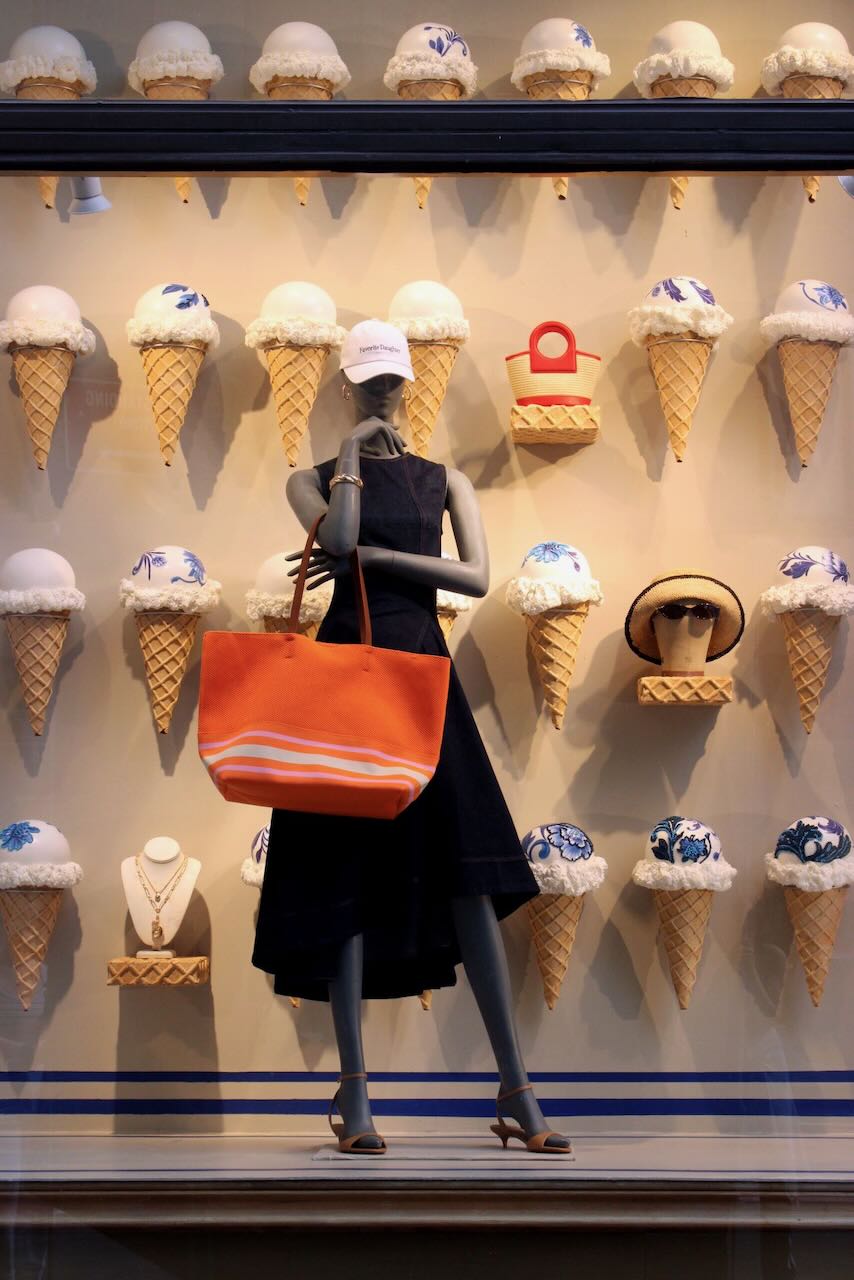
Another ice cream window – store artists make the theme work for their store’s architecture. Photo courtesy of Anthropologie.
Measuring Success
Without a direct line connecting a display to a purchase, Lavinia noted that influence can manifest in different ways, sometimes by immediately bringing shoppers into the store, and other times by shaping customer sentiment and strengthening brand affinity over time.
Inspiring Shoppers to Stop by the Store
At its most basic level, Lavinia said the goal of Anthropologie’s window displays is to inspire someone walking past the store to step inside.
“We often say that the window display is like the cover of our store ‘catalog,’” she continued. “If we’ve done our job well, it sparks curiosity, creates an emotional connection, and invites someone to turn the page and explore what’s inside.”
Beyond execution, customer response remains incredibly important. Some of Lavinia’s favorite moments come from hearing store teams share stories of customers stopping to ask questions, take photos or spend a little extra time engaging with a display.
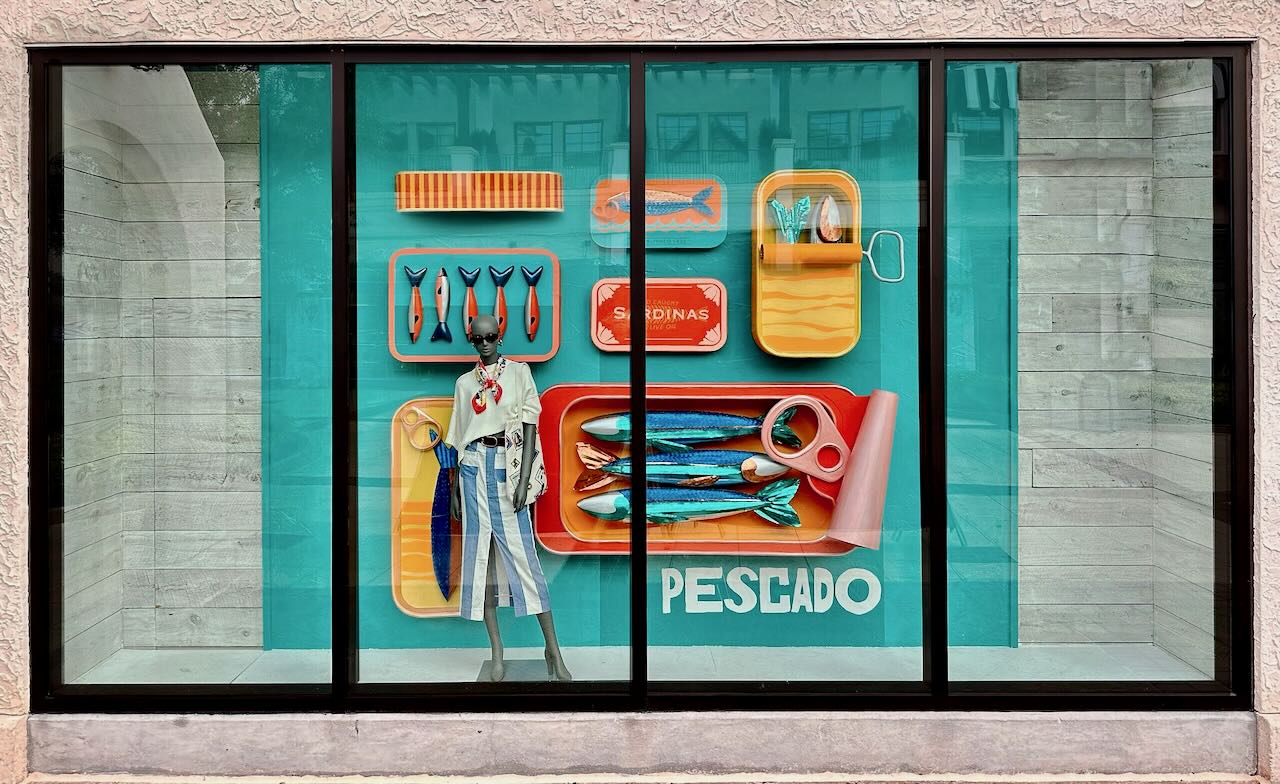
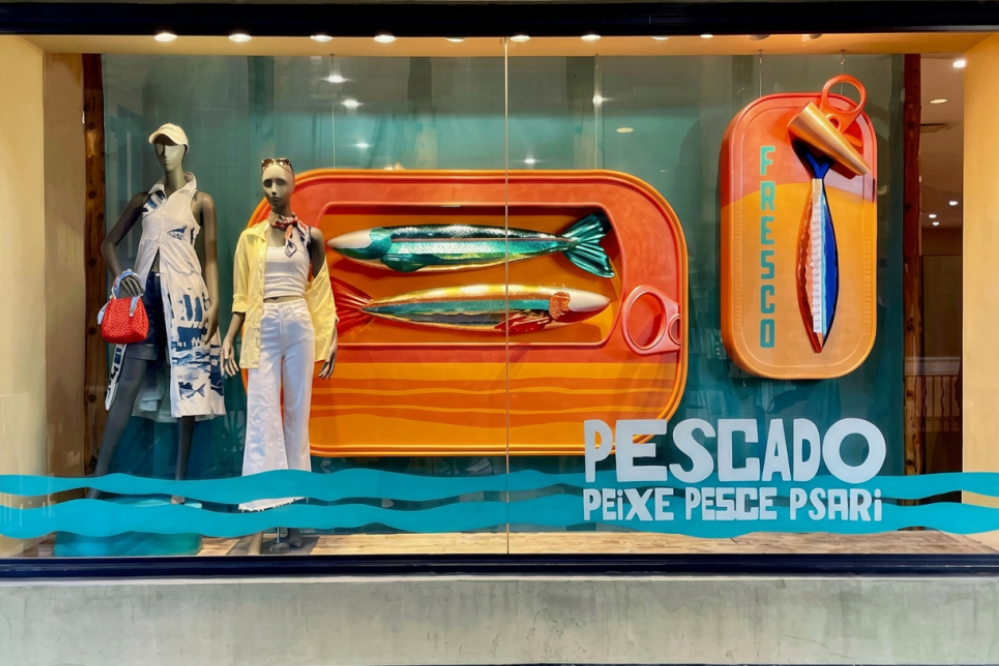
Another “Pescado” window. Photo courtesy of Anthropologie.
Social Media as an Amplifier
While customer reactions inside the store remain important, social media has given Anthropologie’s displays a digital life.
This includes sharing behind-the-scenes moments, DIY projects inspired by displays, artist interviews, Q&As, process videos and visits to Anthropologie’s store art rooms. And, with shoppers sharing pictures and videos of the display online, the result is that a single installation exists outside of every store.
“A special installation, a beautiful detail or a unique store execution can be shared through our social channels and suddenly that smaller story becomes part of a much larger brand conversation,” she said. “So, while there may not be a single metric that defines success, we look for a combination of things: Exceptional execution, creative growth, strong engagement from our store teams, and meaningful reactions from our customers.”
Beyond the Store Window
While Anthropologie’s window displays may appear effortless to shoppers passing by, they’re anything but. Behind every oversized ornament, floating sculpture and immersive seasonal scene is a team of creatives, merchandisers, and store artists working together to transform a simple idea into something memorable.
The result is both a beautiful display and a genuine moment of discovery. And in a retail environment where consumers are constantly searching for inspiration, that ability to stop someone in their tracks and invite them into a story remains one of the most powerful tools a brand can have.
“Those fully realized, 360-degree stories are incredibly powerful because they allow customers to experience the idea from multiple perspectives,” said Lavinia. “The window becomes an invitation, but the story continues everywhere they encounter the brand.”
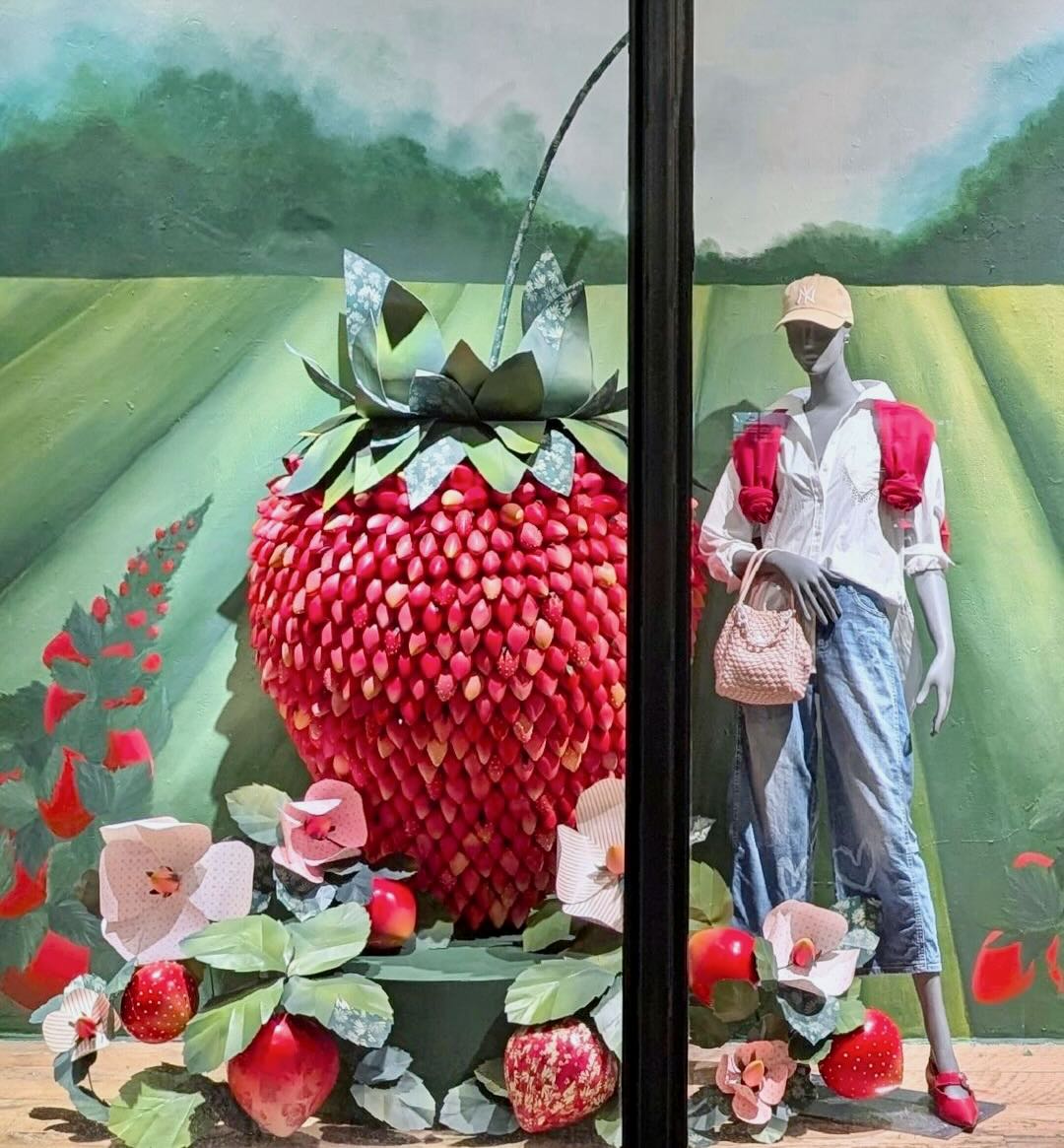
The components of the windows, like the large strawberry here, are works of art themselves. Photo courtesy of Anthropologie.