
Key takeaways
- Universal Cart matters less as a checkout tool than as another sign consumers are moving from brand sites toward AI, search, social and marketplace-led discovery, say retail insiders.
- Retailers such as Ulta Beauty are focused on how to show up in AI-driven recommendation environments with clean data, strong product attributes and content built for context-rich queries.
- Universal Cart is still in its early stages, yet it points to a future in which discovery, comparison and even purchase decisions increasingly happen inside AI-powered ecosystems.
Google’s Universal Cart announcement has generated a lot of discussion about the technology, but not enough about the emergence of AI as a shopping channel, according to retail experts.
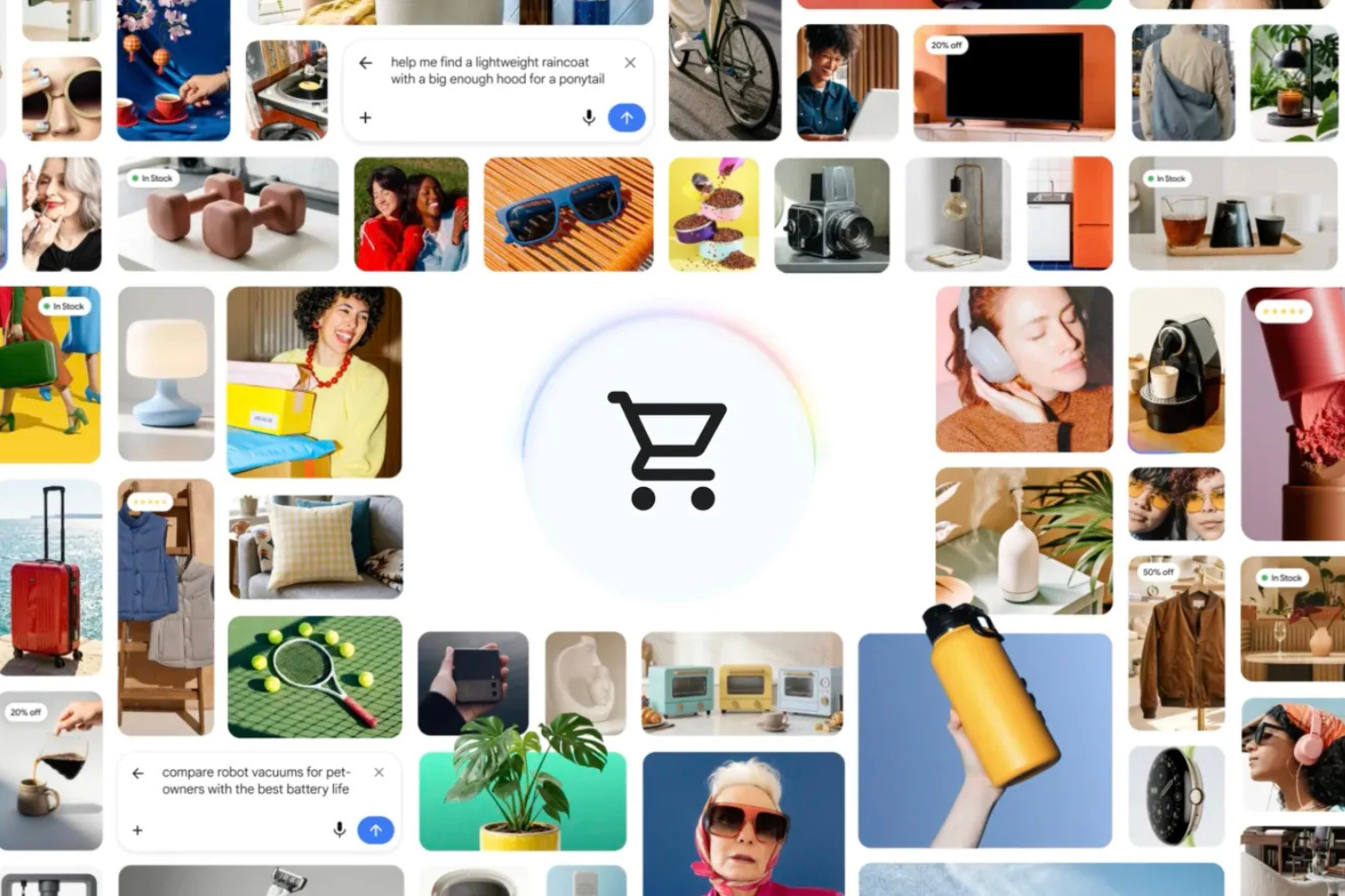
Unveiled at Google I/O 2026, Universal Cart is Google’s new AI-powered shopping hub that lets consumers add products from Search, Gemini, YouTube and Gmail into a single cart that works across retailers. Built on Google’s Shopping Graph, Gemini AI and payments infrastructure, the cart can track price drops, surface deals, flag product compatibility issues and streamline checkout through Google Pay or merchant websites.
“People are focusing a lot on the cart piece, but to me that’s not the most interesting part,” Retailytics Founder Bellamy Grindl said in an interview with Retail TouchPoints. “The bigger trend is that consumers are spending less time on brand websites and more time getting recommendations from AI, search engines, social platforms, and marketplaces. Universal Cart is just another step in that direction.”

For brands, Grindl noted, “the battle isn’t just about driving traffic anymore. It’s about making sure your products show up when consumers and AI agents are looking for solutions. What becomes really important is having clean product data, clear product attributes, accurate inventory and content that helps AI understand not just what you’re selling, but who it’s for and when it should be recommended.”
For example, search is no longer just “bridal lingerie,” Grindl said. “It’s ‘what’s the best affordable lingerie to bring on my honeymoon this summer?’ AI is evaluating context and intent, not just keywords.”
Grindl believes many people assume large retailers have an advantage.
“We’re still in the early innings of AI-driven commerce,” she said. “This feels like the early days of SEO where the winners weren’t necessarily the biggest companies, but the ones that adapted the fastest. The brands that start building AI-readable content, product context, and trust signals today have an opportunity to gain an outsized advantage before everyone else catches up.”
What Google’s Universal Cart Means for Retailers
For all of its potential, industry observers say Universal Cart should be viewed as an early-stage development rather than a finished vision of AI-powered commerce.
“Universal Cart is a significant development and is likely to play a bigger role in commerce going forward,” said Neil Saunders, Managing Director and Retail Analyst at GlobalData Retail. “It is, however, important not to overhype the impact at this stage. This is both because Universal Cart is embryonic and because there is no near-term future in which the majority of retail sales are driven by AI-enabled shopping. It’s also the case that Universal Cart is only one of many technologies that retailers are considering.”
Even so, “Universal Cart does provide a solution to a fragmented online shopping journey where discovery via AI and other sources becomes a more important part of the mix,” Saunders said. Retailers will need to decide whether they want to participate in the arena or develop their own alternatives. “Most will likely participate as they will fear losing market share and relevance if they don’t, but some of the bigger players like Amazon and Walmart will be keen to promote their own platforms.”
The trade-off for improved visibility and the reduced friction that Universal Cart enables is a loss of control, Saunders added.
“Retailers will likely still control the transaction, but they will have less visibility into customer journeys and purchase context,” he said. “Google may monetize the sharing of these things, but it will become more of a black box than it is now. Retailers will also need to think about how they optimize for AI-driven discovery. This is very different from traditional SEO and will require some retooling by retailers.”
How Ulta is Prepping for the Rise of AI Shopping
Beauty retailer Ulta Beauty is doing exactly that.
“At Ulta Beauty, we’re already seeing growing engagement through AI platforms, with traffic from AI sources doubling quarter-over-quarter,” said Josh Friedman, Ulta’s SVP of Ecommerce and Digital. “That’s why we are continuing to strengthen our product data, improve how our products appear in AI search, launch new tools like our AI-powered shopping assistant, Ulta AI, on Ulta.com and the Ulta Beauty App, and integrate with emerging commerce protocols like Google’s UCP.”
The long-term opportunity, Friedman noted, isn’t simply moving checkout into a new surface.
“It’s about bringing Ulta Beauty’s authority, personalized service, differentiated assortment, and loyalty program into another context,” he said. “A consumer could have a detailed conversation about their skin type, hair goals, or beauty routine, receive personalized recommendations and complete a purchase without leaving the AI platform or transferring the cart to our site.”
Friedman explained Ulta Beauty’s discoverability strategy is built around three priorities: accurate and detailed product information, digital experiences that AI platforms can access, and content that reflects conversational shopping behaviors.
“We have used AI to add ecommerce attributes across tens of thousands of products while reducing manual review by roughly 90%,” he said. “Agentic experiences bring those steps together into a single conversation. Whether someone is asking for a sunscreen recommendation before a trip, comparing products for sensitive skin, or building an entire skincare routine, AI can provide more relevant guidance while making it easier to reach a decision.”
Ulta Beauty has about 47 million loyalty members, Friedman noted, who account for roughly 95% of company sales.
“Those relationships, combined with our deep beauty expertise and rich first-party data, become even more valuable in an agentic environment because they allow us to deliver more meaningful personalization,” he added. “In the future, competitive advantage may come down to who has the most trusted expertise, the strongest customer relationships, and the best data to power AI-driven experiences.”
Google’s Shift from Referrer to Transaction Facilitator
For Sudip Mazumder, SVP, Retail Industry Lead, North America at Publicis Sapient, the implications of Universal Cart reach beyond convenience and checkout optimization.
“Google’s Universal Cart, especially when integrated with AI-driven shopping, represents a genuinely significant and fundamental evolution in digital commerce, rather than an over-indexed trend,” he said. “It strategically shifts Google from being a referral engine to a direct transaction facilitator, leveraging its vast search and AI capabilities to anticipate needs and enable purchases within its own ecosystem.”
While its ultimate success hinges on widespread retailer adoption and overcoming consumer habits, the Universal Cart could deepen engagement within Google’s commerce ecosystem and provide greater visibility into transaction and shopping behaviors, Mazumder said. It could also position Google to compete more directly with established commerce platforms like Amazon by offering a frictionless shopping experience across the broader open web.
Not everyone is convinced the impact will be immediate.
“The Universal Cart is unlikely to be a major change in digital commerce in the near term,” said ecommerce and retail adviser Greg Zakowicz. “Short-term, the significance might be overstated, but it is still a significant development. The short-term significance is overstated because its use requires shoppers to change the way they shop. This evolution takes time and we are still in the early stages of it.
“But it’s significant from the standpoint that what Google is doing is really trying to become a marketplace,” Zakowicz said. “If they can own the primary shopping experience, they have power over sellers, much like Amazon does on its platform. If this comes to fruition, it makes Google, and its services, a company brands need to spend with.”
What will it mean for consumers?
The impact is uncertain, Zakowicz explained, and while it may add convenience in some cases, shoppers are still likely to choose trusted brands and may use Google mainly as an enhanced search layer rather than fully changing how they complete purchases.
“There are so many variables, but if shoppers need to visit a retailer’s site, for example, to look at more detailed product images, why would they leave and return to Google to make the purchase?” he added. “The thing to watch is whether people will eventually visit brand sites less and rely on Google more, or simply use Google as an upgraded search tool.”
A recurring view among experts is that the underlying infrastructure matters more than the cart itself.
Paula Macaggi, founder and host of OFFBounds, a weekly retail video podcast, believes the importance of Universal Cart lies more in its infrastructure.
“UCP and AP2 are Google’s attempt to set the standard for how agents transact, the same way they set the standard for how the web is indexed,” she said. “The cart is the consumer-facing wrapper while the infrastructure is the actual play. I think the feature is being over-indexed and the standard is being under-indexed.”
The detail everyone skips, Macaggi explained, is the brand remains the merchant of record.
“That’s the whole game,” she added. “Retailers keep the transaction, the data, and the customer relationship on paper, but discovery, comparison, and the decision move into Google’s surface. So you keep the liability and lose the influence over the moment of choice. Practically, this elevates structured product data from a hygiene task to a competitive asset. Customer acquisition shifts from ‘win the click’ to ‘win the agent’s consideration set,’ and most retailers have no one who owns that yet.”
Google’s growing role in shopping raises questions about who will hold the most influence in ecommerce, Macaggi said.
“Agentic shopping is already operating at scale in Asia, so the competitive question is who will set the standard for it in the Western market and Google decided it will be them.”