

Key takeaways:
- Non-top-tier mall foot traffic turned negative in 2025 for the first time since the pandemic, according to Coresight Research.
- Top-tier malls now command more than double the rent per square foot of non-top-tier malls, Coresight Research found.
- Westminster Mall is being demolished for Bolsa Pacific, a mixed-use project with 2,250 housing units and 220,000 square feet of retail.
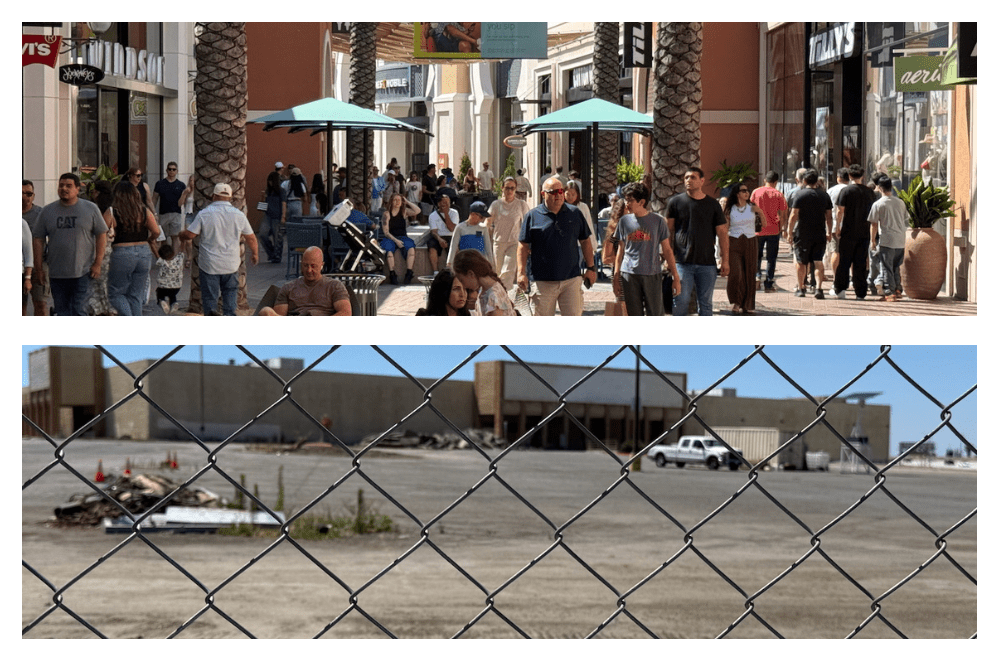
Twenty miles separate Westminster Mall and Irvine Spectrum Center on the 405 freeway in Orange County, California. But the two properties are living in different retail eras.
Westminster Mall closed for good in late 2025, its last leases expiring in October and its final anchor, JCPenney, shutting its doors in late November.
Today the site sits behind chain-link fencing and “Road Closed” signs, the blue-tiled facade of a former anchor store boarded up, broken glass and debris visible through the gates. Shopoff Realty Investments is razing the 83-acre property to build Bolsa Pacific, a mixed-use community of housing, parks and a sharply scaled-down retail component.

Drive south on the 405 to Irvine Spectrum Center and the contrast is immediate. On Father’s Day, the outdoor lifestyle center was packed with families, teens and young adults moving between Nordstrom, Lululemon, Brandy Melville, American Eagle, Free People and a lineup of restaurants, with shaded courtyards and palm-lined walkways filled almost to capacity.
Outside the drink shop La La Land and dumpling destination Din Tai Fung, lines stretch well past the entrances, an example of the center’s success drawing in food and beverage concepts alongside its retail mix, which also includes a 21-screen movie theatre and a comedy club.
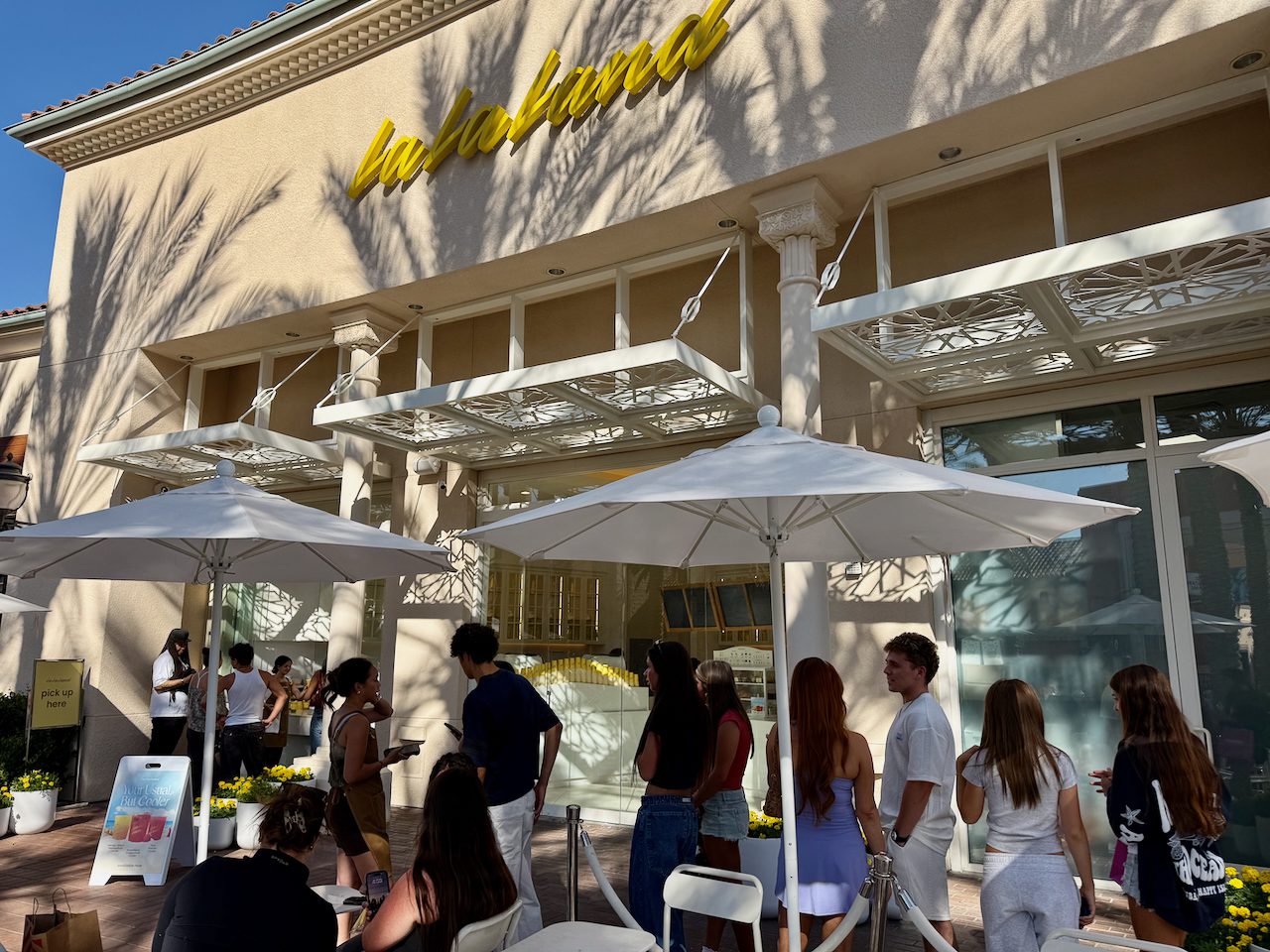
The line outside specialty drink shop La La Land at the Irvine Spectrum Center last week. Photo by Retail TouchPoints.
The two properties sit at opposite ends of a divide that retail industry research firm Coresight Research says has been building for years and is now accelerating, a trend Coresight’s Head of Global Research John Mercer says is likely to continue as AI shopping tools further erode the advantages physical stores in uninspiring shopping centers have left.
In a report titled “The American Mall Renaissance,” Coresight found that foot traffic at non-top-tier malls turned negative in 2025, falling 1.6% year over year, compared with 2% growth at top-tier properties. Mercer said that marks the first negative reading for the segment since the pandemic, when traffic fell across the board.
Only about 20% of U.S. malls meet Coresight’s definition of top-tier, Mercer said. The remaining 80% includes both healthy mid-tier properties and the struggling lower-tier centers most exposed to the trend.
“What we saw is a stronger bounce back for the top tier,” Mercer said. “The lower tier also bounced back somewhat after the pandemic … obviously that slipped more recently.”
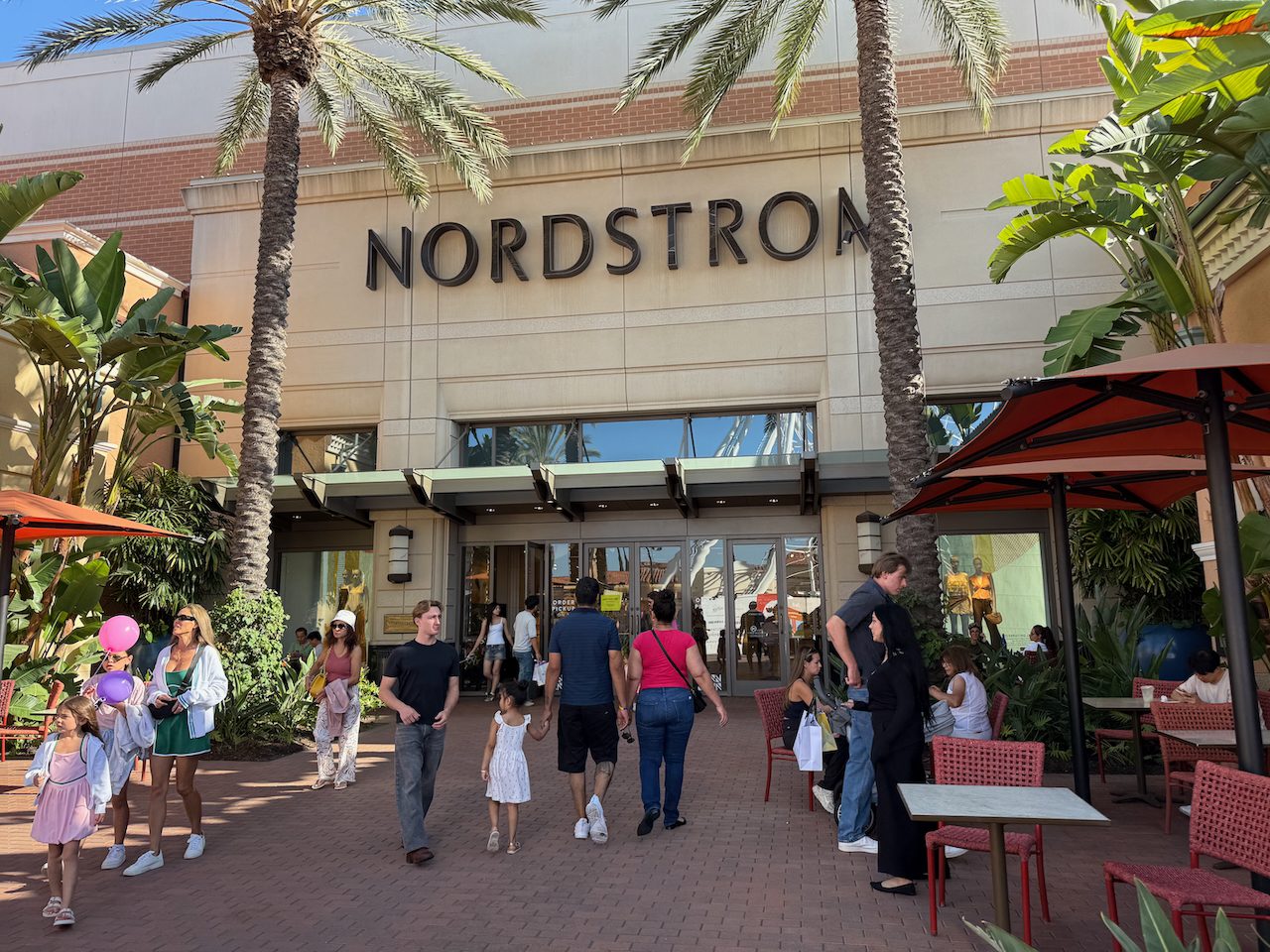
Nordstrom is one of the anchors of the Irvine Spectrum Center. Photo by Retail TouchPoints.
A Retailer Confirms the Shift
The same dynamic Coresight is tracking at the data level showed up on Zumiez’s fourth-quarter earnings call in March.
The action sports and streetwear retailer, which has roughly 700 stores across the U.S. and internationally, has historically resisted the broader narrative of mall decline, telling investors for years that its lower-tier mall locations remained profitable. That changed this year.
Zumiez plans to close approximately 25 stores in fiscal 2026, up from 17 in fiscal 2025, while opening just five new stores. Twenty of the store closures are in North America.
CEO Rick Brooks tied the acceleration directly to the C and D mall segment, telling investors on the call that those locations “just gotten to the point where they’re just not working anymore.”
But Brooks was clear the closures don’t reflect softening demand for Zumiez overall: total North American sales grew in both fiscal 2024 and fiscal 2025 even as store count declined, with the company posting full-year net sales of $929.1 million in fiscal 2025, up 4.5% year over year.
“It’s about how customers are moving to the better retail experiences in the stronger and better malls,” Brooks said. “(Better) malls are winning and the lesser malls are finally really losing.”
Zumiez CFO Chris Work, in emailed comments, said ownership is often the deciding factor in whether a C or D mall survives.
“When the landlord does their job by bringing in desirable tenants and investing in the center it all works,” Work wrote. “Unfortunately, with today’s landscape, certain low-end centers are owned by landlords that are not interested in investing in their centers.”
Work added that some lower-tier centers can still hold their own, particularly in more remote markets that lack a dominant nearby competitor like Irvine Spectrum. Though even those centers, he said, may lose weekend traffic to shoppers willing to drive farther for a better experience.
The Challenges Lower-Tier Malls Face
Mercer described the mechanics of that divide as a self-reinforcing spiral that is difficult for lower-tier properties to escape. Once a struggling mall loses an anchor tenant, he said, it becomes far harder to backfill than at a top-tier property, triggering a downward cycle of shrinking traffic and shrinking tenant rosters that can be nearly impossible to reverse.
Department store closures are a real factor in that spiral, Mercer said, but not the only one, and the impact at top-tier center is very different. At top-tier properties, landlords are often able to backfill a vacated department store with newer concepts such as competitive socializing venues (think axe throwing), Dick’s House of Sport or Netflix House, frequently on better lease terms than the department store carried.
“Top-tier locations don’t need to offer that same level of concession that they had to offer the department store (in the past),” Mercer said. “So, it’s easier and it can be more profitable to backfill that department store space.”
Lower-tier malls rarely attract those same tenants, leaving large anchor boxes vacant, however.
Still, Mercer cautioned against viewing the market as strictly binary. “There is a middle tier which can be quite healthy,” he said. “We shouldn’t write off the middle tier.”
Mercer also pointed to a generational shift in shopping habits, describing a kind of consumer exhaustion with mediocre retail experiences that’s accelerating as ecommerce and emerging AI shopping tools chip away at the one advantage struggling malls had left: convenience for quick, functional purchases.
“Ecommerce is just going to keep taking share and things like agentic commerce is going to make it easier for ecommerce to take share,” he said. “It’s almost like King Canute pushing the waves for some of the C and D malls” — invoking the legend of the king of England who commanded the tide to stop, to illustrate just how futile the fight has become for some of these properties.
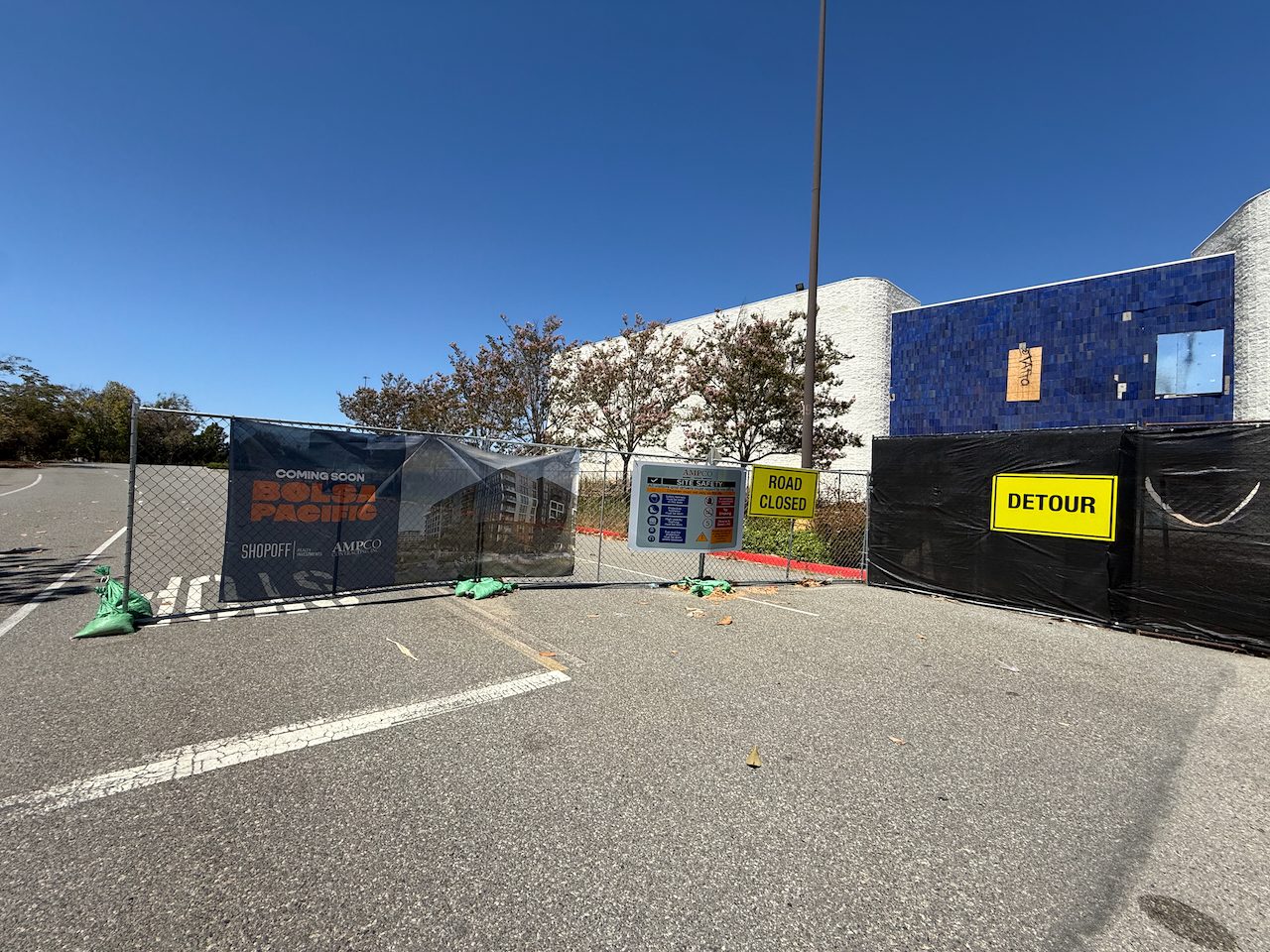
The shuttered Westminster Mall in Orange County, California. Photo by Retail TouchPoints.
When an Owner Has the Capital to Start Over
For Bill Shopoff, president and CEO of Shopoff Realty Investments, the decision to demolish Westminster Mall rather than renovate it came down to data that left little room for debate.
“When we looked honestly at Westminster Mall, the data was clear,” he said. “Foot traffic had collapsed, one anchor tenant was gone, while two others were on life support, and the enclosed, inward-facing structure it was built around no longer resonating with how people live, shop and connect today. Renovating a format that the market had fundamentally rejected would have been throwing good money after bad, when the real opportunity was to reimagine what these 83 acres could become.”
Shopoff’s land assembly for the site began in July 2022 with the Sears parcel, followed by the Macy’s parcel that August, and concluded earlier this year with the acquisition of the remaining 57.5 acres, completing a roughly three-and-a-half-year consolidation of the 83.3-acre property.
The company broke ground on Bolsa Pacific on April 15, 2026. Grading and infrastructure work is expected later this year, with vertical construction beginning in 2027, model homes opening in late 2027 or early 2028 and full project completion targeted for 2031.
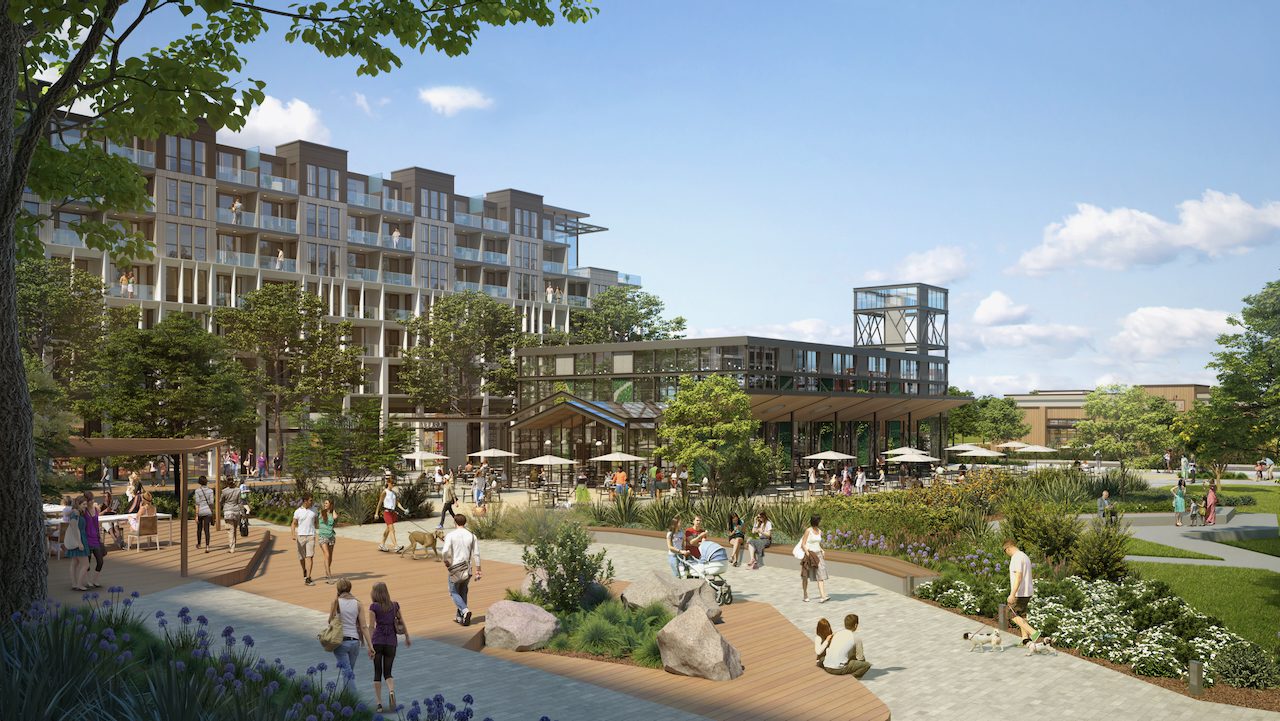
The new Bolsa Pacific development will include 2,250 housing units, 15 acres of open space and approximately 220,000 square feet of retail. Rendering courtesy of Shopoff Realty Investments.
The new development will include 2,250 housing units, 15 acres of open space and approximately 220,000 square feet of retail, down significantly from the original mall’s 1.2 million square feet.
“The Westminster market simply cannot support 1.2 million square feet of traditional retail. And frankly, almost no market in America can anymore,” Shopoff said. “What the data told us is that the community craves quality over quantity: a compelling food hall, local and regional concepts, and retail that gives people a genuine reason to show up rather than defaulting to online retailers.”
Shopoff said the project’s design went through roughly 100 iterations with the city before landing on its final mix and brought in retail consultant Shaheen Sadeghi of LAB Holding to curate the retail component. He said the smaller retail footprint reflects a deliberate strategy rather than a compromise.
“Sizing the retail at approximately 220,000 square feet isn’t a concession,” he said. “It’s a strategic decision to ensure every tenant thrives, which creates a virtuous cycle of foot traffic driven by the 2,250 households who will live on-site. When your customers are your neighbors, the retail equation changes entirely.”
The Widening Gap, By the Numbers
Coresight’s report quantifies just how far apart the two tiers have drifted.
Top-tier mall occupancy reached 95.5% in 2025, essentially flat from a peak of 95.8% in 2024, while the non-top-tier REIT in Coresight’s sample posted occupancy of 90% in 2025, down slightly from 90.3% in 2024.
Average base rent at top-tier malls climbed from $60 to $68 per square foot between 2022 and 2025; the non-top-tier sample REIT moved from $30 to just $31 over the same period, meaning top-tier malls now command more than double the rent per square foot.
Mercer said constrained new supply is reinforcing the divide. New shopping center space delivered nationally in 2025 totaled just 10.2 million square feet, an all-time low and 63% below the 2015-2019 average, according to Cushman & Wakefield data cited in the report. The under-construction pipeline represented just 0.3% of existing mall inventory as of 2025, down from a long-term average of 0.6%.
“This is one of the reasons why there is demand from the retailers when the space is of good quality, because the amount of new space coming on is low by historical standards,” Mercer said. “There is a squeeze in supply.”
That scarcity, combined with continued expansion from luxury brands and international retailers such as Uniqlo, Mango and Primark, has concentrated demand even further on the properties best positioned to absorb it, Mercer said.
Looking ahead, Mercer does not expect the trend to reverse.
“I think the trend is going to continue because of the macro trends, including the demand for better experiences, for newness,” he said. “Ecommerce is just going to keep taking share.”
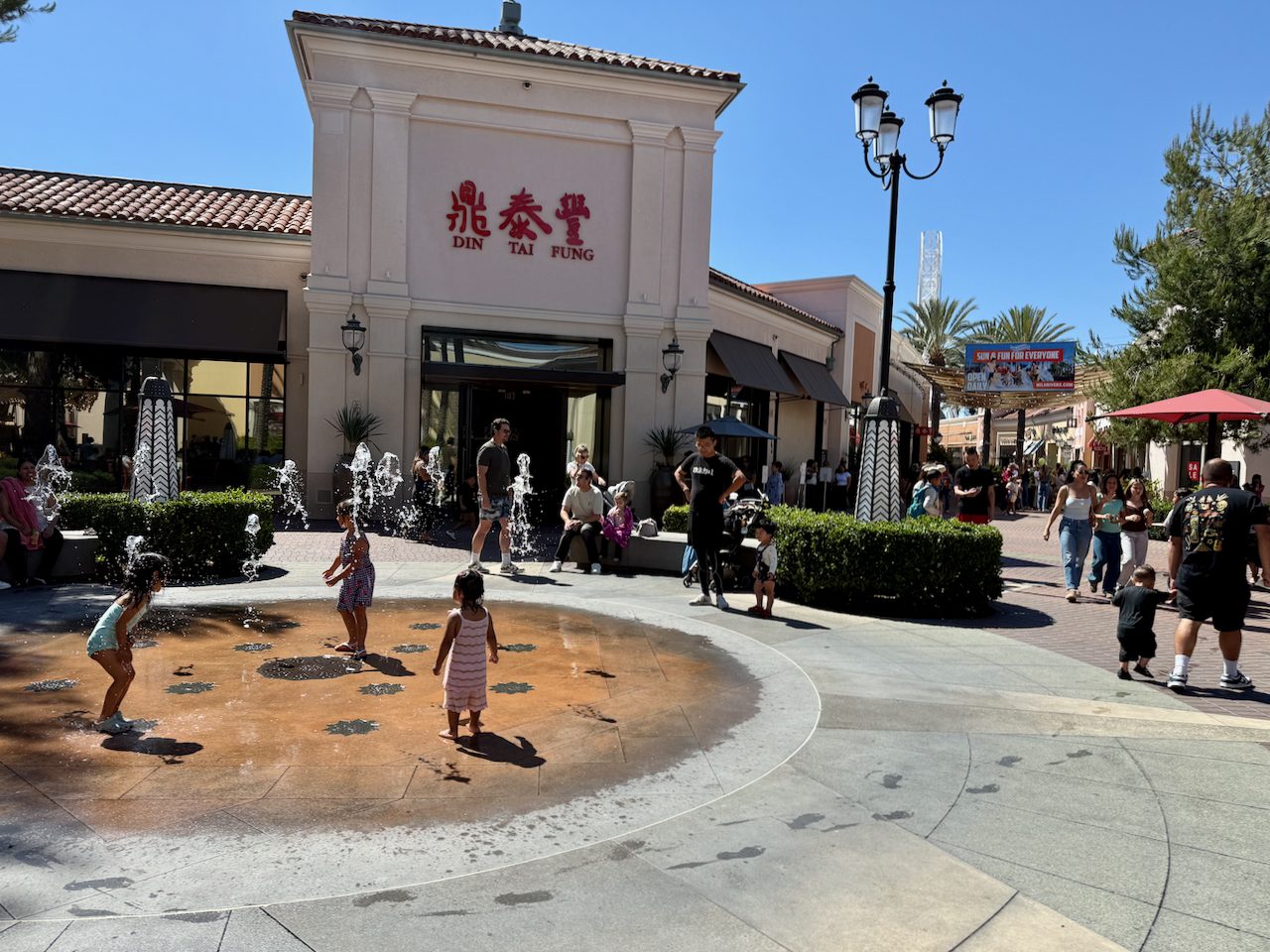
Families playing in the water feature outside dumpling destination Din Tai Fung on Father’s Day at the Irvine Spectrum Center. Restaurants and kid-friendly features are a key part of the center’s success. Photo by Retail TouchPoints.