
Everyone is watching the rise of the alternative last-mile carriers like Veho, Jitsu and GoFor, especially after Black Friday sales reached new records last year.
But no one is asking the only question that matters: Can your middle mile absorb peak volume, sort accurately at speed and route intelligently enough to protect downstream cost and delivery promises?
Right now, the answer across most retailers and LMD carriers is no. And that’s why none of these networks scale consistently.
The bottleneck isn’t the driver. It isn’t the cutoff. It isn’t customer demand. It’s the sortation layer. The part of the network that determines everything downstream: cost, reliability, delivery windows and route density.
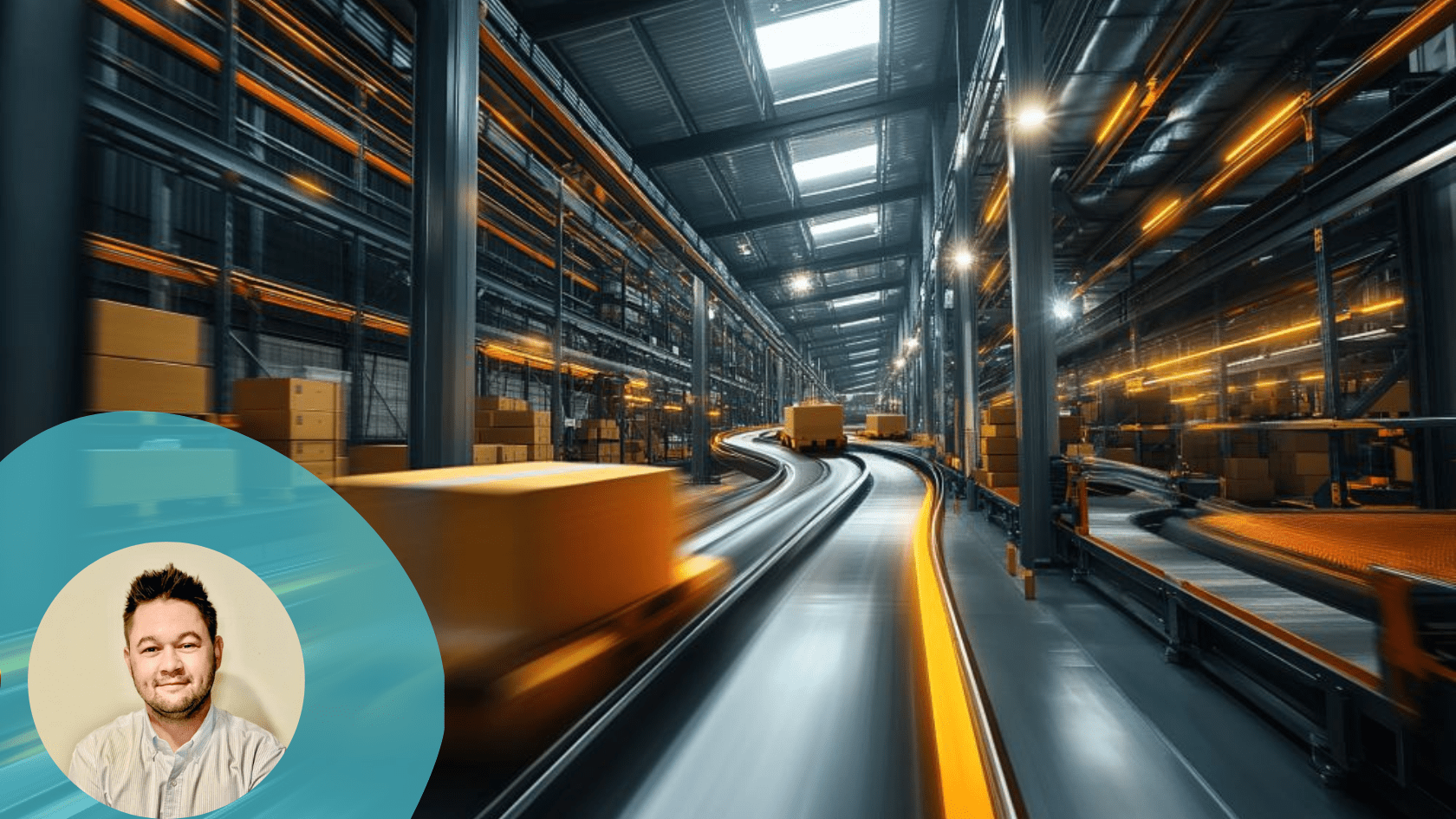
When companies unify their middle-mile strategy with automated sortation, the impact is dramatic: higher throughput, lower error rates, more consistent delivery windows and far more flexibility in how freight flows through the network. The next decade will be won by retailers, brands and LMD providers that stop treating sortation as a warehouse task and start treating it as a strategic advantage.
Sortation is the Real Control Tower of a Network
Every package touches the middle mile. Every decision, the next facility, the next truck, the next route, is created in the sort. If the sort is slow, inconsistent or manual, the entire network pays the price.
Operators feel it in:
- Higher cost per package
- Lower route density
- Missed carrier cutoffs
- Manual rework
- Unpredictable downstream operations
Every second saved and every touch eliminated in this sequence compounds across the network. When you scale this across hundreds of thousands of parcels per day, the economic implications are extraordinary.
The Hidden Truth: One Touch in Sortation Changes the Entire P&L
When a package comes in, it goes through a fast sequence:
Induct → Identify → Route → Divert → Stage → Dispatch
If any part of that chain is manual or error-prone, your network loses speed, loses accuracy and loses money.
Examples operators understand immediately:
- A late linehaul forces re-sequencing across multiple routes
- One mis-sorted carton can break a tight delivery window for a whole wave
- A slow induction lane kills throughput during peak hour
- A manual chute creates bottlenecks that cascade downstream
Multiply these across 100K+ parcels, and the gap between manual and automated becomes a structural economic difference.
The Missing Link: Middle-Mile Sortation Automation
Retailers today must support omnichannel flows: ecommerce replenishment, store allocation, ship-from-store and returns; all while maintaining narrow delivery windows and strict cutoffs for partners and carriers. Legacy sortation systems weren’t built with this level of SKU diversity and service complexity in mind.
Unlike Amazon, UPS and FedEx, emerging last-mile providers lack the network density and routing intelligence of national integrators to make economics work consistently across markets or seasons. They’re still relying on manual induction, static routing, label rescans, human-based resequencing and small nodes with limited throughput.
They can offer a strong doorstep experience, but they can’t solve the middle of the network, so their economics break under volume.
Automated sortation is the unlock. It gives retailers and carriers the same structural advantages as the national integrators without requiring a massive infrastructure footprint.
Automation Fixes the Exact Problems That Kill Scale
Modern automation doesn’t simply replace labor. It replaces the friction that slows networks down.
Step 1: Induction and Identification
What can be automated:
- Robotic arms for random parcel induction
- Automated singulators that convert bulk flow to single-file precision
- DWS (dimension-weigh-scan) tunnels
- Full-vision AI cameras that identify packages without barcodes
Impact:
It reduces one of the most labor-intensive and error-prone parts of sortation, the manual scanning, relabeling and exception handling. According to one robotics manufacturer, automated induction frees up employees to do value-added work rather than routine induction, reduces the cost per unit by $0.02, and halves exceptions.
Step 2: Routing and Decision Logic
What can be automated:
- Network-aware lane assignment
- Dynamic routing based on live network conditions
- Automated re-sequencing for store deliveries or delivery windows
- Intelligent fallback systems when labels are damaged
Impact:
This is where automation moves from “mechanical” to intelligent. Network-aware sortation means the system knows about: late inbound linehaul, weather disruptions, SKU-level surges, carrier cutoff changes, priority loads that need fast-tracking and more. Instead of operating like a static conveyor, the sortation layer behaves more like a real-time decision engine.
Step 3: Diverting, Lane Allocation and Route Building
What can be automated:
- Cross-belt sorters
- Tilt-tray systems
- Micro-sort units (5K–15K pph)
- Sort-to-route systems for LMD carriers
- Pouch sorters for exact delivery-sequence building
Impact:
Carriers and retailers no longer need to choose between speed and precision. Automated diverting allows networks to build more efficient last-mile routes, reduce manual rework and hit tighter delivery windows.
Step 4: Staging, Loading and Dispatch
What can be automated:
- AMRs moving totes and carts
- Robotic palletizing and depalletizing
- Automated chute-to-cart workflows
- Real-time dock management systems
Impact:
Every manual touch removed reduces cost and lowers damage rates. Automated staging also provides retailers and LMD carriers with consistent dock-to-depart times, even during peak periods.
What the Next Decade Looks Like
Over the next decade, sortation will evolve from fixed conveyor hardware into something more software-defined, modular, and intelligent:
- Vision systems that eliminate barcodes
- Network-aware sortation that adapts in real time
- Robotics at every edge: unload, induction, singulation, staging
- High-density micro-sort nodes that bring 5K–10K pph closer to demand clusters
This is the architecture the next generation of logistics will be built on: distributed, automated and deeply integrated with the middle mile.
The retailers, brands, and LMD providers that embrace this shift will build networks that are faster, more adaptive, and structurally lower cost. The ones that don’t will be competing against operators that can reroute freight in real time, scale capacity in minutes and hit delivery promises with precision.
Why Choosing the Right Middle-Mile Partner Matters More than Ever
As networks become more complex, it’s no longer enough to work with a middle-mile provider that simply moves freight from Point A to Point B. Retailers, ecommerce brands and LMD carriers need partners that treat automation as a core product, not an add-on, and that can connect the entire supply chain through a single, integrated platform.
When sortation, routing, linehaul and downstream delivery each depend on different vendors, handoffs become failure points: labels get rescanned, data gets lost, exceptions multiply and performance becomes unpredictable.
A modern middle-mile partner uses automation and software to stitch these steps together. Linking upstream visibility with real-time routing logic, automated sortation with last-mile route building, and carton-level data with customer-level delivery promises. End-to-end connectivity ensures every package moves through the network with a single source of truth, a single flow path and a single operational brain. The result is a supply chain that is faster, more precise and dramatically more scalable than anything built on fragmented vendors or manual processes.
Questions Every Operator Should Ask When Evaluating a Middle-Mile Partner
- How does their sortation technology reduce touches, labor cost, and error rates?
- Can their network handle my peak hour volume—not just my daily average?
- Do they support carton-level and route-level sorting aligned to my delivery windows?
- How dynamically can their nodes respond to late linehaul, weather, or SKU surges?
- Can they consolidate B2B freight with parcels to increase density and lower my cost?
- What throughput, mis-sort, and cost-per-package benchmarks do they consistently achieve?
- How modular and scalable is their sortation footprint across new markets?
If a middle-mile partner can’t answer these, they’re not ready for the next decade.
Automated sortation is no longer a “future investment”; it is the backbone of competitive logistics strategy, the engine that determines every downstream outcome from cost to reliability to customer experience. The companies that embrace this shift now will build networks that are resilient, scalable, and economically advantaged for years to come.
Daniel Sokolovsky is a Los Angeles-based entrepreneur and Co-founder and CEO of Warp, an innovative enterprise freight transportation service powered by advanced technology. As CEO, he is responsible for managing the company’s operations, guiding the Warp brand, and overseeing the company’s overall strategy. Prior to founding Warp, Sokolovsky built Amazon’s last-mile service for every shipper not named Amazon as the founder of Jitsu, an expedited urban, last-mile delivery provider. During his six years at Jitsu, he pushed the company into new verticals and sustainability partnerships while aiming to quintuple revenue.