
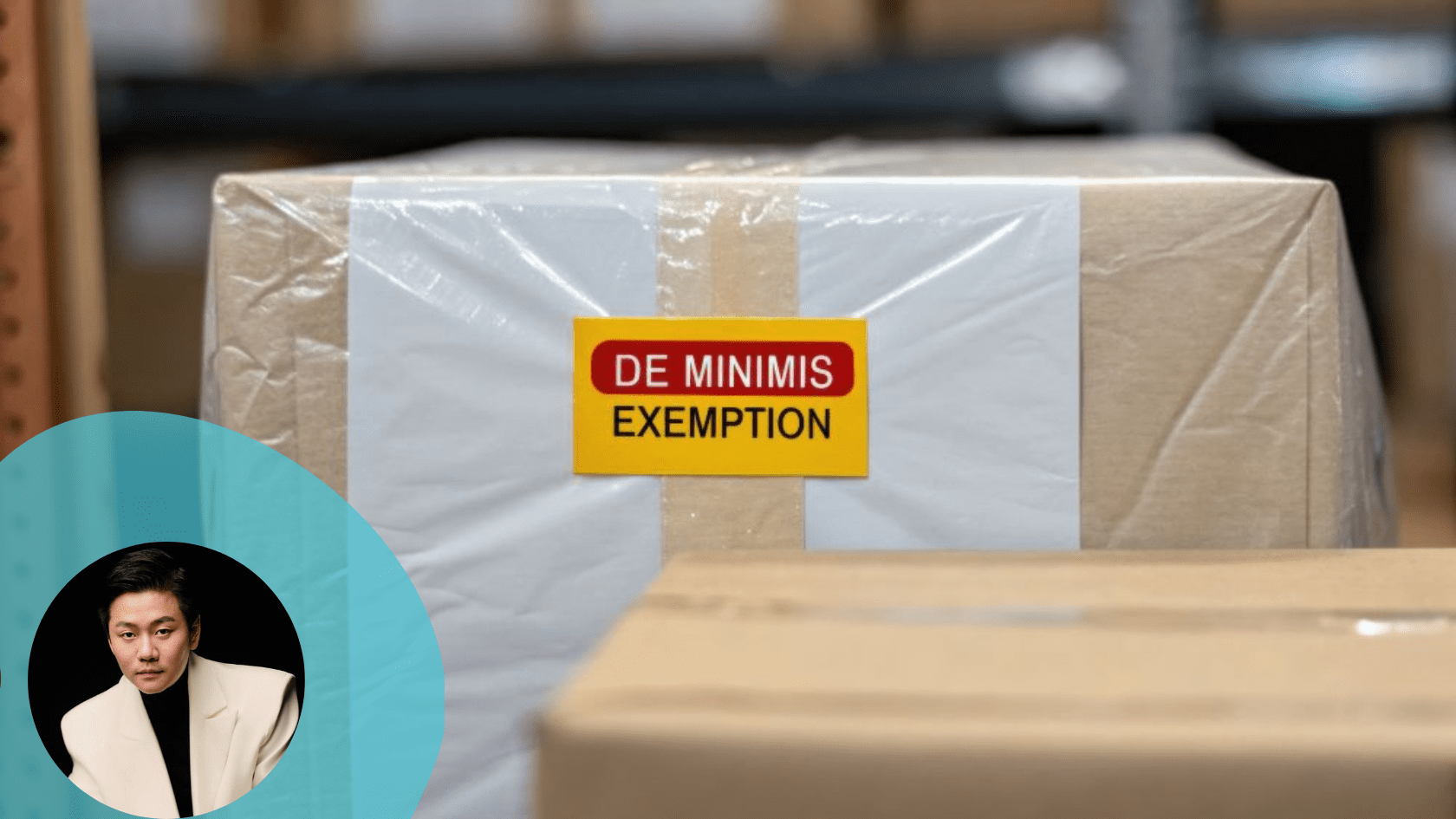
For years, the de minimis exemption served as the silent engine behind the global direct-to-consumer (DTC) explosion. By allowing packages valued under $800 to enter the U.S. duty-free, it enabled a model where individual orders could be shipped directly from overseas factories to American doorsteps with minimal friction.
However, the landscape shifted permanently in 2025. With the suspension of this exemption on August 29, 2025, the industry is no longer facing a temporary disruption. We are in the midst of a structural reset in how global supply chains are built and managed.
As we navigate 2026, the brands that remain competitive will not be those chasing the lowest short-term costs, but those that rethink their entire fulfillment architecture to balance cost efficiency, delivery speed and increasing regulatory complexity. Success now requires a stage-adaptive fulfillment strategy – one that evolves alongside the brand rather than forcing it into a static model.
The End of the ‘Direct-from-Factory’ Monopoly
The scale of the de minimis era was staggering. Shipments into the U.S. rose from 134 million in 2015 to over 1.36 billion in 2024. When the exemption ended for goods originating from China and Hong Kong in mid-2025, the impact was immediate and profound. Within just five weeks of the exemption’s removal, postal volume into the U.S. fell by 70.7%, according to the United Nations postal agency, as sellers were forced to reevaluate their direct shipment strategies.
Today, the new normal means every parcel sent directly to a U.S. customer carries additional taxes and processing fees. Under the current rules, carriers collect import charges either as a percentage of value or a flat rate that is often as high as $200 per parcel.
For many emerging brands, these costs are untenable. While moving production closer to home is an initial consideration for some, the reality of higher domestic manufacturing costs makes that transition unrealistic for many. Consequently, the industry is seeing a clear shift toward compliance-led, globally diversified fulfillment strategies.
The Shift to a Stage-Adaptive Hybrid Model
The most effective strategy for 2026 is no longer a one-size-fits-all approach. Instead, industry best practices suggest a hybrid fulfillment model that matures in three distinct phases based on a brand’s growth stage:
- Early-Stage: China-based proximity fulfillment – For brands just starting, the priority is minimizing inventory risk and preserving cash. By fulfilling orders directly from China, near the point of manufacture, businesses avoid the heavy capital outlay required to pre-ship large quantities of bulk inventory to U.S. warehouses before demand is proven.
- Growth-Stage: U.S. distributed warehousing – As a brand gains traction, the focus shifts to speed and consistency. At this stage, high-growth sellers should migrate to a distributed warehousing model in the U.S. Staging inventory domestically allows brands to offer the fast delivery speeds American consumers expect while paying tariffs on the wholesale value of goods rather than the retail value, which is significantly more cost-effective in the post-de minimis environment.
- Mature-Stage: Global footprint diversification – Truly mature brands require global expansion capability. This stage necessitates a network of global fulfillment centers – often spanning 13 or more countries – to ensure a seamless, localized experience in every major market where buyers reside.
Beyond Logistics: The ‘Last-Mile Guardian’
Fulfillment isn’t just moving boxes; it’s the physical manifestation of your brand promise. When cross-border shipping becomes complex, the consumer’s experience must remain seamless. This is where the concept of the Last-Mile Guardian becomes critical, as logistics providers now act as strategic operators protecting a brand’s reputation, which includes not damaging the product in transit.
Research indicates that consumers perceive goods in premium packaging as 45% more valuable. For DTC brands, the unboxing experience is the physical embodiment of their identity. One emerging best practice involves leveraging supply chain partners with on-the-ground teams in manufacturing hubs like Shenzhen. These teams can communicate directly with factories in their native language, coordinate custom packaging and solve production challenges in real time, effectively eliminating the language and cultural barriers that traditionally plague Western-based logistics providers.
Bridging the Complexity Gap for Emerging Brands
For startups and crowdfunded campaigns, the end of de minimis could have been a death knell if not for the rise of flexible, ROI-driven logistics models. Traditional 3PLs require high Minimum Order Quantities (MOQs), often 500+ orders monthly, and penalize brands during slow periods which can kill early-stage companies.
Modern 3PLs should work the same with a company shipping 50 orders in a soft launch month or 50,000 orders during Q4 peak season. This isn’t charity – it’s strategic partnership. That margin can allow small companies the opportunity to grow into high-volume businesses because they were supported before they had scale.
Looking Forward: Data-Driven Agility and AI
The winners in 2026 will be the strategic operators that leverage technology to manage global uncertainty. This involves using AI-driven inventory intelligence to optimize global stock placement. By using data to predict when and how much to order, brands can significantly reduce cash flow risks and improve shipping speeds – sometimes by as much as 20%.
Optimizations such as:
- Predicting optimal stock placement based on historical sales patterns, seasonal trends and regional demand. Instead of guessing how much inventory to position in each warehouse, brands receive data-driven recommendations that reduce cash flow risk and prevent stockouts.
- Dynamically selecting shipping routes to balance cost, speed and tariff exposure. As regulations change, like the de minimis suspension, the system automatically identifies the most cost-effective fulfillment strategy for each order.
- Optimizing reorder timing by analyzing sales velocity, lead times and seasonal patterns. This helps brands know exactly when and how much to order from suppliers.
By embracing globally diversified fulfillment and investing in flexible, data-driven supply chains, DTC brands can turn regulatory hurdles into a competitive advantage. The goal is to ensure that the brand promise made online is flawlessly realized the moment a package hits a customer’s hands.
William Yu is the Founder and CEO of NextSmartShip, serving over 2,000 DTC brands globally. Coming from a marketing background, he founded NSS after identifying a critical gap between China’s manufacturing ecosystem and the global fulfillment infrastructure for modern ecommerce brands. He brings a customer-first perspective to logistics – treating fulfillment as a growth engine, not just a cost center. Today, NextSmartShip operates 30 fulfillment centers across 13 countries, helping brands optimize inventory, reduce risk and scale internationally.