


For years, ecommerce has succeeded on an assumption that the more a marketplace offers, the more users are to spend. Digital shelves seem to be infinite, unlike physical ones, and this “endless aisle” was long seen as a competitive advantage. Now, shoppers spend more time browsing, comparing, filtering— and increasingly leave without buying anything.
According to Business Insider, an Accenture survey of 19,000 consumers worldwide found that 74% didn’t finish their carts, because they felt overwhelmed by content and choice and frustrated by the effort required to decide. This is not a temporary fatigue. It’s a structural shift in how people want to see digital commerce.
In response, marketplaces have focused on faster delivery, video content, gamification, loyalty mechanics and social commerce. As the COO of Flowwow, a global gifting marketplace, I believe the future of ecommerce lies in prioritizing the quality of choice over endless options, because despite lots of new features in ecommerce, the core problem remains helping customers make decisions easier.
When Too Much Choice is Too Much
The paradox of choice becomes especially visible in niche categories, where emotional stakes are higher and decision confidence matters. Internal behavioral analysis from the gifting segment shows a clear pattern: during peak seasonal periods, customers spend around 20% more time choosing a gift, and product page engagement increases by up to 1.5X. Still, this increased activity doesn’t always mean successful sales, as too many options often leave people frustrated.
The traditional retail logic works in physical stores, where choice is naturally limited. In digital environments, where a single category can contain tens of thousands of listings, discovery turns into a maze. The next step for ecommerce is about design that is aimed to intentionally reduce perceived choice. So what are the important elements of the storefront that sells, not just shows?
Curated Collections Instead of Infinite Feeds
Time is a precious resource. There’s no wonder people don’t want to scroll endlessly trying to find the best possible option. They want reassurance that they’re looking in the right place.
Short, scenario-based collections — think “For Mom,” “Under $100,” or “For Bestie” — outperform broad category listings. Offering customers a small but relevantly curated selection isn’t just less stressful for them, it’s smarter business, leading to bigger purchases.
This approach mirrors how large platforms structure discovery. Amazon’s fastest-growing segments between 2023 and 2025 – including Beauty & Personal Care (+19% YoY), Pet Supplies (+15%), and Home & Kitchen (+13%) – are frequently surfaced through themed carousels like “self-care,” “pet wellness,” or “home organization,” rather than raw category lists.
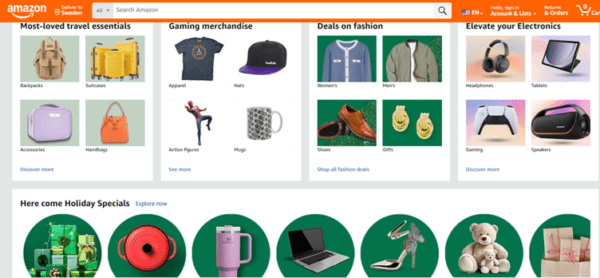
Image courtesy Flowwow
Behavior as the Primary Signal
Marketplaces now use a user’s purchase history and on-platform activity to improve suggestions. Here come rather useful insights and solutions powered by machines. According to multiple U.S. marketing and tech media reports, AI-driven recommendation engines are projected to influence up to 35% of total ecommerce revenue by 2025.
In some segments, like gifting, the challenge is more complex, as it’s expected that the behavior of both the giver and the recipient will be analyzed for the proper recommendations. This dual-perspective approach allows technology to act as a mediator between people, reducing anxiety around “getting it right” and increasing confidence in the final choice.
Platforms must move toward predictive personalization, where the system anticipates future tastes and needs, going beyond a simple order history approach. Etsy offers users ranking and query matching algorithms, which go far beyond matching keywords to product tags. Etsy’s Context Specific Ranking algorithm dynamically adjusts results based on a specific shopper’s habits and preferences, ensuring the listings that appear first are tailored to that individual’s likely intent.
AI Without Illusions
AI often can seem to be a universal solution. Still, it requires clear service logic, smooth internal processes and an understanding of how users make decisions. Algorithms excel at detecting patterns humans may overlook: repeat purchase cycles, implicit brand preferences or consistent avoidance behaviors. On large, universal marketplaces, AI helps filter noise. On niche platforms, it reduces choice anxiety and reinforces trust. The point is, the strategy question is still on the business itself.
Zara uses AI to forecast fashion demand, allocate inventory dynamically and adjust replenishment based on sales data, weather patterns and emerging trends. According to industry analyses, AI-powered inventory management has helped reduce holding costs by around 15% while improving stock turnover.
Quality Competition
A Digital Commerce 360 survey in 2024 found that while over half of consumers noticed an increase in product assortment on marketplaces, only about 19% found the broader assortments appealing, with others reporting clutter and inconsistent policies. The successful marketplace of the future will be perceived not as a storefront but as an intelligent service assistant, capable of anticipating context, shortening the journey to purchase and, ultimately, leaving the customer with the feeling of having made a meaningful choice.
Ultimately, the competitive battleground for ecommerce is no longer defined by how many products you can show, but by how well you can help the customer decide. The goal for ecommerce is to transform your marketplace to a trusted personal assistant, which can easily turn customer anxiety into confidence.
Vera Modenova is COO at Flowwow, a global gifting marketplace. With nine years in ecommerce operations and customer experience, she leads the growth of a ‘glocal’ platform active in 40+ countries, including the UK, UAE, Spain, and the U.S. Her determination and passion for helping local businesses succeed have led her to oversee Flowwow’s international expansion and to double the company’s growth year over year. Modenova built the customer support department from the ground up, achieving a 97% satisfaction rate, and led the transformation of Flowwow from a floral marketplace into a multi-category platform, launching 10+ new verticals in two months.