Key Takeaways:
David’s Bridal has spent 75 years selling wedding dresses. Now, the brand is building something far more ambitious: a digital platform designed to support every stage of the wedding journey, from the moment a couple gets engaged to the final walk down the aisle.
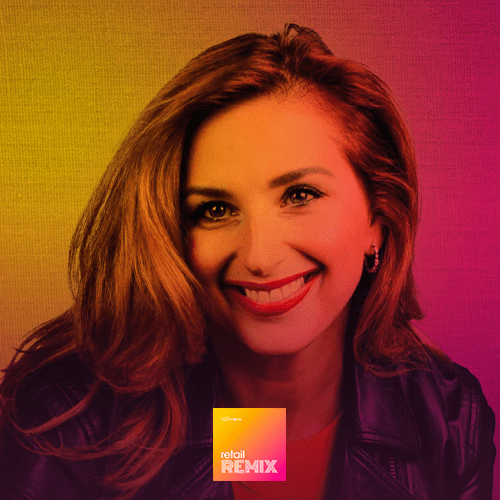
Elina Vilk, President and Chief Business Officer of David’s Bridal, laid out that vision in a recent episode of the Retail Remix podcast, hosted by Kate Robertson, Editor in Chief of Retail TouchPoints. Vilk, who previously held senior roles at Facebook, Hootsuite and PayPal, joined David’s Bridal drawn by a specific opportunity: the brand had already reached 90% of all brides through its ecosystem, but was only selling them dresses.
“It’s a tech problem, it’s a platform problem,” Vilk said in the interview. “So it’s actually not as different as you might think coming into a David’s when you think about it that way.”
Before getting into strategy, Vilk offered context on how the bridal market itself has changed. Social media, she said, has been the single biggest shift in bridal — outside of the pandemic.
The pressure on today’s brides extends well beyond the wedding day. Proposals, engagement photo shoots and cake tastings are all now documented and shared publicly. A bride with 100 guests at her wedding could have thousands of people see her photos.
“Brides today do not have that luxury,” Vilk said, referring to the curated photo albums of a previous generation. “You go in and… you will get photos of you at every angle at every seat.”
That visibility has translated into stress, which is the problem David’s Bridal is now in the business of solving.
At the center of David’s Bridal’s platform strategy is Pearl, an AI-powered wedding planning tool. Vilk described Pearl as capable of planning an entire wedding in five minutes, but the more significant aspect of the product is how it was built.
David’s Bridal stylists, referred to internally as “dream makers,” have been with the company for 30-plus years in some cases. They know not just dresses, but the full dynamics of a wedding: local vendors, family tensions, the emotional weight of trying on a gown for the first time. That institutional knowledge became the foundation for Pearl’s AI.
“We modeled our AI — we called it a knowledge graph essentially — and it’s built around this concept of all the knowledge that our dream makers have around what are the stresses of a bride, what are the things she’s really going through, what is the tone we need to have when having that conversation,” Vilk said.
The AI was trained on the tonality and responses of those in-store employees, not just factual data about weddings. Vilk was direct about the limits of what the technology can do: “The AI will not go to your mother-in-law and tell her that she can’t invite those 20 extra people.”
The goal, she said, is to remove the mental load of the planning process, or what Vilk described as “physical thought bubbles over your head, like you’re carrying heavy, heavy, heavy backpacks.”
To illustrate the scope of that load, Vilk broke down what appears on most wedding checklists as a single task, such as the engagement photo shoot, into more than a dozen micro-decisions: choosing a photographer, selecting a location, coordinating outfits, planning a shot list, scheduling hair and makeup, cleaning the ring, deciding whether to include a pet.
“99% of these things are in your head,” she said. “You’re sitting there in your head and then you wonder, ‘Why am I stressed?’ That’s why you’re stressed.”
The average wedding planning cycle runs approximately 18 months, Vilk noted, though it can range from two months to three-plus years.
David’s Bridal has also moved to capture brides earlier in the planning process, before they know exactly what they’re searching for. Through a Shopify integration completed last year, the brand became one of the first retailers to make its products commercially available directly on ChatGPT.
“We were one of the first few brands that took them up on it and literally flipped on the switch,” Vilk said. “And now we actually have commerce available on ChatGPT.”
Early results have been notable. Vilk described week-over-week growth in the “hundreds of percentage points,” though she acknowledged the volume is still far below traditional search channels. The growth rate, she said, is “nothing like I’ve seen in a very long time.”
The rationale connects to how brides search. High-involvement purchases like wedding dresses and venues carry long research cycles. Brides often begin with questions rather than keywords — “What are the best venues for spring?” or “What should I consider for a Halloween wedding?” — making conversational AI a natural fit.
Perhaps the most significant mindset shift Vilk described involves how David’s Bridal now views the broader bridal market. The brand operates approximately 193 locations. There are more than 7,000 bridal markets across the U.S.
Rather than treating boutiques and other retailers as competition, David’s Bridal has repositioned them as potential partners — channels through which it can extend its manufacturing scale and design capabilities.
“There’s just a total mindset shift that we’ve made where boutiques, for example, are no longer competitors, but they’re partners,” Vilk said. “We don’t have competitors at all. We have only partners. And we are a digital platform that serves the entire wedding ecosystem, not just the dress.”
That shift is grounded in the brand’s production capacity. David’s Bridal operates 40-plus design centers and factories globally. During the recent period of tariff volatility, the brand’s net tariff impact came in below 4% — a figure Vilk attributed to the flexibility of its global manufacturing footprint.
The brand is now moving into wholesale, with plans to offer its production capabilities to boutiques and enterprise retailers. It has also acquired the license for Vera Wang Bride, which Vilk described as an entry point into higher-end wholesale markets.
“I just think that’s a huge power that we have in terms of scale,” Vilk said. “We can definitely help boutiques and larger-scale enterprise stores with pricing, with fit.”
The brand’s sizing goes up to size 30 — and its fit guarantee, which launched alongside the interview, reflect a similar philosophy: use what David’s Bridal has built over decades and make it available more broadly.
Physical retail remains part of the strategy, though in a different form. Vilk described a desire to expand the brand’s footprint through smaller-format stores, including shop-in-shop arrangements inside boutiques and large retailers.
“There is nothing from a brand perspective — we call them brand anchors — there’s nothing that anchors you more in terms of your brand than having a footprint,” she said.
The brand is also responding to a shift in wedding styles. Courthouse weddings and backyard weddings have grown in popularity, and Vilk noted that “backyard weddings” is currently one of David’s Bridal’s top search terms. That trend is informing the development of casual bridal offerings.
Vilk described the brand’s 2026 vision as becoming “the everything one-touch, one-click wedding.” Budgeting tools and bridal party collaboration features are already live, with more planned. The brand has developed what it calls a “stress meter” — a framework for identifying and addressing the most common pain points in the planning process.
Budget ranked as the top stressor, which led to the launch of a budgeting tool. Coordinating bridesmaids came in second.
Longer term, Vilk said the platform could extend beyond weddings entirely — into baby planning, life milestones and other special occasions. David’s Bridal already has established businesses in prom and special occasion.
“We see us evolving past weddings,” Vilk said. “I just think it’s kind of blue sky for us at this point.”
Related Links
Key Takeaways:
David’s Bridal has spent 75 years selling wedding dresses. Now, the brand is building something far more ambitious: a digital platform designed to support every stage of the wedding journey, from the moment a couple gets engaged to the final walk down the aisle.
Elina Vilk, President and Chief Business Officer of David’s Bridal, laid out that vision in a recent episode of the Retail Remix podcast, hosted by Kate Robertson, Editor in Chief of Retail TouchPoints. Vilk, who previously held senior roles at Facebook, Hootsuite and PayPal, joined David’s Bridal drawn by a specific opportunity: the brand had already reached 90% of all brides through its ecosystem, but was only selling them dresses.
“It’s a tech problem, it’s a platform problem,” Vilk said in the interview. “So it’s actually not as different as you might think coming into a David’s when you think about it that way.”
Before getting into strategy, Vilk offered context on how the bridal market itself has changed. Social media, she said, has been the single biggest shift in bridal — outside of the pandemic.
The pressure on today’s brides extends well beyond the wedding day. Proposals, engagement photo shoots and cake tastings are all now documented and shared publicly. A bride with 100 guests at her wedding could have thousands of people see her photos.
“Brides today do not have that luxury,” Vilk said, referring to the curated photo albums of a previous generation. “You go in and… you will get photos of you at every angle at every seat.”
That visibility has translated into stress, which is the problem David’s Bridal is now in the business of solving.
At the center of David’s Bridal’s platform strategy is Pearl, an AI-powered wedding planning tool. Vilk described Pearl as capable of planning an entire wedding in five minutes, but the more significant aspect of the product is how it was built.
David’s Bridal stylists, referred to internally as “dream makers,” have been with the company for 30-plus years in some cases. They know not just dresses, but the full dynamics of a wedding: local vendors, family tensions, the emotional weight of trying on a gown for the first time. That institutional knowledge became the foundation for Pearl’s AI.
“We modeled our AI — we called it a knowledge graph essentially — and it’s built around this concept of all the knowledge that our dream makers have around what are the stresses of a bride, what are the things she’s really going through, what is the tone we need to have when having that conversation,” Vilk said.
The AI was trained on the tonality and responses of those in-store employees, not just factual data about weddings. Vilk was direct about the limits of what the technology can do: “The AI will not go to your mother-in-law and tell her that she can’t invite those 20 extra people.”
The goal, she said, is to remove the mental load of the planning process, or what Vilk described as “physical thought bubbles over your head, like you’re carrying heavy, heavy, heavy backpacks.”
To illustrate the scope of that load, Vilk broke down what appears on most wedding checklists as a single task, such as the engagement photo shoot, into more than a dozen micro-decisions: choosing a photographer, selecting a location, coordinating outfits, planning a shot list, scheduling hair and makeup, cleaning the ring, deciding whether to include a pet.
“99% of these things are in your head,” she said. “You’re sitting there in your head and then you wonder, ‘Why am I stressed?’ That’s why you’re stressed.”
The average wedding planning cycle runs approximately 18 months, Vilk noted, though it can range from two months to three-plus years.
David’s Bridal has also moved to capture brides earlier in the planning process, before they know exactly what they’re searching for. Through a Shopify integration completed last year, the brand became one of the first retailers to make its products commercially available directly on ChatGPT.
“We were one of the first few brands that took them up on it and literally flipped on the switch,” Vilk said. “And now we actually have commerce available on ChatGPT.”
Early results have been notable. Vilk described week-over-week growth in the “hundreds of percentage points,” though she acknowledged the volume is still far below traditional search channels. The growth rate, she said, is “nothing like I’ve seen in a very long time.”
The rationale connects to how brides search. High-involvement purchases like wedding dresses and venues carry long research cycles. Brides often begin with questions rather than keywords — “What are the best venues for spring?” or “What should I consider for a Halloween wedding?” — making conversational AI a natural fit.
Perhaps the most significant mindset shift Vilk described involves how David’s Bridal now views the broader bridal market. The brand operates approximately 193 locations. There are more than 7,000 bridal markets across the U.S.
Rather than treating boutiques and other retailers as competition, David’s Bridal has repositioned them as potential partners — channels through which it can extend its manufacturing scale and design capabilities.
“There’s just a total mindset shift that we’ve made where boutiques, for example, are no longer competitors, but they’re partners,” Vilk said. “We don’t have competitors at all. We have only partners. And we are a digital platform that serves the entire wedding ecosystem, not just the dress.”
That shift is grounded in the brand’s production capacity. David’s Bridal operates 40-plus design centers and factories globally. During the recent period of tariff volatility, the brand’s net tariff impact came in below 4% — a figure Vilk attributed to the flexibility of its global manufacturing footprint.
The brand is now moving into wholesale, with plans to offer its production capabilities to boutiques and enterprise retailers. It has also acquired the license for Vera Wang Bride, which Vilk described as an entry point into higher-end wholesale markets.
“I just think that’s a huge power that we have in terms of scale,” Vilk said. “We can definitely help boutiques and larger-scale enterprise stores with pricing, with fit.”
The brand’s sizing goes up to size 30 — and its fit guarantee, which launched alongside the interview, reflect a similar philosophy: use what David’s Bridal has built over decades and make it available more broadly.
Physical retail remains part of the strategy, though in a different form. Vilk described a desire to expand the brand’s footprint through smaller-format stores, including shop-in-shop arrangements inside boutiques and large retailers.
“There is nothing from a brand perspective — we call them brand anchors — there’s nothing that anchors you more in terms of your brand than having a footprint,” she said.
The brand is also responding to a shift in wedding styles. Courthouse weddings and backyard weddings have grown in popularity, and Vilk noted that “backyard weddings” is currently one of David’s Bridal’s top search terms. That trend is informing the development of casual bridal offerings.
Vilk described the brand’s 2026 vision as becoming “the everything one-touch, one-click wedding.” Budgeting tools and bridal party collaboration features are already live, with more planned. The brand has developed what it calls a “stress meter” — a framework for identifying and addressing the most common pain points in the planning process.
Budget ranked as the top stressor, which led to the launch of a budgeting tool. Coordinating bridesmaids came in second.
Longer term, Vilk said the platform could extend beyond weddings entirely — into baby planning, life milestones and other special occasions. David’s Bridal already has established businesses in prom and special occasion.
“We see us evolving past weddings,” Vilk said. “I just think it’s kind of blue sky for us at this point.”
Related Links