
Key Takeaways:
- Consumers are altering their purchasing behaviors, with fuel purchases dropping below 10 gallons per transaction as household budgets tighten.
- Walmart absorbed a $175 million reduction in operating income growth due to elevated distribution and fulfillment fuel costs.
- Despite macroeconomic pressures, Walmart reported a 7.3% revenue increase to $177.8 billion and reiterated its full-year financial outlook.
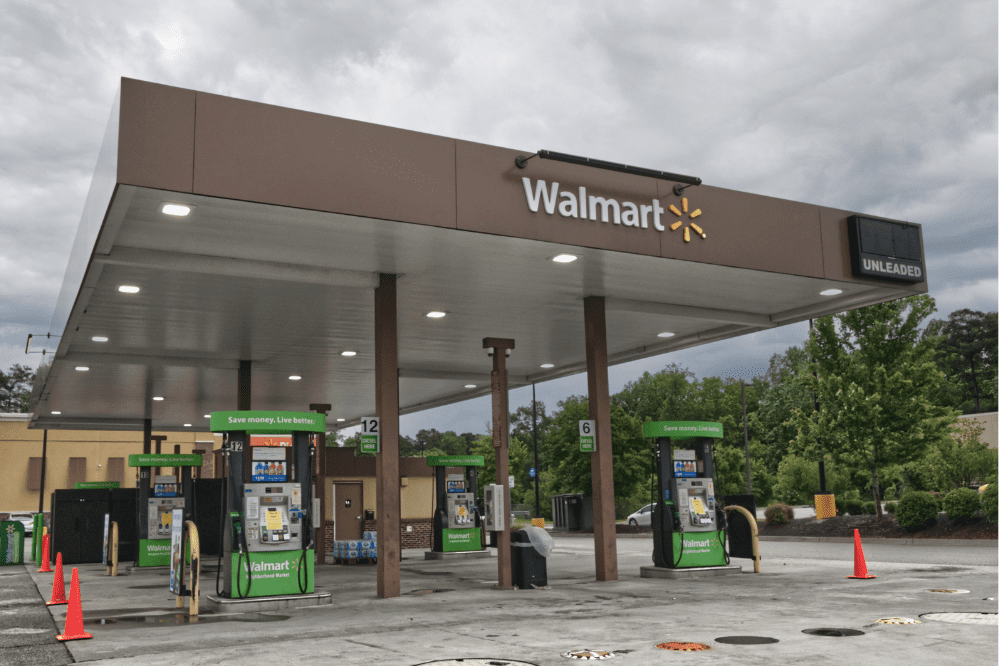
Economic pressures on Walmart consumers are particularly visible at the fuel pump, according to the company’s Q1 results. For the first time since 2022, the number of gallons that customers purchased during a single transaction at Walmart fuel stations fell below 10 gallons, showing that consumers are managing their cash flow tightly, purchasing only the fuel they immediately need rather than filling their tanks completely.
“When I look at the consumer, especially here in the U.S., they’re telling us they’re feeling some pressure and they’re looking to Walmart for value,” said John Furner, President and CEO of Walmart U.S., on the company’s earnings call on Thursday.
But the search for savings is also driving more foot traffic to value-driven retailers. During the month of May, fuel gallons sold at Sam’s Club locations increased by 12%, contrasting sharply with a broader industry decline of 5%, said CFO John David Rainey.

“That tells you that customers are coming to us looking for value,” Rainey said on the call. “What’s important to note about that is that a fuel member spends 1.6 times more in the rest of the basket than a non-fuel member. It just shows the importance of engagement, where the importance of leaning into these periods where wallets are stretched and providing these price points for customers that they find attractive.”
High Fuel Costs Hit Walmart’s Bottom Line
Walmart reported that higher fuel costs negatively affected its bottom line in Q1, which ended April 30, 2026.
“We absorbed approximately $175 million or about 250 basis points of operating income growth from higher than planned fuel costs in our global distribution and fulfillment operations,” Rainey said.
Despite this short-term pressure on corporate profitability, the retail corporation opted to absorb these costs rather than pass them entirely to the consumer. The company expanded its discount programs to include approximately 7,200 active rollbacks across its assortment.
Tariff Refunds a Minor Factor in the Long-Term
Walmart is actively participating in the process to recover potential refunds related to the International Emergency Economic Powers Act (IEEPA).
However, Walmart executives noted that these potential refunds are a minor factor in the broader financial picture.
“We are participating in the process, and we believe that the maximum refunds we may be eligible to receive as the importer of record represent less than half of 1% of our U.S. annual sales,” Rainey said.
Walmart has strategically chosen to exclude any potential IEEPA tariff refunds from its forward-looking financial guidance, focusing instead on the underlying performance of the core business. If the company secures these refunds, Walmart would prioritize reinvesting that capital into lowering prices for consumers.
Q1 Results and Outlook
Walmart reported total revenue of $177.8 billion, a 7.3% increase compared to the prior year. Operating income increased 5% despite the $175 million fuel headwind.
Global ecommerce sales increased by 26%, driven heavily by store-fulfilled pickup and delivery options. As consumers seek to minimize their own driving to save on gas, the convenience of local delivery solutions has accelerated. Walmart reported that more than 36% of all its U.S. store-fulfilled deliveries were completed in under three hours.
Walmart’s global advertising business increased 37%, with strength across segments. Walmart U.S. advertising increased 36%.
Looking ahead, the multinational retail corporation reiterated its full-year financial outlook. For fiscal 2027, Walmart projects constant currency net sales growth between 3.5% and 4.5%, alongside adjusted operating income growth of 6% to 8%. For the second quarter, the company anticipates net sales growth of 4% to 5% and an operating income increase of 7% to 10%.