Key takeaways:
- Kroger to acquire Giant Eagle for $1.65B, adding 197 stores across five Ohio Valley states.
- Deal expected to close in 2027, pending antitrust review and limited store divestitures.
- Comes 100 days into CEO Greg Foran’s tenure, as Kroger pivots back to physical expansion.
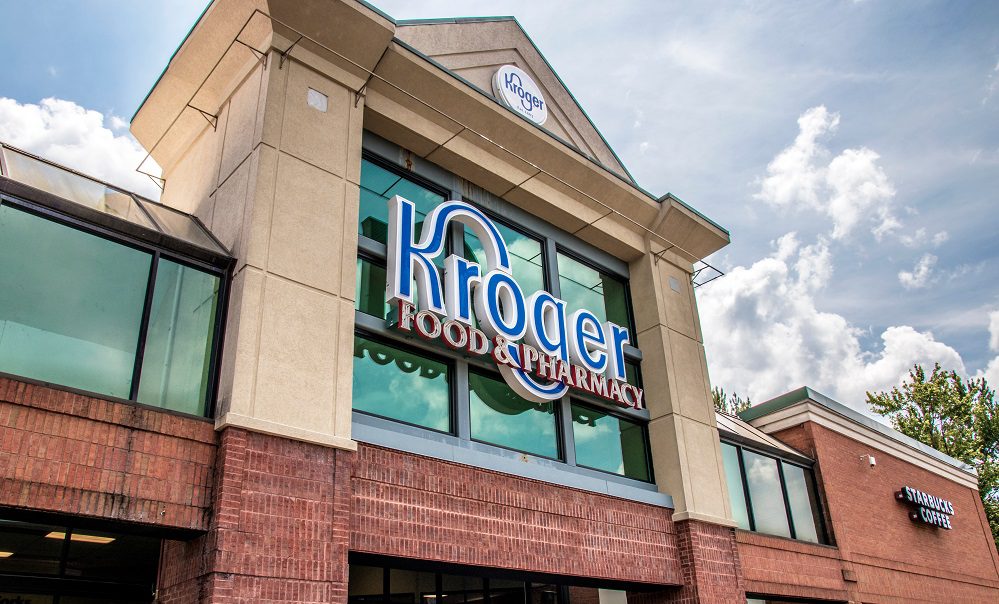
The Kroger Co. has agreed to acquire Giant Eagle, Inc. in a deal worth approximately $1.65 billion, the companies announced Wednesday.
The deal marks Kroger’s most notable acquisition move since its proposed $25 billion merger with Albertsons was blocked in 2024 after the FTC and Washington state sued to stop it on antitrust grounds.
Unlike that deal, which combined two national chains with extensive market overlap, the Giant Eagle acquisition is a regional bolt-on that adds density in markets adjacent to Kroger’s existing footprint rather than consolidating a direct nationwide competitor, a structure that may face a less complicated regulatory review.
The transaction, unanimously approved by Kroger’s board of directors, is structured as $1.25 billion in cash consideration plus the assumption of approximately $400 million in outstanding liabilities. Kroger will finance the deal entirely with cash and expects to maintain its net total debt to adjusted EBITDA ratio within its target range of 2.3 to 2.5 times following the close.
Kroger, Giant Eagle Deal Details
Giant Eagle, a family-owned food and pharmacy retailer founded in 1931, operates 197 supermarkets and 11 standalone pharmacies across northern Ohio, western Pennsylvania, West Virginia, Maryland and Indiana, generating approximately $9 billion in annual sales. Pittsburgh-based Giant Eagle is regularly ranked among the largest private corporations in the U.S.
“Giant Eagle is a well-run, high-quality regional grocer with a strong reputation for fresh products, pharmacy, private label and customer loyalty,” said Greg Foran, CEO at Kroger, in a statement. “We evaluated the opportunity carefully, and the strategic fit is clear. Giant Eagle expands our reach into attractive adjacent markets, allowing us to do what we do best: Run outstanding stores, deliver fresh foods and convenient meal solutions at affordable prices, and take care of our customers and associates every single day.”
Bill Artman, CEO at Giant Eagle, framed the deal as an opportunity for growth. “Today’s announcement marks an exciting next chapter for our team members, customers, vendors and community partners,” Artman said in a statement. “Together with Kroger, we will be well-positioned to advance our strategy and deliver better quality and service, better everyday value, and a better shopping experience for our customers, while providing greater growth opportunities for our dedicated team members.”
Regulatory Path and Timeline
Kroger and Giant Eagle expect to make limited Giant Eagle store divestitures as part of the process for obtaining regulatory clearance. The transaction is expected to close in 2027, subject to that clearance and other customary closing conditions.
Kroger said it expects the deal to be accretive to adjusted earnings per diluted share in the second full year after close, excluding one-time transaction and integration costs.
The Backdrop: A Strong First Quarter
The acquisition announcement follows Kroger’s first-quarter 2026 earnings call on June 19, during which new CEO Foran laid out both the company’s progress and where it’s falling short.
In the quarter ended May 23, total company sales reached $46.12 billion, up from $45.11 billion a year earlier, with identical sales excluding fuel rising 1%. Adjusted earnings per share climbed 6% year-over-year to $1.58, from $1.49, while operating profit reached $1.407 billion, compared with $1.322 billion a year ago.
Gains were driven largely by strong performance in fresh food, private-label brands and a rapidly expanding digital business, though management acknowledged that top-line growth faced headwinds from an accelerating shift toward generic pharmacy prescriptions and tighter consumer budgets.
Kroger reaffirmed its full-year 2026 guidance alongside the quarterly results, projecting identical sales growth (excluding fuel) of 1% to 2%, adjusted operating profit of $5 billion to $5.2 billion, and adjusted EPS of $5.10 to $5.30.
Foran’s Background
Kroger named Foran CEO in February, bringing more than four decades of experience running large consumer businesses across five countries. Prior to Kroger, he served as CEO of Air New Zealand, and before that, Foran spent six years leading Walmart U.S., where he is credited with turning around the retail giant’s largest division through 2019.
Foran’s appointment followed the March 2025 resignation of longtime Kroger CEO Rodney McMullen after an internal investigation found his personal conduct, while unrelated to the business, was inconsistent with the company’s policy on business rthics.
Foran’s First 100 Days
The first-quarter results also marked Foran’s first earnings call as Kroger’s permanent CEO, capping his first 100 days in the role. The former Walmart U.S. chief executive used the call to lay out where he sees the business falling short as much as where it’s succeeding, according to RTP’s earlier coverage of the call.
Foran pointed to three operational priorities: reining in operating costs that have been growing faster than sales, speeding up decision-making across the organization and narrowing the execution gap between Kroger’s best- and worst-performing stores. He told analysts that roughly two of every five stores he’s visited in his first months on the job are in strong shape, another two of five are middling, and one in five needs meaningful improvement.
Foran also signaled a shift back toward physical growth after a multiyear pause in new store openings, saying Kroger’s existing footprint is one of its strongest assets but that standing still on store growth means standing still on market share.
The quarter also came against a backdrop of executive turnover, with four senior Kroger executives departing since Foran took over in February.
As of January 31, 2026, according to Kroger’s most recent annual report, the company operated 2,697 supermarkets across 35 states and the District of Columbia, either directly or through its subsidiaries. Of those stores, 2,250 included pharmacies and 1,731 included fuel centers.
Kroger has grown into its current footprint largely through decades of acquisitions, and the company has historically kept the names of the regional chains it acquires rather than converting them to the Kroger banner, preserving local brand loyalty built up over generations.
The Giant Eagle acquisition would add a new regional banner to that list once the deal closes.
The transaction also comes as Kroger continues to lean into loyalty, private label and retail media as growth levers. The company noted that Giant Eagle’s own loyalty program, pharmacy business and private label portfolio provide a foundation it intends to build on with Kroger’s ecommerce, data and personalization capabilities.