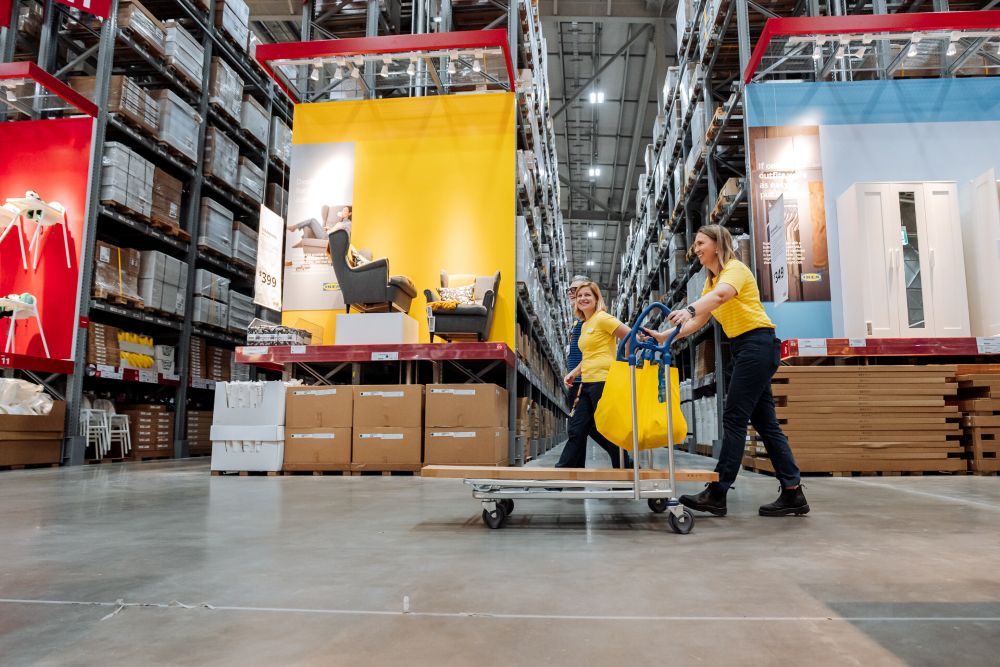
Ikea has opened its first store in New Zealand, in Auckland’s Sylvia Park, and has added 29 pickup points throughout the country where online shoppers can pick up their purchases. The store will feature a buy-back service, even for non-Ikea products, to support circular commerce and help reduce waste.
“We’re thrilled to bring Ikea all the way to New Zealand, the country that’s geographically the furthest from our Swedish beginnings,” said Tolga Öncü, COO and Ingka Retail Manager for Ingka Group, the largest operator of Ikea retail stores. “Coming to New Zealand is a real leap of faith, investment and friendship, showing we’re not just exporting a store. We’re planting roots for the long term.”
Ahead of the store opening, Ikea has visited more than 500 homes throughout the country to understand the life-at-home expectations of many Kiwis, and to translate those learnings into its store and online. Ikea has collected its findings into its first Life at Home Report about New Zealand, and organized housewarming celebrations in locations across Auckland that reflect the Kiwi lifestyle, including backyard gatherings, late-night garage jams and sunny seaside mornings.
Tariffs Causing Shift in Ikea Sourcing in the Americas
A bit closer to its home base, Ikea reportedly plans to source more product from U.S. factories as a way to circumvent the tariffs that have raised its products’ prices, according to Reuters. The move is designed to support expansion in the U.S., the retailer’s second-biggest market, as well as other markets in the Americas including Canada, Mexico, Chile and Colombia, with plans to open in Costa Rica and Panama.

“We are designing our supply chain network to be much more resilient, robust, and responsive,” said Susanne Waidzunas, Global Supply Manager at Inter IKEA in an interview with Reuters, adding that the company’s stores in North and South America are very dependent on furniture being shipped in, with long lead times. “The closer we can build, the faster we can react from a supply perspective, both when it goes up in demand but also when it goes down.”